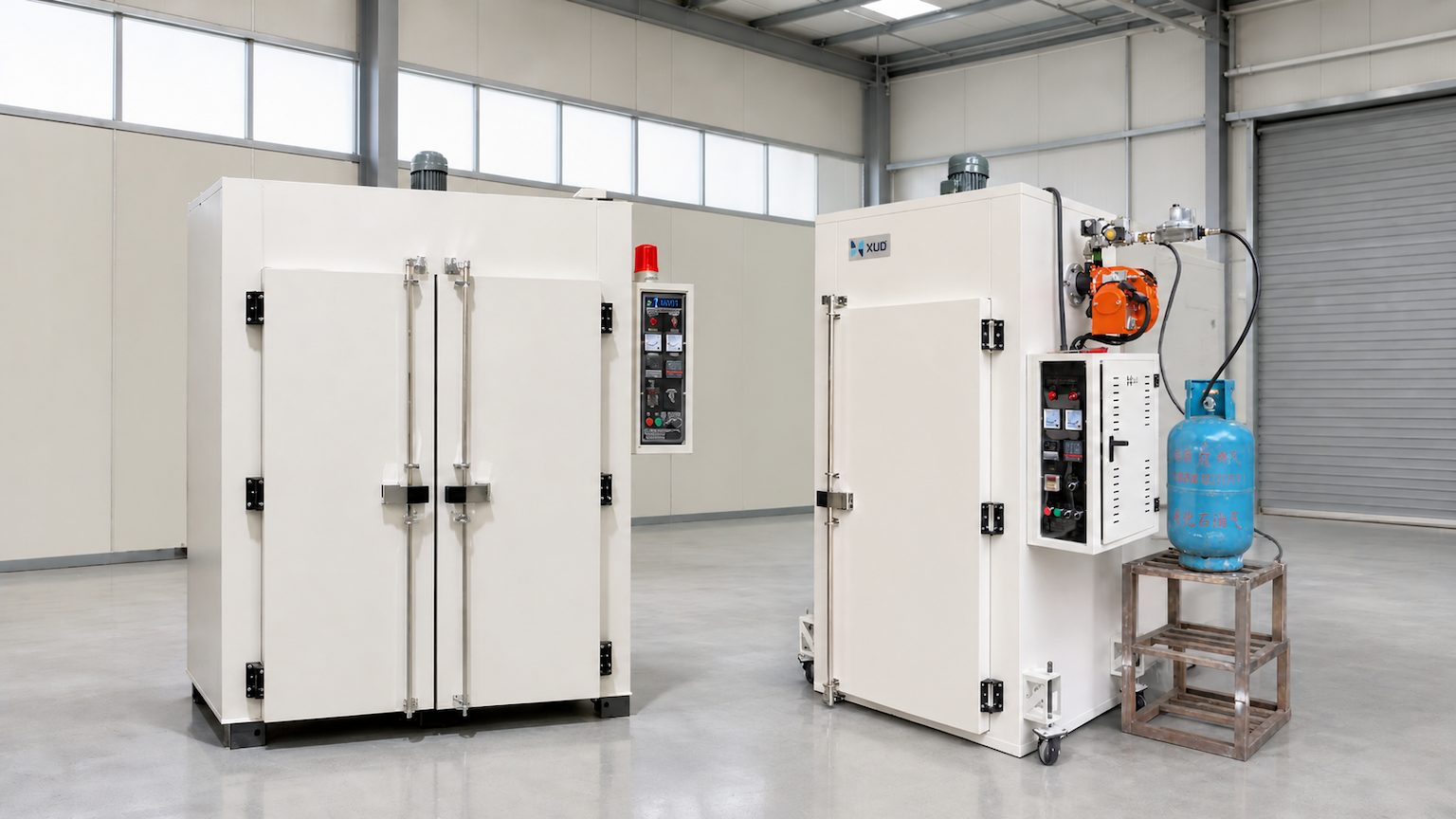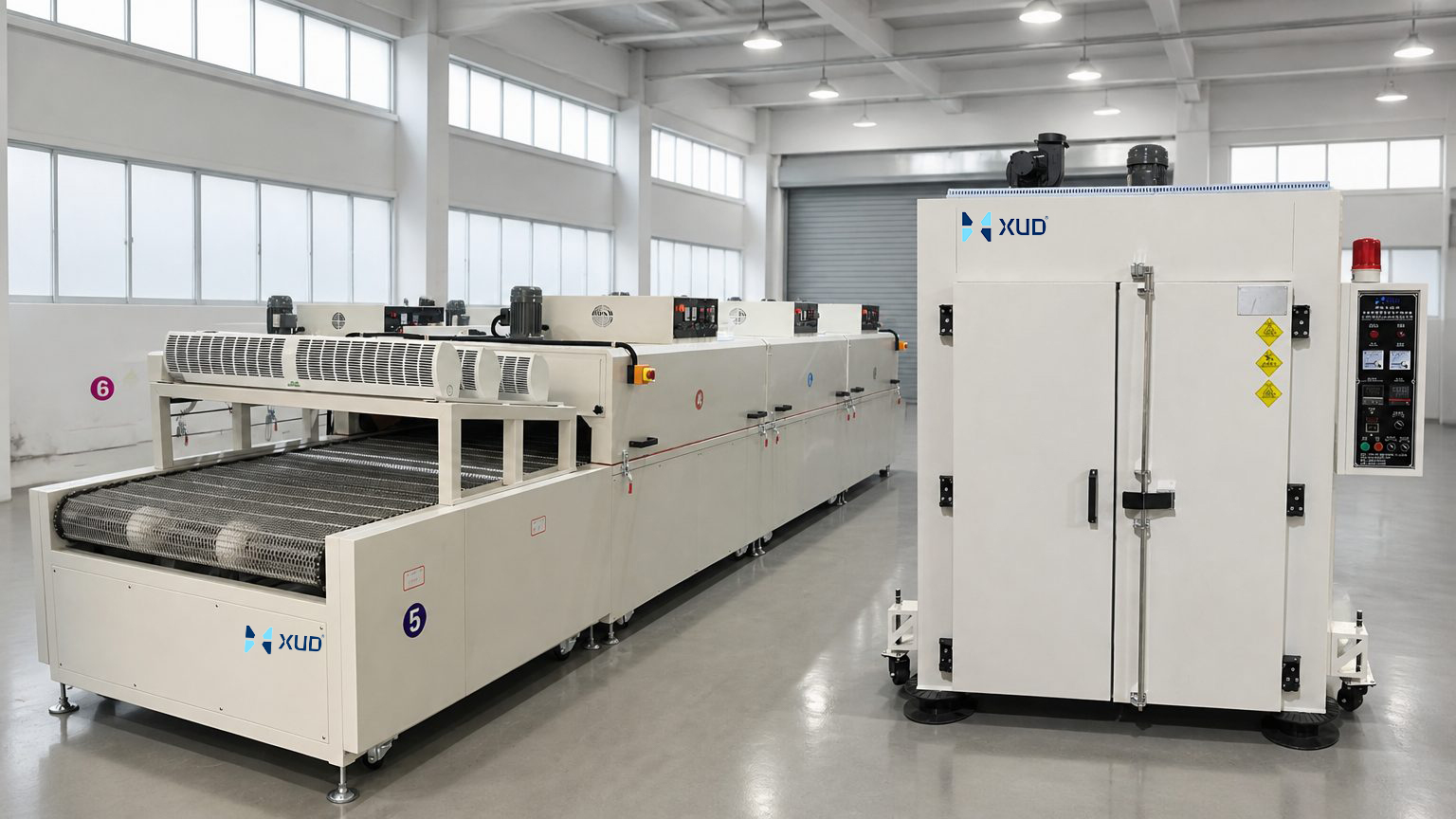
Hot Air Oven Temperature and Time
author: Anna
2026-10-26
There is no universal temperature or duration for using a hot-air oven that applies to all materials. The appropriate process depends on the material, the thickness of the workpiece, moisture content, loading configuration, airflow, and final processing requirements. In industrial production, a distinction should be made between the heating-up period, the effective holding (dwell) time, and the cooling period; for dry-heat sterilization, the applicable sterilization protocols and their associated validation requirements must be followed.
As a hot air ovens manufacturer, XUD provides reference guidelines regarding temperature and time; we also offer customization tailored to your specific application.
1. Hot Air Oven Temperature and Time Reference Chart
1.1Common Dry-Heat Sterilization Temperature & Time Cycles
For laboratory and healthcare settings, dry-heat sterilization relies on well-documented temperature-time relationships to achieve reliable microbial kill. The U.S. Centers for Disease Control and Prevention (CDC) outlines standard reference cycles for sterilization using hot air ovens:
| Temperature | Common Holding Time |
|---|---|
| 150°C (302°F) | 150 minutes |
| 160°C (320°F) | 120 minutes |
| 170°C (338°F) | 60 minutes |
Important Note: These values apply exclusively to validated dry-heat sterilization processes for heat-resistant medical supplies, glassware, or metal items. They are not intended for applications such as industrial drying, curing of coatings, or polymer aging. Please follow the equipment manufacturer’s instructions, material specifications, and site-approved sterilization protocols.
Related Products:

1.2 Industrial Drying: Why a Single Chart Won't Work
For hot-air ovens used in manufacturing and industrial sectors, each application scenario carries its own unique constraints and standards.
| Application Scenario | Key Factors for Temperature & Time Selection |
|---|---|
| Metal hardware post-wash drying | Residual water volume, part geometry, batch load size, and dryness endpoint |
| Electronic components & PCB coating curing | Component heat resistance, coating/adhesive technical data sheet (TDS) requirements |
| Motor winding insulation varnish curing | Insulation varnish specifications, winding structure, exhaust capacity, and thermal load |
| Paint, ink, and coating curing | Coating manufacturer’s recommended cure schedule and actual part surface temperature |
| Plastic, rubber, and composite thermal processing | Material heat deflection temperature, wall thickness, and allowable dimensional change |
| Laboratory sample drying | Sample composition, target moisture content, and test method standards |
2. How to Determine the Correct Hot Air Oven Temperature and Time
2.1 Identify the Material and Its Heat Limit
The first step in developing a process workflow is to understand the upper temperature limits of the materials being used. Setting an oven temperature too high—even if it accelerates drying or curing—can lead to discoloration, warping, melting, outgassing, coating defects, or even permanent component failure.
Metals: Most ferrous and non-ferrous metals can withstand high temperatures; however, their surface treatments, platings, and tempered properties often have much lower temperature tolerances.
Electronics and Printed Circuit Boards (PCBs): Components such as capacitors, semiconductors, and connectors have strict maximum temperature ratings. Exceeding these limits can compromise long-term reliability or even cause total failure.
Plastics and Elastomers: Every polymer has a specific glass transition temperature and heat deflection temperature. Even a brief excursion above these limits can result in dimensional deformation or material embrittlement.
Coatings, Resins, and Adhesives: These materials typically have a narrow curing temperature range. Temperatures that are too low result in incomplete curing and poor performance, while temperatures that are too high can cause blistering, yellowing, or brittleness.
Insulation Materials: Thermal classes (such as Class A, B, F, or H) define the maximum allowable operating temperatures for motor windings and electrical insulation materials during continuous service.
2.2 Consider Part Thickness, Weight, and Moisture Content
Even when using identical materials, differences in the dimensions, mass, or internal structure of workpieces can lead to variations in the time required for thermal insulation (or maintaining a specific temperature).
Heat is transferred from the air inside an oven to the surface of a workpiece and subsequently conducted inward. Thin sheets, small fasteners, or components with low mass reach their target temperatures quickly; conversely, thick castings, wire coils, complex assemblies, or porous materials require more time to heat through completely and to expel any internal moisture.
Initial moisture content is also critical. A workpiece with significant residual rinse water on its surface will require much longer to dry than one with only a thin film of water.
For hygroscopic materials, moisture may still be present internally even when the surface appears "dry." Such workpieces require a longer dwell time to allow internal moisture to migrate to the surface and be removed.
For hygroscopic materials, moisture may still be present internally even when the surface appears "dry." Such workpieces require a longer dwell time to allow internal moisture to migrate to the surface and be removed.
2.3 Understand Air Circulation and Loading Arrangement
Hot-air ovens rely on forced convection to distribute heat evenly across the materials being processed. Even when the correct temperature and time are set, poor airflow can lead to inconsistent results.
Airflow Path: Different airflow patterns—such as horizontal, vertical, or lateral—yield varying effects depending on the shape of the workpieces and the design of the shelving.
Tray Spacing and Loading Density: Overcrowding the shelves restricts airflow, creating "shadow zones" (stagnant air pockets) and extending processing cycles.
Workpiece Orientation: Stacking items flat or nesting them together can trap moisture and prevent air from reaching all surfaces of the workpieces.
Air Deflectors and Flow Adjustment: Adjusting the direction of the airflow allows heat to be directed into hard-to-reach areas.
To achieve uniform industrial heating, select a hot-air circulation oven that supports airflow adjustment, and configure it according to the specific characteristics of your products and your loading requirements.
2.4 Define the Required End Point
Drying: Evaluated by measuring residual moisture content, weight loss, or the dew point of exhaust gases.
Curing: Verified through hardness testing, cross-cut adhesion testing, solvent rub testing, or thermal analysis.
Sterilization: Confirmed using biological indicators and temperature distribution mapping under full-load conditions.
Thermal Aging: Verified via mechanical property testing following exposure under controlled conditions.
This explains why a set of process parameters that proves effective at one facility may fail at another: both facilities might employ the same “160°C / 60-minute” process, yet only one has clearly defined and validated the specific criteria for determining when the workpieces have reached their final, required state.
3. Set Temperature vs. Actual Part Temperature: Why the Difference Matters
3.1 The Oven Display Does Not Tell the Whole Story
The temperature shown on your oven controller is the temperature at the sensor location—usually in the return air duct or near the chamber wall. It does not automatically mean every part, and every part’s interior, has reached that same temperature.
Large loads, thick parts, and poor air flow create a temperature lag between the chamber air and the actual workpiece. In some cases, the controller reads 170°C while parts in the center of the batch are still at 130°C. Relying only on the display can lead to under-processed parts and hidden quality failures.
3.2 When Should the Holding Time Begin?
To avoid timing errors, you must clearly define three separate phases of a thermal cycle:
Heat-up time: The period from cycle start until the entire load (not just the air) reaches the target process temperature.
Holding time / dwell time: The period during which all parts remain within the specified temperature tolerance to complete drying, curing, or sterilization.
Cooling time: The period required to cool parts down to a safe handling or unloading temperature.
Holding time / dwell time: The period during which all parts remain within the specified temperature tolerance to complete drying, curing, or sterilization.
Cooling time: The period required to cool parts down to a safe handling or unloading temperature.
For critical processes, the hold timer must start only after the load reaches the required temperature—not when the oven is turned on. For dry-heat sterilization in particular, cycle validity depends on load temperature, not just chamber setpoint. Always follow your process specification for the exact timing trigger point.
3.3How Temperature Mapping Helps Identify Cold and Hot Spots
Temperature mapping (thermal mapping) uses multiple temperature sensors placed throughout an empty chamber and then across a fully loaded batch to map hot and cold zones.
- Empty chamber mapping shows base oven uniformity under ideal conditions.
- Loaded mapping with actual parts or simulated product reveals real-world cold spots caused by part geometry, racking, and air flow blockage.
- Loaded mapping with actual parts or simulated product reveals real-world cold spots caused by part geometry, racking, and air flow blockage.
Mapping data tells you where the slowest-heating location is, so you can set your hold time based on the coldest point in the load. This is the only reliable way to confirm that every part in the batch receives the full required thermal exposure.
4. Why Does Your High Temperature Industrial Oven Take Too Long to Dry Parts?
4.1The Parts Are Still Wet After the Full Cycle
If parts come out damp after a full cycle, check these common root causes:
- Initial moisture load is higher than the original recipe was designed for.
- Parts are stacked or nested, trapping water in crevices and blind holes.
- Exhaust / moisture removal is insufficient, so humid air recirculates inside the chamber.
- The defined end point is unrealistic for the part geometry and load configuration.
- Parts are stacked or nested, trapping water in crevices and blind holes.
- Exhaust / moisture removal is insufficient, so humid air recirculates inside the chamber.
- The defined end point is unrealistic for the part geometry and load configuration.
Start by verifying exhaust settings, reducing batch load, and improving part orientation before raising the set temperature.

4.2 The Surface Is Dry but the Interior Is Not
Surface dryness does not equal core dryness. This is especially common with thick castings, porous materials, wound coils, and assembled parts with internal cavities.
Heat must conduct inward to drive internal moisture to the surface, where air flow can carry it away. If hold time is based only on surface appearance, internal moisture remains and causes problems later—such as corrosion, coating adhesion failure, or electrical insulation breakdown. Use weight-loss testing or core temperature measurement to confirm full dryness.
4.3 Some Parts Are Overheated While Others Are Underprocessed
Uneven results across the same batch almost always relate to air flow and load layout:
- Parts near the air inlet receive more direct heat and may overheat.
- Parts in shadowed areas or deep inside stacks receive less air flow and stay cooler.
- Tray position, shelf spacing, and sensor placement all affect perceived and actual uniformity.
- Parts in shadowed areas or deep inside stacks receive less air flow and stay cooler.
- Tray position, shelf spacing, and sensor placement all affect perceived and actual uniformity.
The fix is rarely a higher set temperature. Instead, adjust racking, increase tray spacing, reorient parts, or tune air flow patterns to improve heat distribution.
4.4 Increasing the Temperature Does Not Solve the Problem
It’s tempting to turn up the heat to speed up a slow process, but this often creates new problems without fixing the root cause.
Excessive temperature can cause:
- Discoloration, oxidation, or scaling on metal surfaces
- Warping, melting, or dimensional change in plastics and composites
- Blistering, cracking, or yellowing of coatings and inks
- Premature failure of electronic components and insulation materials
- Warping, melting, or dimensional change in plastics and composites
- Blistering, cracking, or yellowing of coatings and inks
- Premature failure of electronic components and insulation materials
In many cases, poor air flow or overloading is the real bottleneck. Raising temperature only damages parts while the cold spots still take just as long to reach target temperature.
5. How to Calculate the Total Hot Air Oven Cycle Time
5.1 Total Cycle Time vs. Holding Time
Many people confuse “hold time” with “total cycle time,” but they are not the same. For planning production capacity, you need the full end-to-end cycle.
The basic formula for total batch cycle time is:
Total Cycle Time = Heat-up Time + Holding Time + Cooling Time
- Heat-up time: from loading and door close until the full load reaches set temperature
- Holding time: validated dwell period at process temperature
- Cooling time: from end of hold until parts are cool enough to unload safely
- Holding time: validated dwell period at process temperature
- Cooling time: from end of hold until parts are cool enough to unload safely
For example, a metal hardware drying process might have:
- Heat-up: 30 minutes
- Holding: 60 minutes at 140°C
- Cooling: 20 minutes (down to 50°C safe handling temperature)
- Total cycle time: 110 minutes per batch
- Holding: 60 minutes at 140°C
- Cooling: 20 minutes (down to 50°C safe handling temperature)
- Total cycle time: 110 minutes per batch
Only the 60-minute holding period is the “temperature and time” value people typically reference. The other 50 minutes is essential for scheduling but often overlooked.
5.2 Why the Same Oven Can Have Different Cycle Times
Two batches run in the same oven at the same set temperature can have very different total cycle times. Variables that change cycle length include:
- Load mass and weight: heavier loads take longer to heat and cool
- Part size and thickness: thicker parts have longer heat-up and moisture migration times
- Loading pattern: dense, nested loads extend heat-up time significantly
- Incoming part temperature: cold parts from an unheated warehouse take longer to warm up
- Process requirements: tighter temperature tolerances or lower moisture targets add hold time
Never assume a recipe validated for one product will work at the same total cycle time for a different part.
5.3 How Cycle Time Affects Batch Capacity
Total cycle time directly determines how many batches you can run per shift, per day, and per week. This is a key input for production planning and oven sizing.
For example, with an 110-minute total cycle and an 8-hour shift:
- Available operating time: 480 minutes
- Batches per shift: roughly 4 full batches (440 minutes) with changeover time in between
- Batches per shift: roughly 4 full batches (440 minutes) with changeover time in between
If you reduce total cycle time to 90 minutes through better air flow and loading optimization, you can fit 5 batches per shift—a meaningful capacity gain without buying a second oven.
Accurate cycle time calculation helps you evaluate oven utilization, quote lead times, and decide when additional or larger equipment is justified.
Custom Industrial Oven: 9 Key Specifications to Define Before Requesting a Quote
Related Article
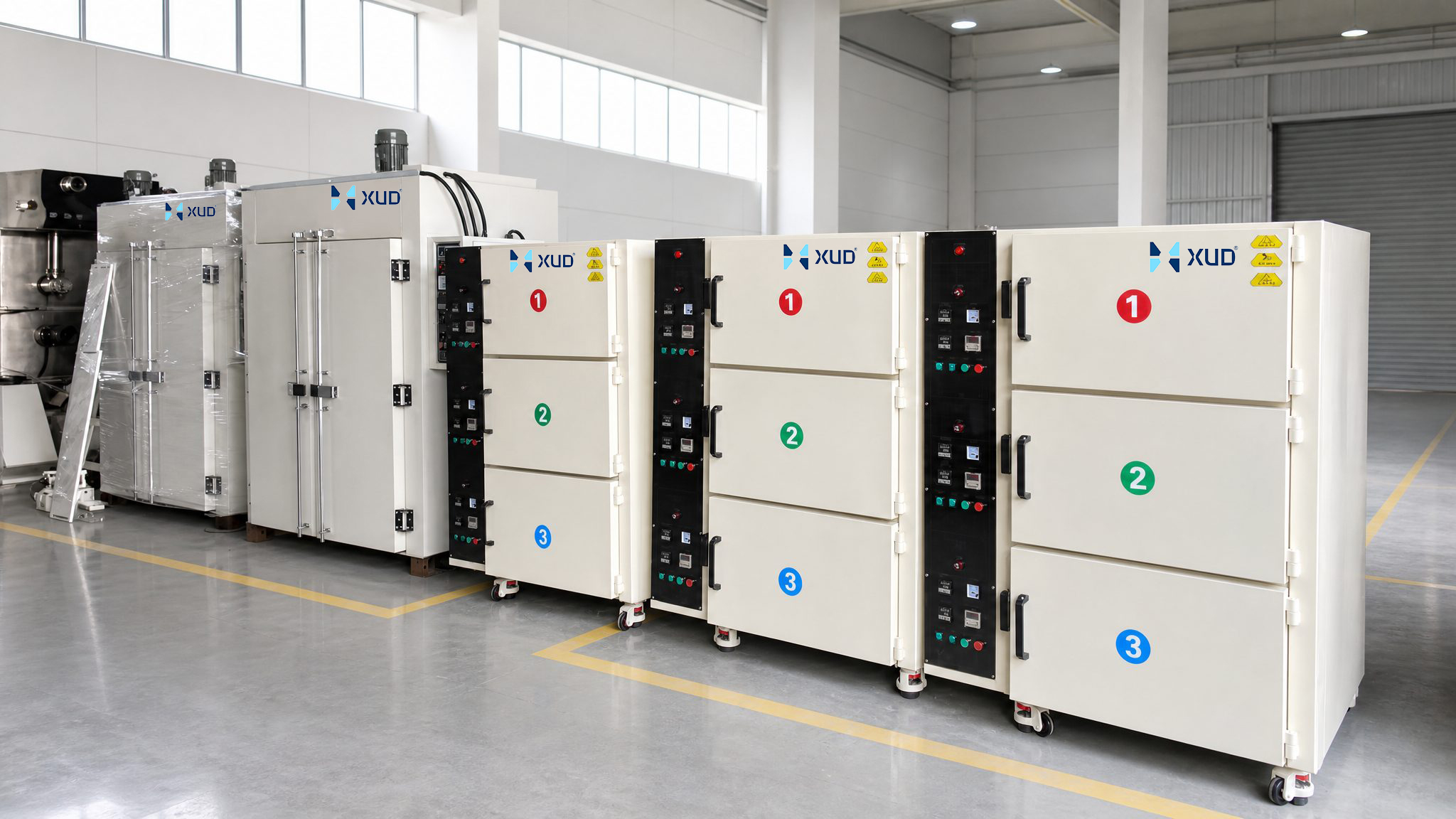
Planning a custom industrial oven? Learn which process, load, temperature, airflow, heating, control, safety, and site specifications to prepare before requesting a quote.
Custom Industrial Oven: 9 Key Specifications to Define Before Requesting a Quote
Looking for an industrial drying oven supplier? Learn how to compare oven types, temperature uniformity, customization, energy efficiency, safety, and total cost before buying.
How to Choose a Reliable Industrial Drying Oven Supplier?