How to Choose a Reliable Industrial Drying Oven Supplier?
author: Anna
2026-10-23
Industrial drying ovens are core heat-treatment equipment in the manufacturing sector; their performance directly dictates production efficiency, batch-to-batch consistency, and final product quality. Precise temperature control and uniform hot-air circulation can significantly shorten drying cycles while reducing material scrap rates and rework costs.
For manufacturing enterprises, selecting a reliable industrial drying oven supplier—one with strong engineering design capabilities, a high level of customization, and a robust after-sales support system—is often just as critical as the purchase price of the equipment itself.
1. What is an industrial drying oven? How does it work?
1.1 How an industrial drying oven works
An industrial drying oven is a piece of industrial equipment designed to remove moisture, solvents, or other volatile components from materials through controlled heating. It relies on the coordinated operation of four core systems:
Heating elements generate the necessary heat;
Circulation fans drive the directional flow of hot air within the chamber, ensuring heat is distributed evenly across the surfaces of the workpieces;
Temperature controllers monitor the chamber temperature in real time, dynamically adjusting the heat output to maintain the set value;
Insulation surrounding the chamber minimizes heat loss, thereby reducing energy consumption.
The synergy between these four systems directly determines the equipment’s temperature stability, drying efficiency, and energy consumption.
1.2 What is the difference between drying and curing?
While both processes rely on heating, they differ significantly in terms of their objectives and equipment requirements:
Drying: The primary goal is to remove moisture or solvents from a material. This is a physical process that prioritizes moisture-removal efficiency and temperature uniformity, typically occurring within a low-to-medium temperature range.
Curing: This involves using heat to trigger cross-linking reactions in resins, adhesives, or composite materials. As a chemical process, it demands high precision in temperature control, consistent duration at specific temperatures, and a stable internal atmosphere.
Because these processes require different temperature ranges, dwell times, and airflow configurations, selecting the wrong type of equipment will inevitably lead to process failure.
2. Types and Applications of Industrial Drying Ovens
| Oven Type | Suitable Application Scenarios |
|---|---|
| Hot Air Circulation Oven | For regular batch drying of industrial parts, hardware products and electronic components. Highly versatile, suitable for most medium & low temperature drying requirements |
| Forced Convection Oven | Processes requiring high temperature uniformity and strong airflow to remove surface solvents, such as precision part drying and coating pre-drying |
| High Temperature Oven | Drying, heat treatment or material curing at specific high temperature ranges, e.g. metal tempering, high-temperature resin curing |
| Vacuum Drying Oven | Heat-sensitive materials, oxidizable materials, or special drying processes that reduce solvent boiling point under low-pressure environment |
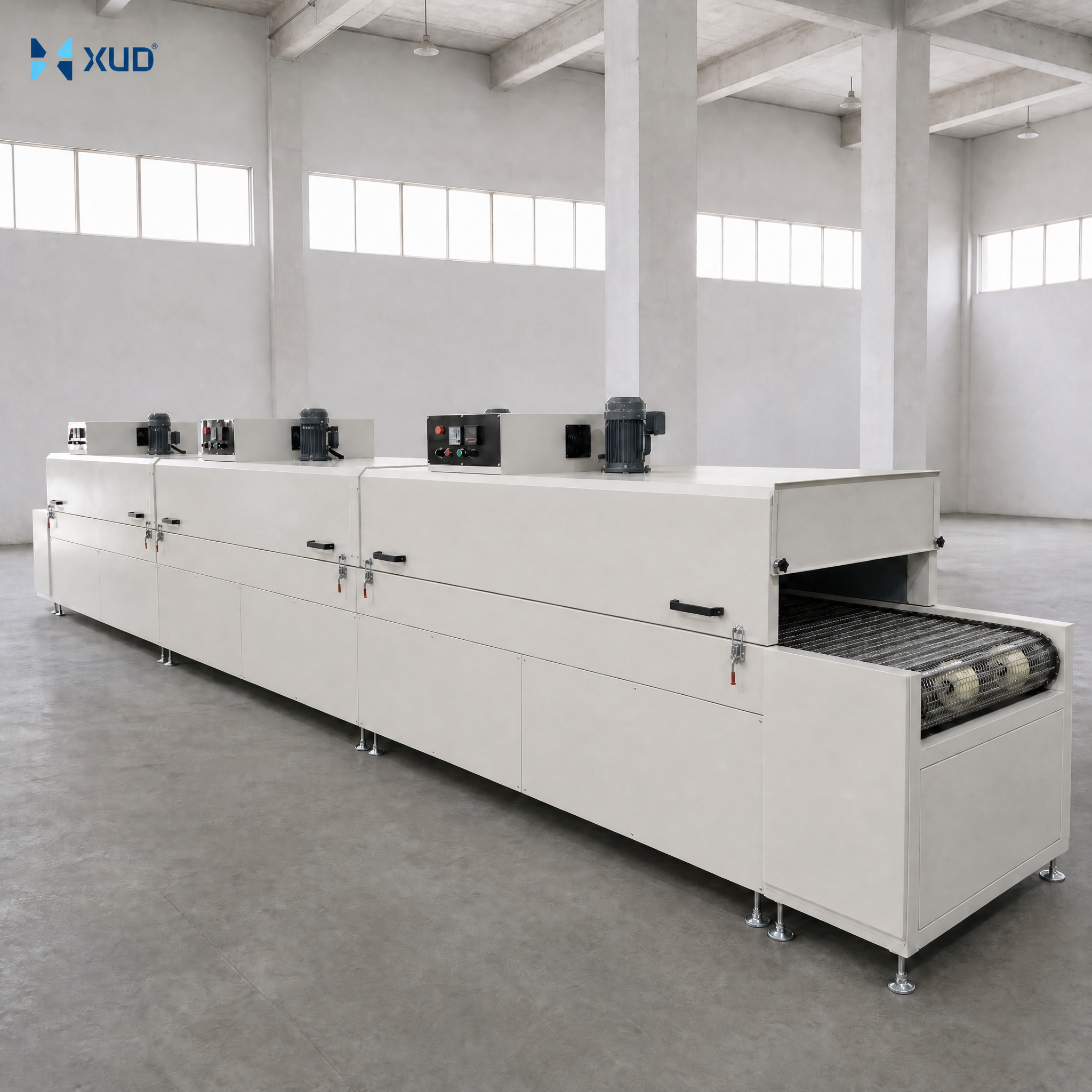
| Conveyor / Tunnel Oven | Continuous production lines & high-volume processing. Workpieces move in/out continuously via conveyor belt for non-stop production |
| Precision / Clean Oven | Applications with strict requirements on temperature fluctuation, cavity cleanliness and process repeatability, such as optical components and semiconductor device drying |
3. Which industries utilize industrial drying ovens?
3.1 Electronics and Electrical Manufacturing
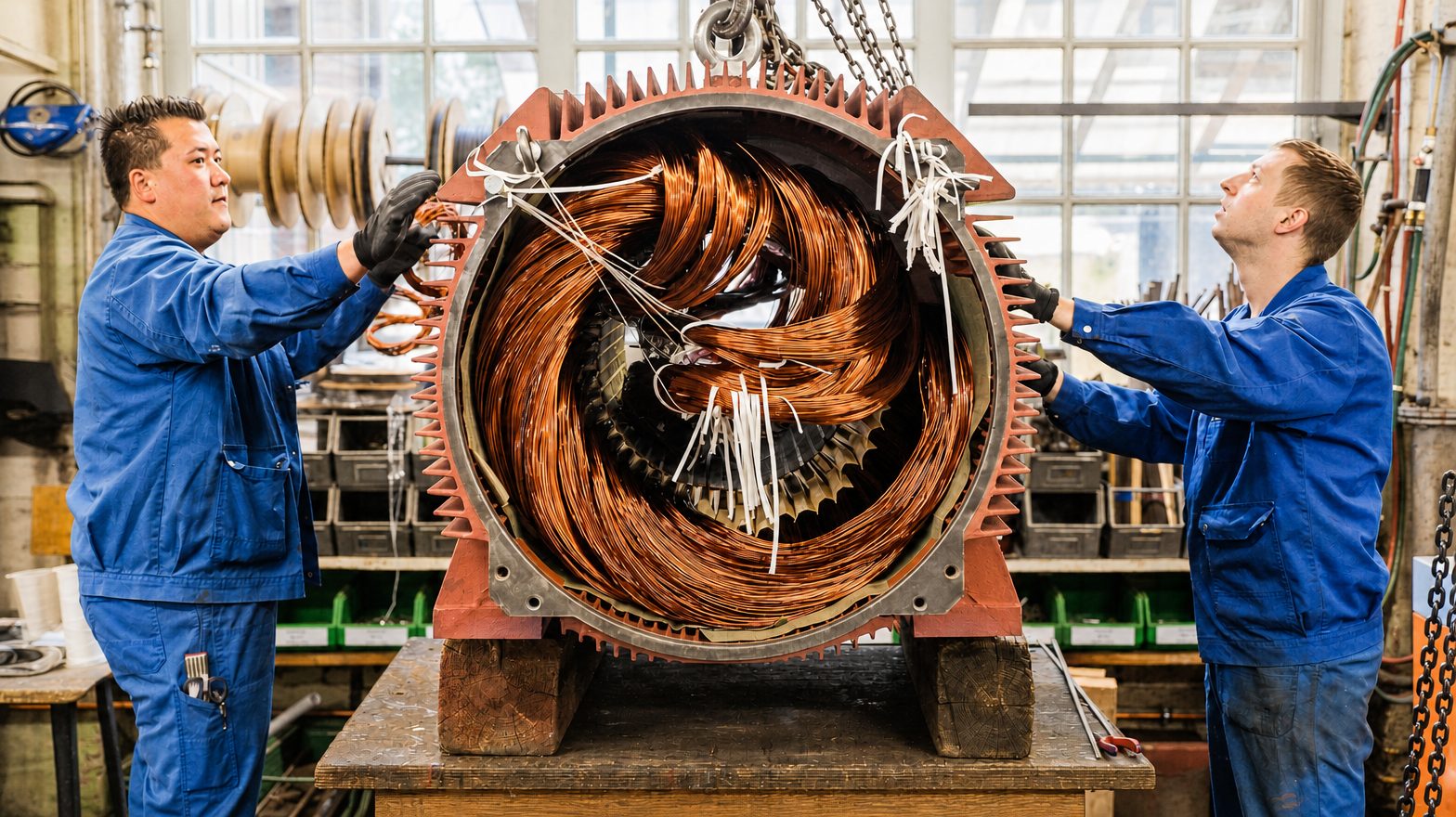
Common applications include the curing of solder mask inks on PCBs, moisture removal and drying of electronic components, and the drying of insulating varnish on motor windings.
3.2 Automotive, Hardware, and Metalworking
Key requirements include the drying of metal parts after degreasing, the curing of surface coatings, and low-temperature heat treatment of hardware products.
3.3 Plastics, Rubber, and Composite Materials
Industrial ovens are essential for the dehumidification and drying of plastic pellets, the secondary vulcanization of rubber, and the curing of carbon fiber/resin-based composite materials.
3.4 Printing, Coating, and Surface Treatment
Processes such as the drying of printing inks, the leveling and curing of applied coatings, and the drying of components following surface oxidation treatments all require a controlled heating environment.
4. How to Evaluate Industrial Oven Suppliers
4.1 Manufacturing Experience and Engineering Design Capabilities
Assess the supplier’s years in business, the experience of their core engineering team, and their track record with similar projects and processes in your industry. A high-quality supplier will not merely provide a list of technical specifications; instead, they will analyze your specific workpieces and process requirements to explain how the equipment’s airflow design, heating capacity, and temperature control strategy meet your production needs—rather than dismissing your concerns with a generic "this standard model will work for everything" response.
4.2 Customization Capabilities and OEM/ODM Services
Standardized ovens often meet only basic requirements; most industrial applications necessitate some degree of customization—such as chamber dimensions, shelving structures, temperature ranges, air circulation volume, control programming, or integration with automated systems. Manufacturers with in-house production capabilities can flexibly adjust configurations, whereas pure trading companies are typically limited to minor modifications of existing off-the-shelf products, which often results in poor process compatibility.
4.3 Quality Control Systems and Documentation
A reputable industrial drying oven supplier will provide comprehensive factory inspection records, including test reports on temperature uniformity (under no-load conditions), electrical schematics, operation and maintenance manuals, and relevant compliance certifications. Suppliers with rigorous quality control will conduct simulated load testing on every unit before it leaves the factory, rather than simply shipping the equipment immediately after assembly.
4.4 Warranty Policies, Spare Parts, and After-Sales Support
Clarify the warranty duration and scope, the lead times and costs for replacement parts (such as heating elements, temperature controllers, and fans), and whether the supplier offers on-site installation, commissioning, and operator training. Inquire about their response time for troubleshooting. Given that long-term operation may inevitably lead to technical issues, a slow after-sales response can cause production line downtime—resulting in losses that far exceed the value of the equipment itself.
4.5 Technical Communication and Consulting Expertise
A professional supplier will proactively ask for technical details—such as workpiece specifications, process requirements, and production capacity targets—before providing a quote, rather than simply offering a low price without understanding your needs. If a supplier promises that their equipment is "perfectly suitable" without first gaining a thorough understanding of your specific process, it is highly likely that compatibility issues will arise later. Take XUD Oven as an example: as an industrial oven manufacturer with years of industry experience, the company possesses its own production lines for sheet metal processing, assembly, and testing. It offers comprehensive, end-to-end services—ranging from solution design and custom manufacturing to installation and commissioning. Its product portfolio includes hot-air circulation ovens, high-temperature ovens, and precision ovens, all of which can be customized to meet specific customer process requirements.
5. What Factors Influence the Price of Hot Air Ovens?
5.1 Factors Affecting Oven Pricing
Effective chamber volume and overall physical dimensions;
Maximum operating temperature and temperature precision requirements;
Heating capacity, number of circulation fans, and airflow duct design;
Level of automation, conveyor systems, and customized configurations;
Additional costs such as packaging, shipping, on-site installation, and warranty services.
For instance, the price difference between a high-temperature oven and a standard-temperature oven of the same volume can exceed 100%.
5.2 Purchase Price vs. Total Cost of Ownership (TCO)
Lower-priced equipment often features compromises in insulation, heating elements, or fan components. This typically results in higher energy consumption during operation, an increased likelihood of malfunctions, and a shorter service life. Over time, the cumulative costs—including electricity, repairs, and losses due to downtime—will far outweigh any initial savings on the purchase price. When evaluating costs, it is essential to calculate the total cost of ownership over a 3–5 year period, rather than focusing solely on the initial acquisition price.
6. Why Choose XUD Oven as Your Industrial Drying Oven Supplier?
6.1 Serving a Wide Range of Industries
XUD Oven offers a diverse product portfolio—including standard hot-air circulation ovens, forced-convection ovens, high-temperature ovens, precision clean-room ovens, and continuous tunnel ovens—designed to meet the drying, baking, and curing requirements of sectors such as electronics, hardware, automotive, and composite materials.
6.2 Customized Equipment Solutions
Our engineering team tailors the chamber structure, airflow design, temperature control strategy, and loading configuration to your specific needs—factoring in the shape and dimensions of your workpieces, temperature requirements, production capacity goals, and facility environment. This ensures that the equipment integrates seamlessly into your existing production workflow, minimizing the costs associated with process adaptation.
6.3 Expert Consultation and Quotations
If you are looking for a reliable industrial drying oven supplier, please share your process requirements and production parameters with our technical team. We will evaluate the most suitable equipment solution for your needs and provide detailed technical specifications along with a comprehensive quotation.
7. Frequently Asked Questions
What factors should be considered when selecting a supplier for industrial drying ovens?
Key aspects to evaluate include engineering design capabilities, experience with similar projects in the industry, the level of customization offered, quality control systems, and the responsiveness of after-sales support. Do not base your decision solely on price.
How do I choose an industrial drying oven that suits my specific process?
First, define the material characteristics, process objectives (drying, baking, or curing), operating temperature, production capacity requirements, and any special operating conditions (such as explosion-proof, anti-corrosive, or cleanroom requirements). Then, select the appropriate type of oven—ideally by having the supplier’s technical team assess your needs and propose a solution.
Can industrial drying ovens be customized?
Manufacturers with in-house production capabilities can typically offer customization. This includes adjustments to chamber dimensions, temperature ranges, shelving structures, control programs, and integration with automated systems, all of which can be tailored to your specific production requirements.
What information is required to request a quote?
You should provide details such as the material and dimensions of the workpieces, the batch load size or daily production capacity, the target process temperature and drying duration, whether the materials contain solvents or corrosive components, the available power supply and site conditions at your facility, and any specific functional requirements.
Electric vs. Gas Industrial Oven: Operating Costs, Installation and Performance
Related Article
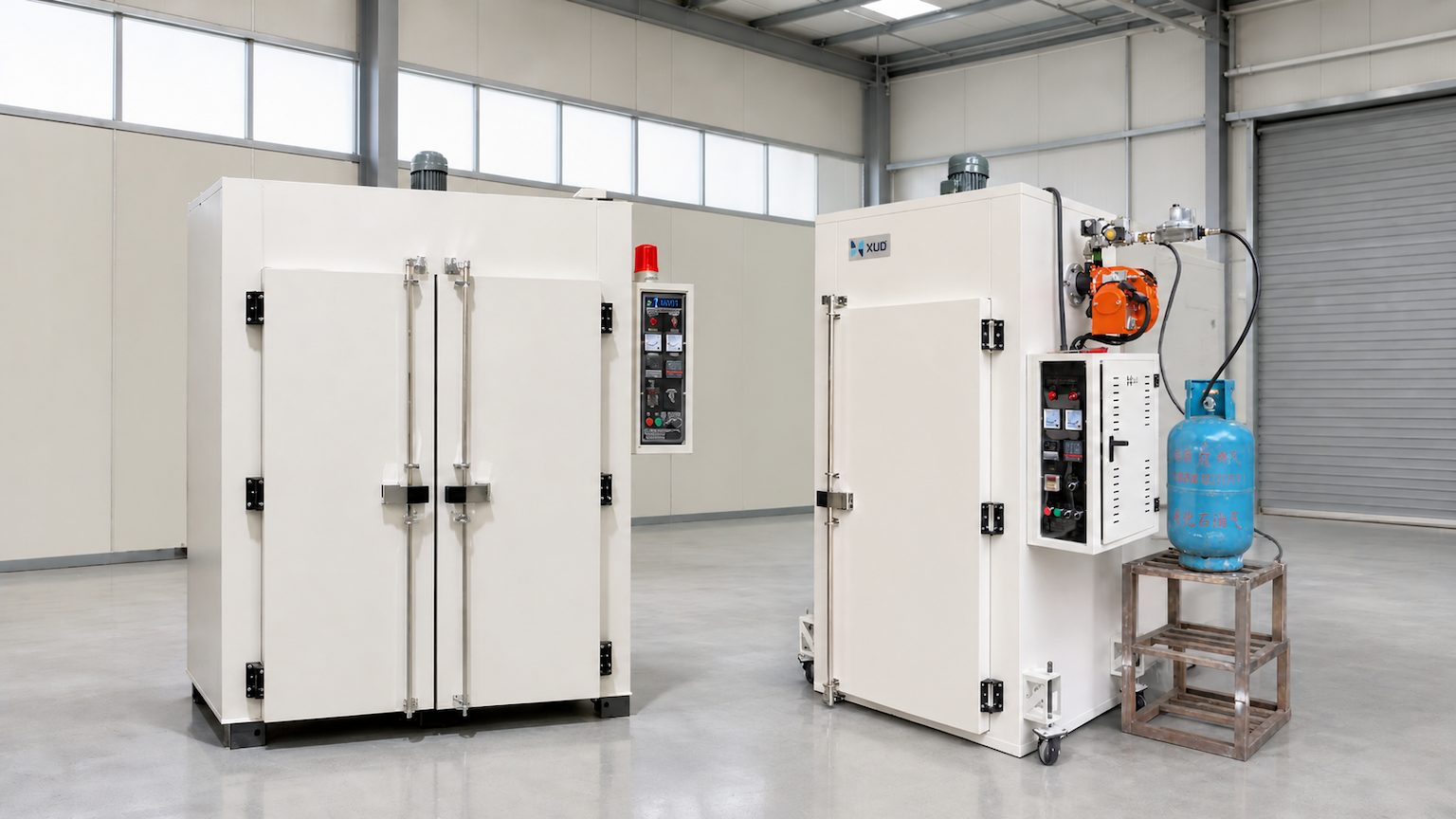
Compare electric and gas industrial ovens by energy costs, heating performance, installation requirements and safety considerations for industrial drying and heating applications.
Electric vs. Gas Industrial Oven: Operating Costs, Installation and Performance
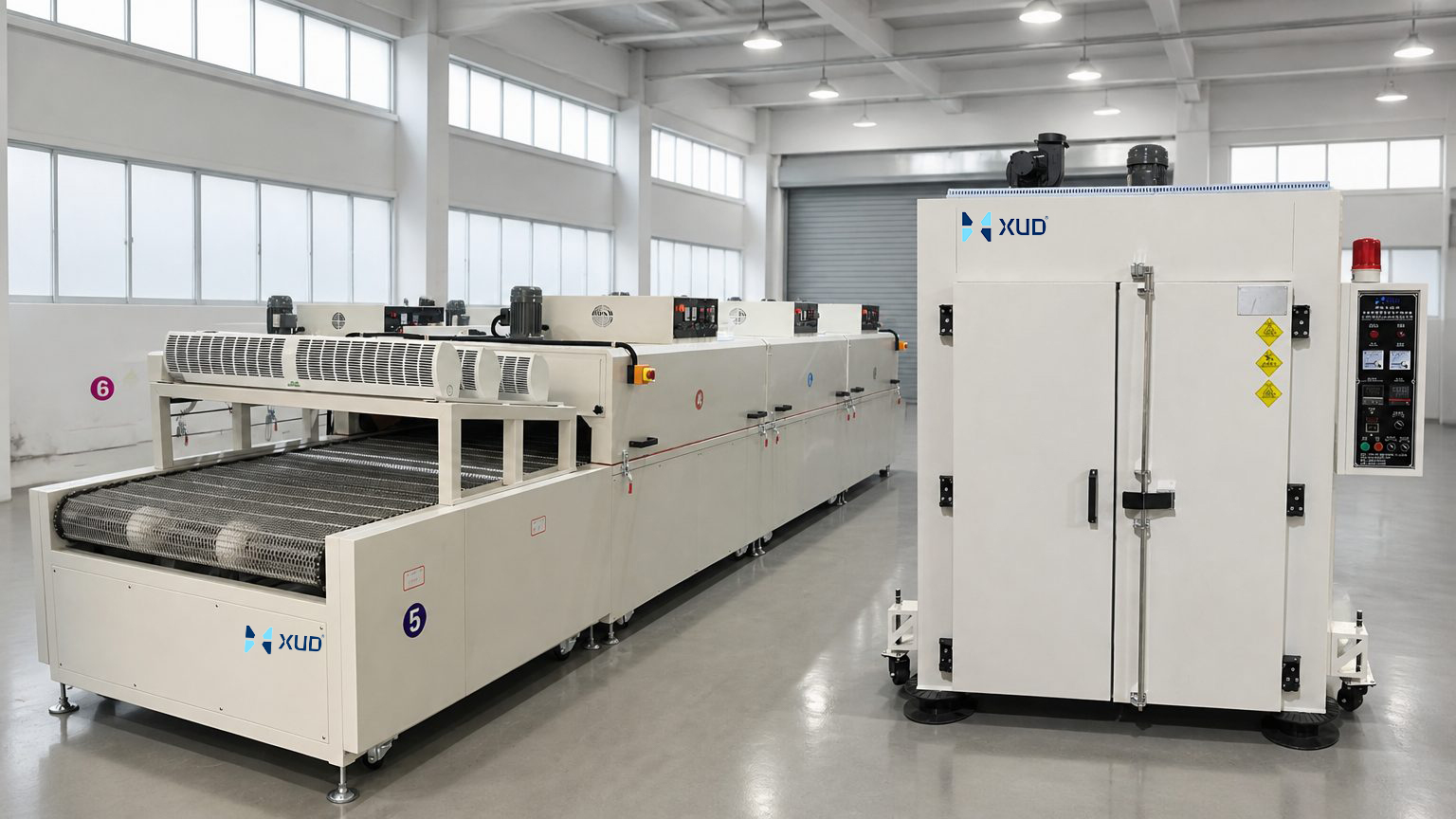
Compare batch and conveyor ovens by production volume, process flexibility, labor, floor space and operating costs to find the right industrial heating solution.
Batch Oven vs. Conveyor Oven: Which Is Better for Your Production Line?