Custom Industrial Oven: 9 Key Specifications to Define Before Requesting a Quote
When requesting quotes, many buyers provide only a "target temperature" and "approximate internal dimensions." This makes it impossible for manufacturers to accurately calculate costs, often leading to significant discrepancies in price quotes, repeated revisions to the proposed solution, or—in the worst-case scenario—equipment that fails to meet actual process requirements upon arrival. The suitability of a custom industrial oven depends entirely on clear technical specifications; the more precise the requirements, the better the final solution will align with your needs, offering superior value for money.
Table of Contents
- Define Workpiece Characteristics and Heat Treatment Process Objectives
- Calculating Chamber Dimensions and Actual Load Capacity
- Defining Temperature Ranges and Complete Heating Profiles
- Selection of Heating Method and Airflow Circulation Structure
- Determination of Loading Methods and Equipment Layout
- Defining Control System and Automation Levels
- Safety, Ventilation, and Compliance/Certification Requirements
- Confirming Facility Space, Utilities, and Installation Constraints
- Compiling a Comprehensive Inquiry Package
- FAQ
1. Define Workpiece Characteristics and Heat Treatment Process Objectives
1.1 What are the materials or components to be processed?
It is necessary to specify the material of the workpieces, their individual dimensions and weight, and their initial state—for example, whether they contain moisture, feature solvent-based coatings, or include corrosive or combustible volatile components.
1.2 Process objectives and required treatment outcomes
Different process objectives—such as drying, curing, preheating, aging, or heat treatment—require entirely different equipment design approaches. Even when the set temperature is the same (e.g., 200°C), the requirements can vary drastically: curing epoxy resin demands extremely high temperature uniformity, whereas preheating metal focuses more on heating efficiency.

2. Calculating Chamber Dimensions and Actual Load Capacity
2.1 Dimensions of Individual Workpieces vs. Total Batch Load Dimensions
When determining whether a workpiece can fit into the chamber, one must account for the space occupied by trays, fixtures, shelving, or carts, as well as the necessary ventilation gaps between workpieces and between the workpieces and the chamber walls—all of which consume internal chamber volume.
2.2 Batch Weight, Shelf Spacing, and Capacity Margins
The total weight per batch must be defined to verify the load-bearing capacity of shelves and the base plate. Additionally, it is essential to allow for adjustable shelf spacing and excess production capacity to accommodate future product iterations or increased throughput requirements.
3. Defining Temperature Ranges and Complete Heating Profiles
3.1 Maximum Design Temperature vs. Standard Operating Temperature
The standard operating temperature refers to the temperature used during routine production, while the maximum design temperature represents the equipment's safe upper limit; these two concepts must not be conflated. Operating the equipment consistently near its design limit will significantly shorten the lifespan of heating elements and insulation; therefore, a reasonable temperature margin should be factored into the equipment selection.
3.2 Temperature Uniformity and Requirements for Heating, Cooling, and Dwell Times
Specific requirements must be established regarding heating rates, dwell (holding) times, the potential need for forced cooling, and temperature uniformity. It is also necessary to clarify whether uniformity specifications apply to an empty or loaded chamber, as well as the specific testing standards to be used.
4. Selection of Heating Method and Airflow Circulation Structure
4.1 Electric Heating vs. Gas Heating
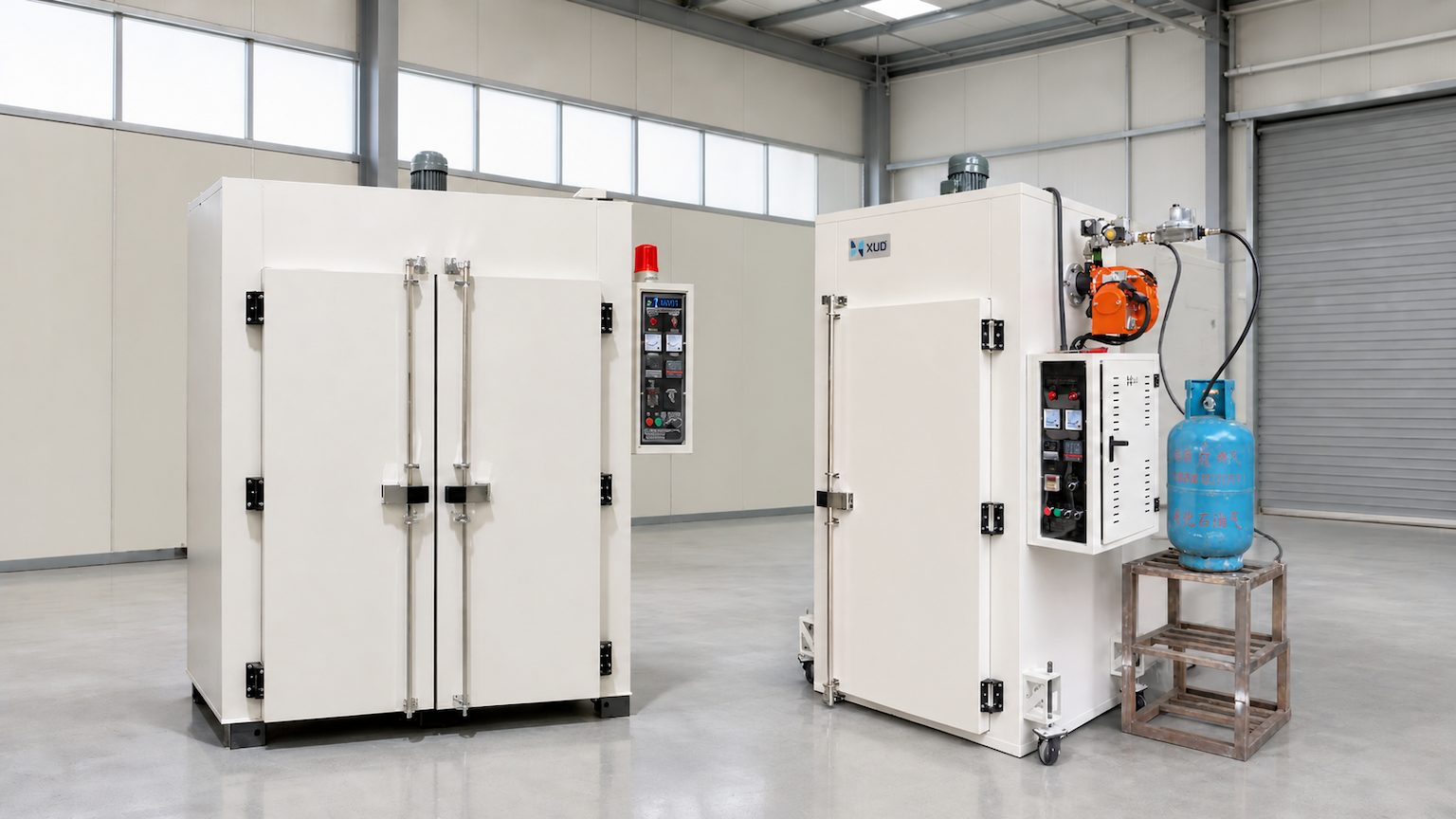
Electric heating offers high temperature control precision and is simple to install and maintain, making it suitable for processes requiring high thermal stability, such as precision curing or aging. Gas heating, by contrast, entails lower operating costs and is better suited for large-chamber, high-throughput, high-temperature applications. The choice should be based on a comprehensive assessment of local energy prices, required heating rates, and on-site utility infrastructure.
4.2 Design of Air Circulation, Exhaust Systems, and Heat Distribution
Different airflow configurations—such as horizontal or vertical air supply—are tailored to specific workpiece loading methods and heating requirements. Exhaust capacity must be matched to the volume of moisture or solvents released during the process.
5. Determination of Loading Methods and Equipment Layout
5.1 Shelf-based vs. Trolley-based Loading
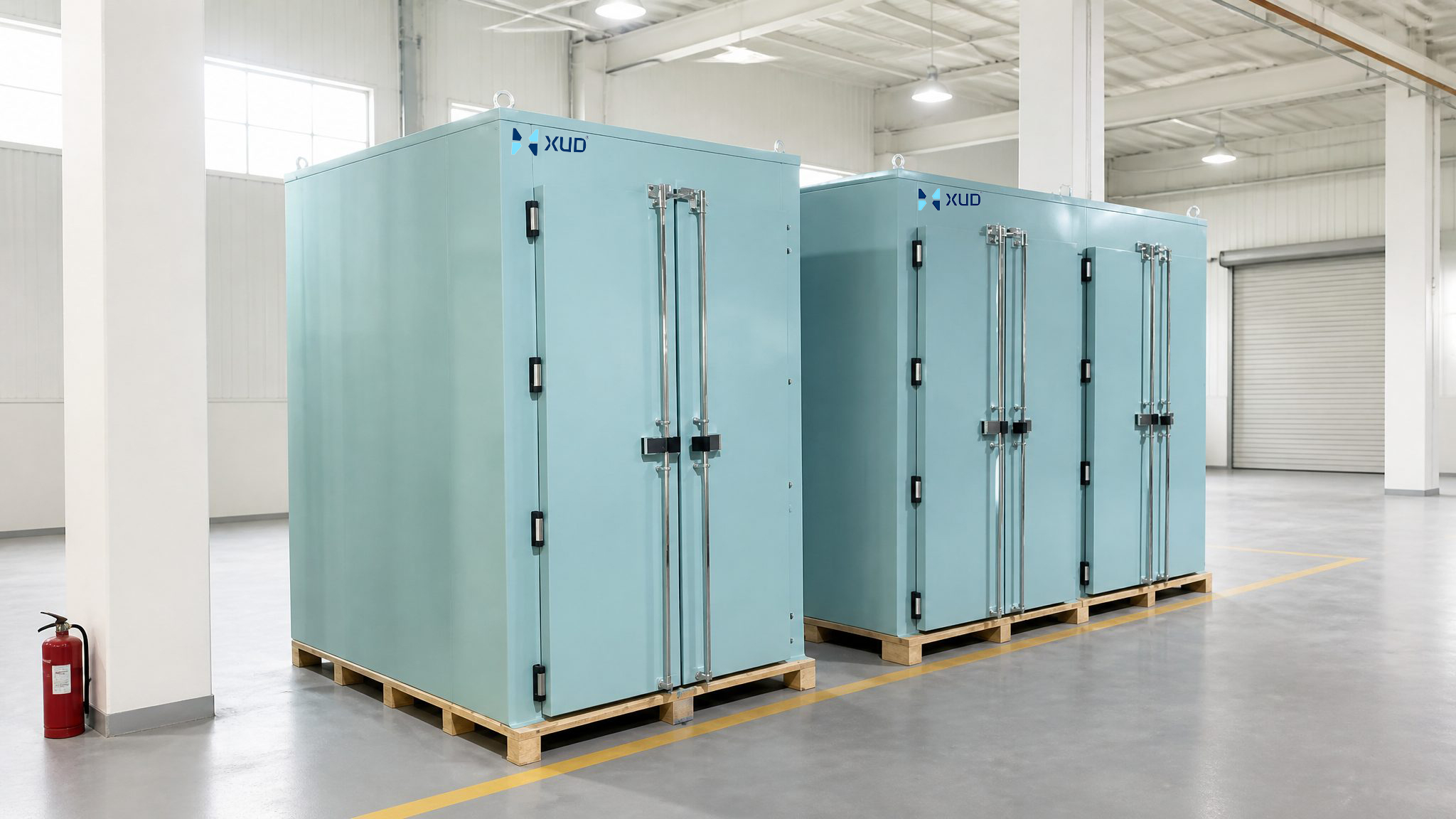
Manual shelf loading is ideal for small-batch, high-variety production, offering a compact footprint and lower costs. Trolley-based loading—where entire batches are moved in and out—ensures high efficiency and consistent batch quality; however, it requires larger door dimensions and more operational space, and the presence of the trolley must be accounted for in terms of its impact on airflow distribution.
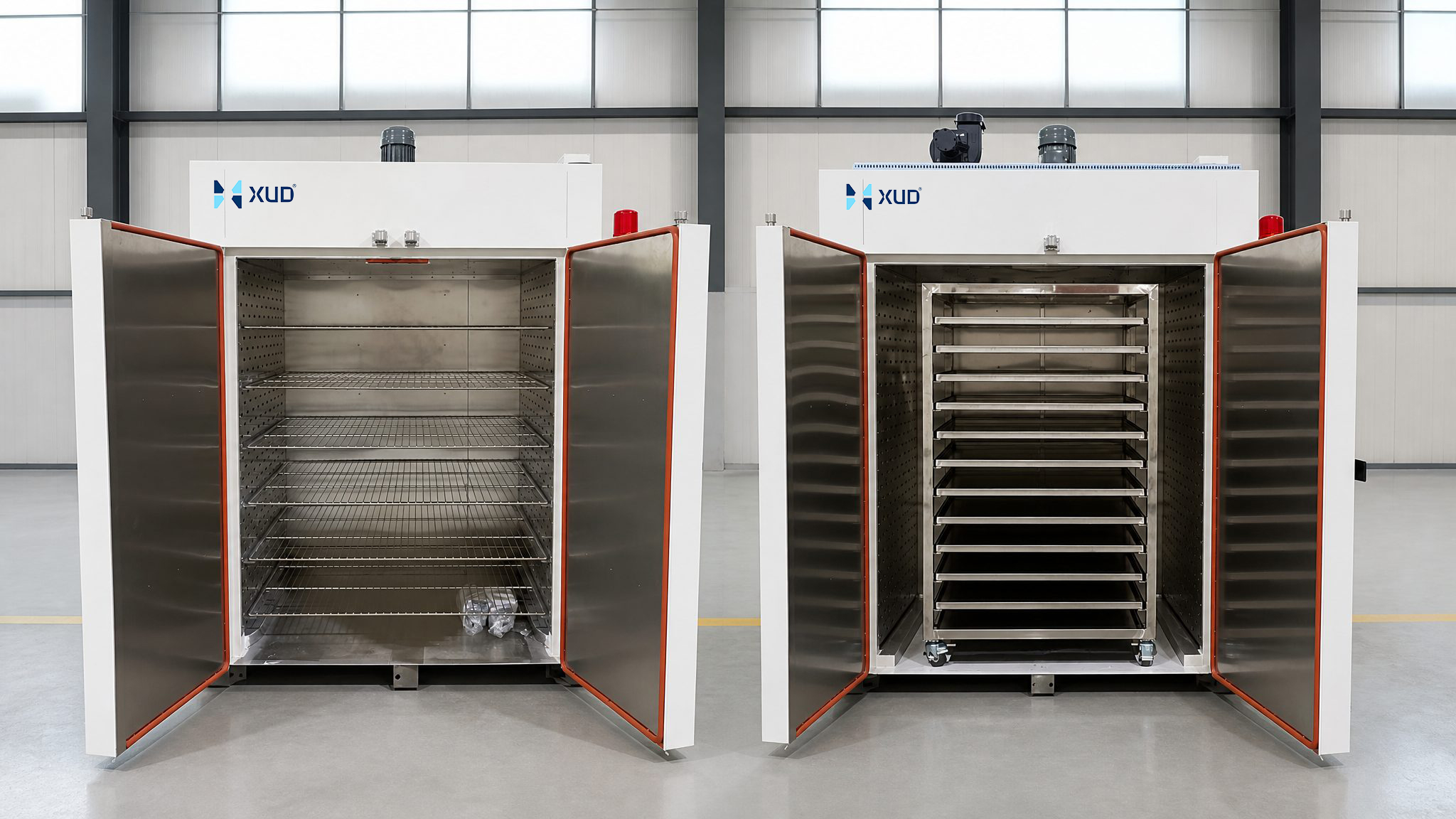
5.2 Single-door, Pass-through (Double-door), and Continuous Conveyor Configurations
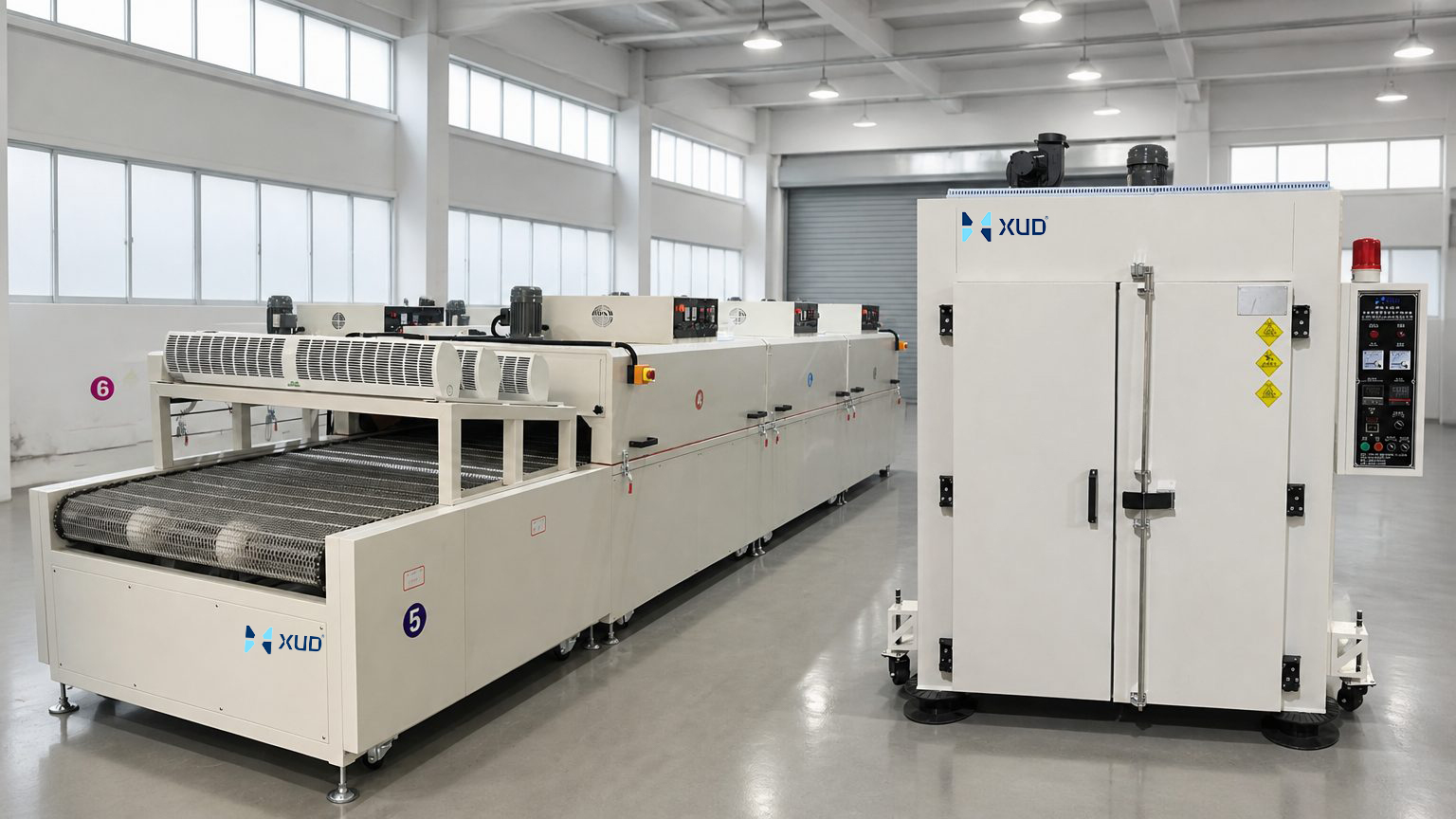
A single-door design is a versatile, general-purpose choice. A pass-through configuration (with doors at both ends) can be integrated into a production line to facilitate unidirectional material flow and minimize handling. Continuous tunnel ovens are designed for high-volume, assembly-line-style production.
6. Defining Control System and Automation Levels
6.1 Basic Temperature and Timer Control
Basic configurations feature a digital temperature controller and a timer, enabling simple temperature settings and scheduled start/stop operations. This setup is cost-effective and easy to operate, making it suitable for straightforward processes such as standard drying or preheating that do not require high levels of automation.
6.2 PLC + HMI, Recipe Management, and Data Traceability
For functions such as multi-stage programmed heating, storage of multiple recipes, fault alarms, and production data logging, a system incorporating a PLC and an HMI (touchscreen) is required. If the equipment is to be integrated into an automated production line, communication interfaces must also be provided. Industries such as automotive, medical, and aerospace typically require data traceability; these requirements should be clarified in advance to avoid the additional costs of future retrofitting.

7. Specifying Safety, Ventilation, and Compliance/Certification Requirements
7.1 Overtemperature Protection and Safety Interlocks
Standard configurations include an independent overtemperature protector and an emergency stop button. Additional safety interlocks—such as automatic power cutoff upon door opening or system shutdown in the event of a fan failure—should be selected based on the specific risk level of the process. When handling flammable or explosive materials, specialized safety features, such as explosion-proof pressure relief mechanisms and combustible gas detection systems, must be incorporated.
7.2 Ventilation Systems and Process-Specific Risk Assessment
While standard moisture-removal or exhaust systems may suffice for routine operations, processes involving volatile substances—such as solvents or oil mists—require a specialized ventilation design and a dedicated risk assessment based on the safety parameters of the materials involved. Standard ventilation configurations cannot be applied directly in such cases.
7.3 Export Markets and Certification Requirements
For export projects, the target market must be identified in advance (e.g., CE certification for the European Union or UL certification for North America), as different regions have distinct regulatory directives that dictate specific design standards.
8. Confirming Facility Space, Utilities, and Installation Constraints
8.1 Available Facility Space and Equipment Access Routes
Specify the dimensions (length, width, and height) of the designated installation area, as well as the dimensions of workshop entrances, elevators, and passageways, to ensure the equipment can be moved into position without obstruction. For overseas projects, consider container transport size limitations to avoid significant cost increases due to oversized or overweight cargo.
8.2 Utility Connections: Power, Gas, and Exhaust
Define the on-site power supply specifications (voltage, frequency, phase, and available capacity). If gas heating is selected, provide details on the gas type, supply pressure, and connection points. Additionally, confirm the location and routing of exhaust duct connections so the manufacturer can align the equipment’s interface design accordingly.
9. Compiling a Comprehensive Inquiry Package for Industrial Ovens
A complete inquiry package is essential for obtaining accurate quotes and viable technical solutions. It is recommended to organize your documentation according to the following list:
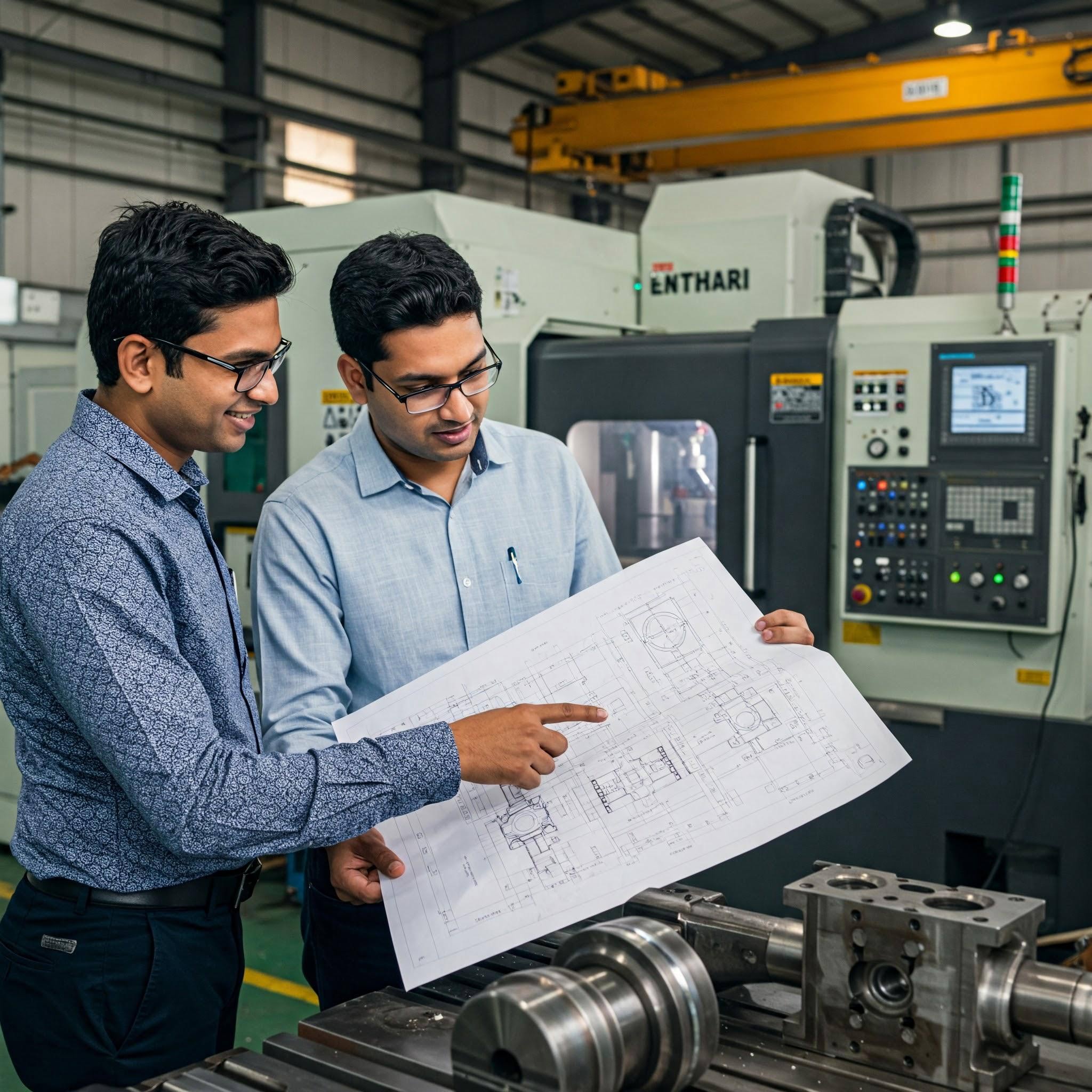
- Workpiece Details: Product drawings, dimensions and weight per unit, photographs, material properties, and initial state.
- Capacity Requirements: Batch load quantity/weight, or required throughput (per hour/day).
- Process Requirements: Heat treatment objectives, complete temperature profile, and temperature uniformity standards.
- Loading Method: Preferred loading configuration (e.g., shelving, carts/trolleys, or continuous/conveyor-based).
- Configuration Requirements: Preferred heating energy source, level of automation, and safety/compliance standards.
- Site Conditions: Available floor space, utility parameters, and equipment access routes.
- Commercial Requirements: Budget range, expected delivery timeline, target market, and required certifications or technical documentation.
FAQ
1. What information is required for customizing an industrial oven?
You should provide details such as the material, dimensions, and weight of the workpieces; the heat treatment process objectives and temperature profiles; the required capacity per batch and loading method; on-site utility and space constraints; as well as any specific requirements like compliance certifications or automation needs. The more comprehensive the information provided, the more accurate the proposed solution and price quote will be.
2. What is the lead time for a custom industrial oven?
For standard custom-engineered industrial ovens, the typical lead time is 4–8 weeks. For projects involving complex configurations—such as explosion-proof designs, specialized automation, or export-related certifications—the lead time is generally 6–12 weeks.
3. Can I choose between electric or gas heating for a custom oven?
Yes, both heating methods are available as options for your custom oven.
Hot Air Oven Temperature and Time
How to Choose a Reliable Industrial Drying Oven Supplier?
Related Article