Batch Oven vs. Conveyor Oven: Which Is Better for Your Production Line?
When investing in industrial heating equipment, one question comes up more than any other: should you go with a batch oven that loads and processes one load at a time, or a conveyor oven that runs parts continuously through a heated tunnel? It’s not a trick question—and there’s no one-size-fits-all winner. The right choice depends on your production volume, part variety, process requirements, and long-term growth plans. At Dongguan Xinyuanda Machinery, we’ve helped hundreds of manufacturers work through this decision, so let’s break it down with real-world factors, not marketing fluff.
What Is a Batch Oven?
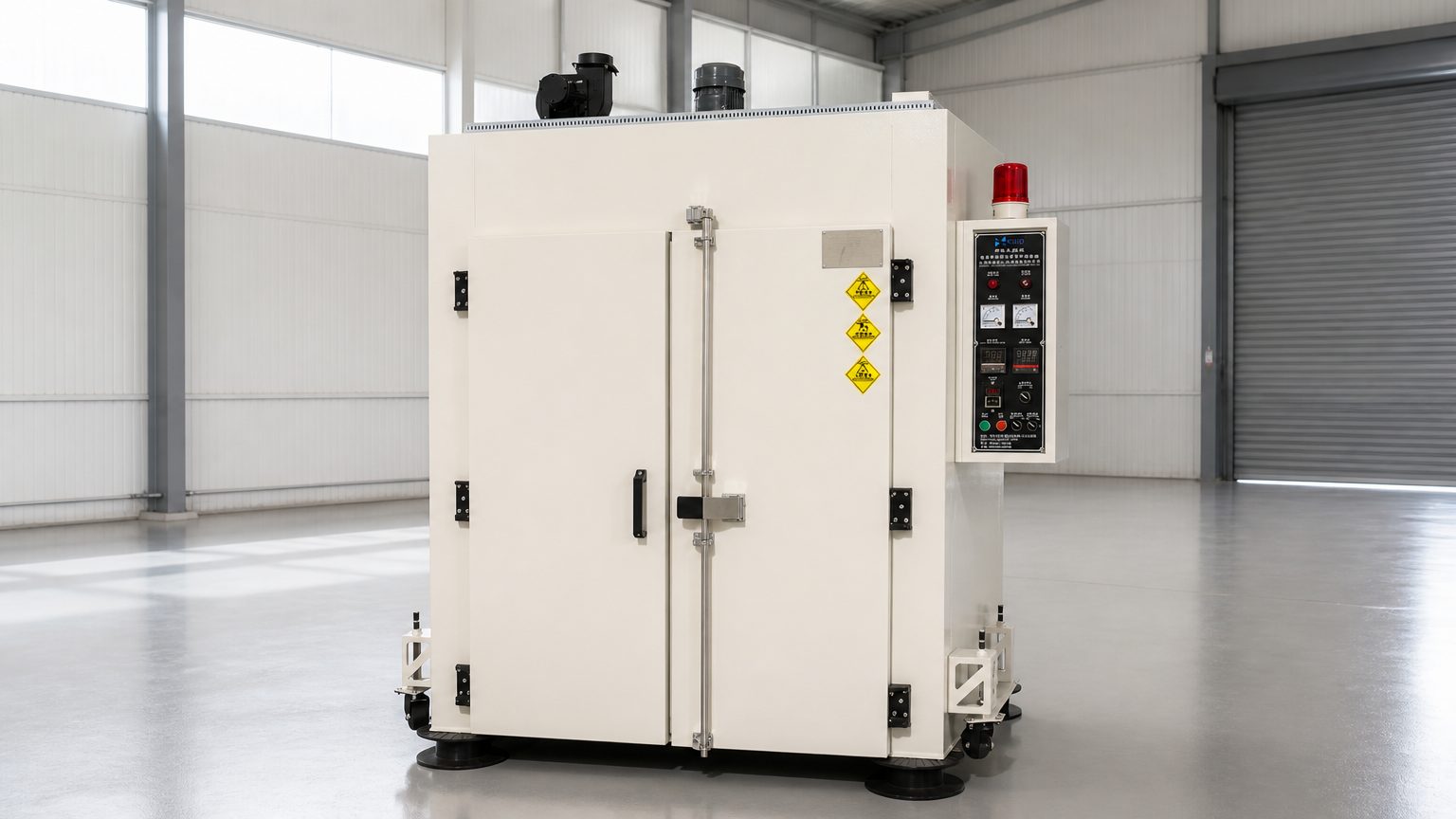
A batch oven—often called a cabinet or box oven—processes parts in discrete loads. You load a batch, close the door, run a complete heat cycle (ramp-up, soak, cool-down), then unload before the next batch begins. Industrial batch ovens come in single-door, double-door, walk-in, and truck-in configurations, with capacities ranging from a few cubic feet to entire room-sized chambers.
Where batch ovens shine:
- High-mix, low-to-medium volume production
- Products requiring unique temperature profiles per batch
- Processes that need strict batch traceability (e.g., aerospace, medical components)
- Batch drying oven applications for coatings, curing, and moisture removal
The tradeoff is straightforward: every cycle includes load/unload dead time. If you’re running 20 batches a day, that idle time adds up fast.
What Is a Conveyor Oven?
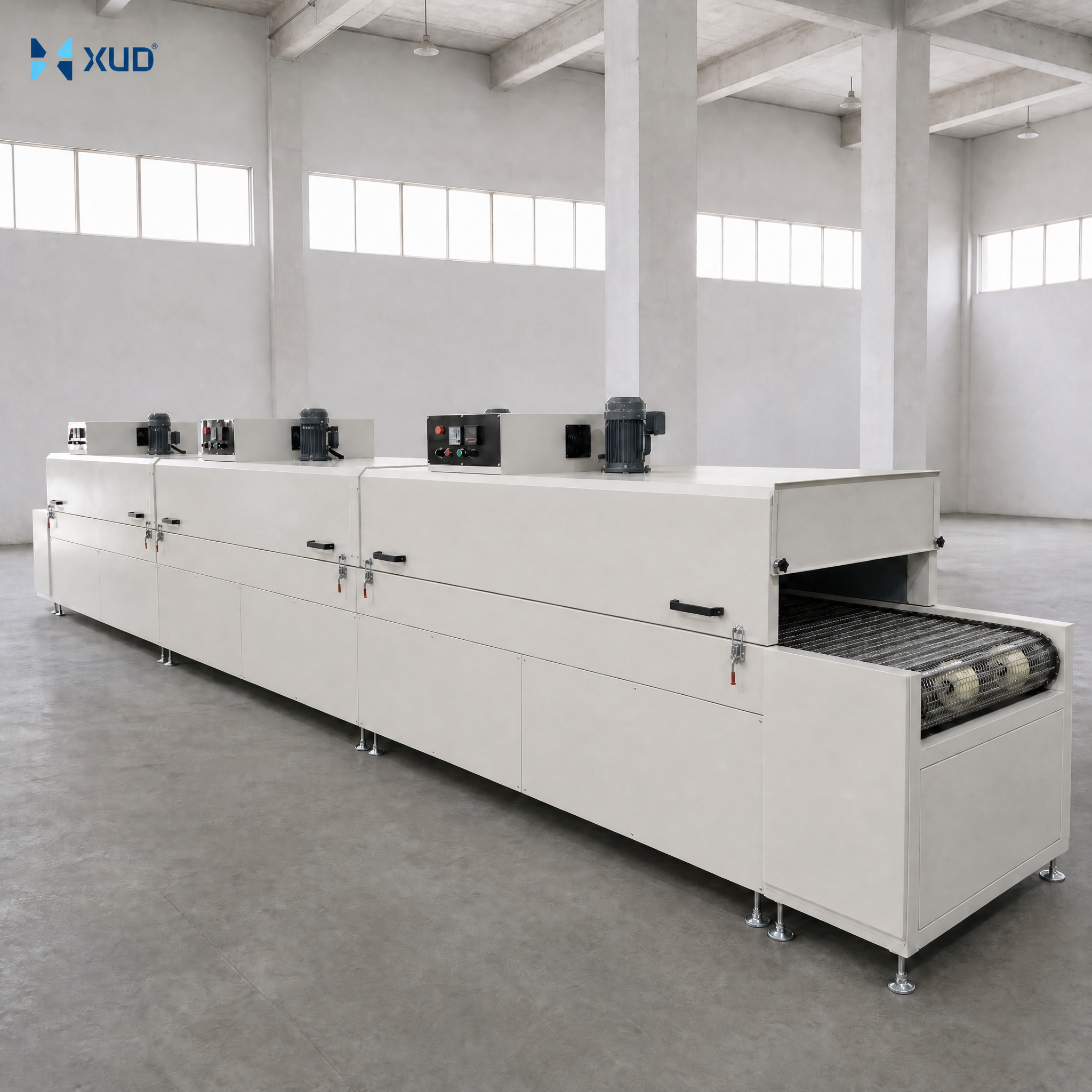
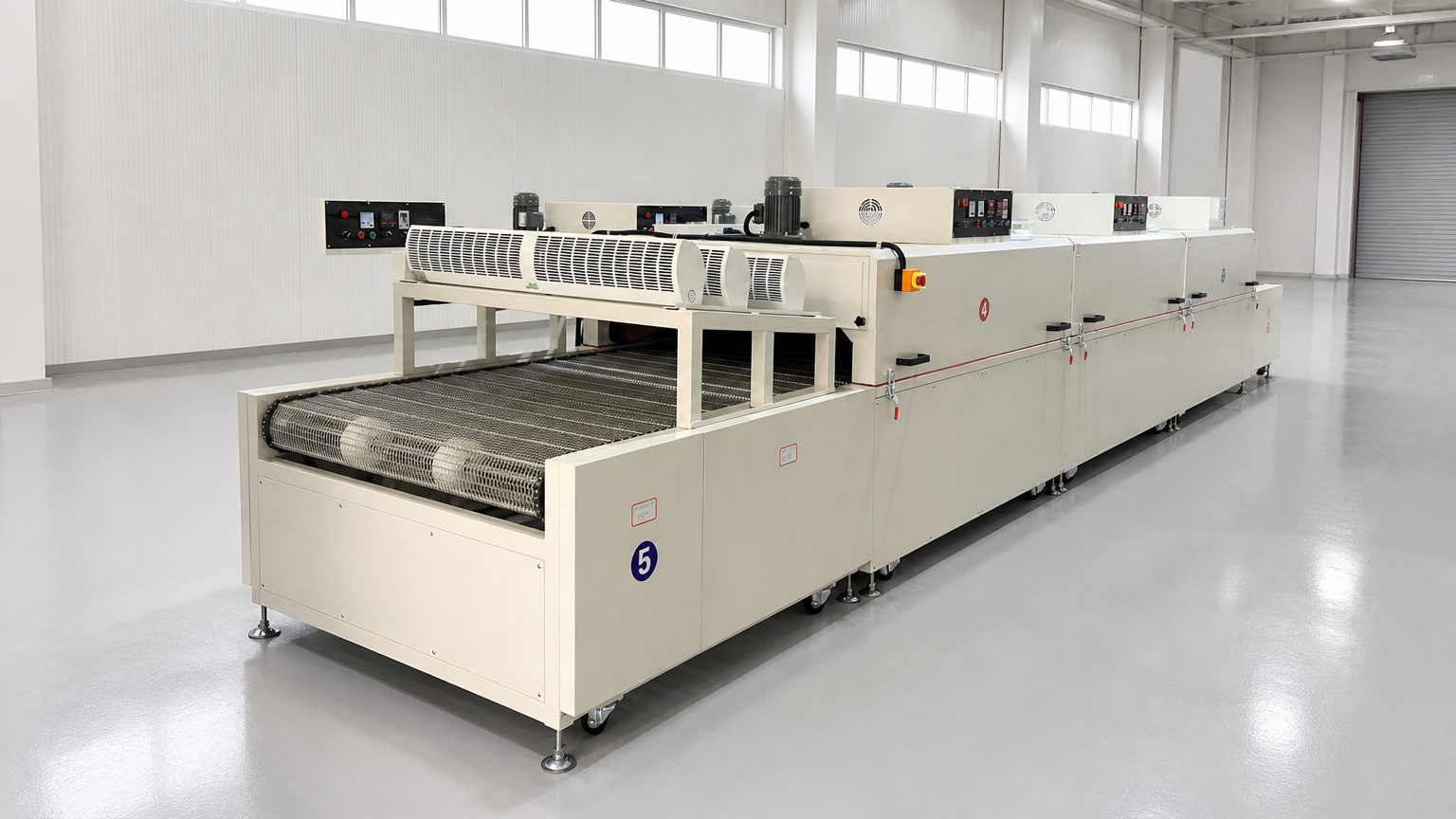
A conveyor oven (also called a continuous oven system or tunnel oven) moves parts on a belt, chain, or overhead conveyor through one or more heated zones. Parts enter at one end, spend a controlled amount of time in the heat zone, and exit at the other—no stopping, no opening doors mid-cycle.
Where conveyor ovens shine:
- High-volume, repeatable production with steady takt time
- In-line integration with upstream/downstream processes
- Consistent, repeatable results for identical parts
- 24/7 operation with minimal manual intervention
The main constraint? Flexibility isn’t its strong suit. Changing part sizes or temperature profiles often requires conveyor speed adjustments, zone reconfiguration, or longer changeover times. Product variety and conveyor design must be planned upfront.
Batch Oven vs. Conveyor Oven: Key Differences
Let’s compare the two across the factors that actually impact your bottom line.
| Factor | Batch Oven | Conveyor Oven |
|---|---|---|
| Production mode | Discrete cycles | Continuous flow |
| Product flexibility | High—easy recipe changes per batch | Lower—optimized for steady-state runs |
| Labor requirement | Higher—manual loading/unloading per batch | Lower once automated in-line |
| Floor footprint | Compact vertical footprint per unit | Longer horizontal layout |
| Process traceability | Excellent—batch-by-batch records | Continuous, but per-part tracking needs extra systems |
| Energy profile | Peak-heavy, idle time between batches | Steady-state, lower door-opening heat loss |
A quick note on energy: it’s commonly assumed conveyor ovens are always more efficient, but that’s only true at high utilization. A batch oven running at 80% load factor can outperform a half-empty conveyor line running all day. The math matters.
Which Oven Is Better for Your Production Volume?
Low volume, high mix (under 500 parts/day): Batch is almost always the answer. The flexibility to switch temperatures, racking, and part types between loads outweighs any efficiency gains from continuous processing.
High volume, steady output (2,000+ parts/day): A conveyor oven system typically delivers faster payback. Labor savings alone often justify the investment within 12–24 months.
Middle-ground scenarios: This is where it gets interesting. For example, a hypothetical contract manufacturer running 800 parts/day across three product lines might compare a dual-door batch oven (staggered loading to reduce idle time) against a custom conveyor with quick-change fixtures. There’s no universal answer—you run the numbers.
How to Calculate the Total Cost of Ownership
Don’t just compare sticker prices. Total cost of ownership (TCO) paints the real picture:
- Capital cost: Equipment, installation, ductwork, and electrical upgrades
- Labor cost: Loading/unloading time × hourly rate × annual operating hours
- Energy cost: kW consumption × utility rate, factoring in idle time and load factor
- Maintenance: Heating elements, seals, conveyor motors, belts, and downtime
- Opportunity cost: Throughput limits and scalability constraints
A simple framework: estimate annual production output, divide by total annual cost, and compare output per dollar spent. That figure tells you more than any spec sheet.
Questions to Ask Before Choosing an Industrial Oven
- How many parts do you need to process per hour, per shift?
- What are the part dimensions, weight, and loading method (racks, trays, fixtures)?
- Do you run multiple temperature profiles, or one standard recipe?
- Will loading/unloading be manual, automated, or semi-automated?
- Do you expect production volume to change in the next 3–5 years?
Frequently Asked Questions
Is a batch oven cheaper than a conveyor oven? In most cases, yes—on upfront purchase price. But at high production volumes, the conveyor oven’s lower per-unit labor and energy cost can make it cheaper over time. Run a 3-year TCO comparison to be sure.
Which oven is better for small-batch production? An industrial batch oven is generally better for small-batch work, especially with frequent product changeovers.
Can a batch oven be used for high-volume manufacturing? It can, but it reaches a ceiling. Multiple batch ovens run in parallel can scale output, but at some point a continuous oven system becomes more efficient and cost-effective.
When should a company invest in a continuous oven? When production volume is stable and high enough that labor savings, throughput gains, and consistent quality justify the higher initial investment and longer setup lead time.
Ready to Find the Right Oven for Your Line?
Whether you’re leaning toward a batch drying oven for flexible production or a continuous tunnel oven for high output, the right choice comes down to your specific numbers and process needs.
Explore our full range of Industrial Batch Ovens and Industrial Tunnel Ovens on our site, or reach out directly for a custom comparison based on your actual production data.
Contact Us
WhatsApp: +86 18998007076
Email: annalan@xudoven.com
Dongguan Xinyuanda Machinery Equipment Co., Ltd.
industrial heating solutions built around your production reality.
Industrial Tunnel Ovens for Continuous Production: Design, Applications and Selection
Related Article