Vacuum Bagging Process for Carbon Fiber Composite Panels
Vacuum Bagging Process for Carbon Fiber Composite Panels
Bagging Materials, Vacuum Connections, Leak Checks and Oven Curing
In This Guide
1. What Is Vacuum Bagging in Carbon Fiber Manufacturing?
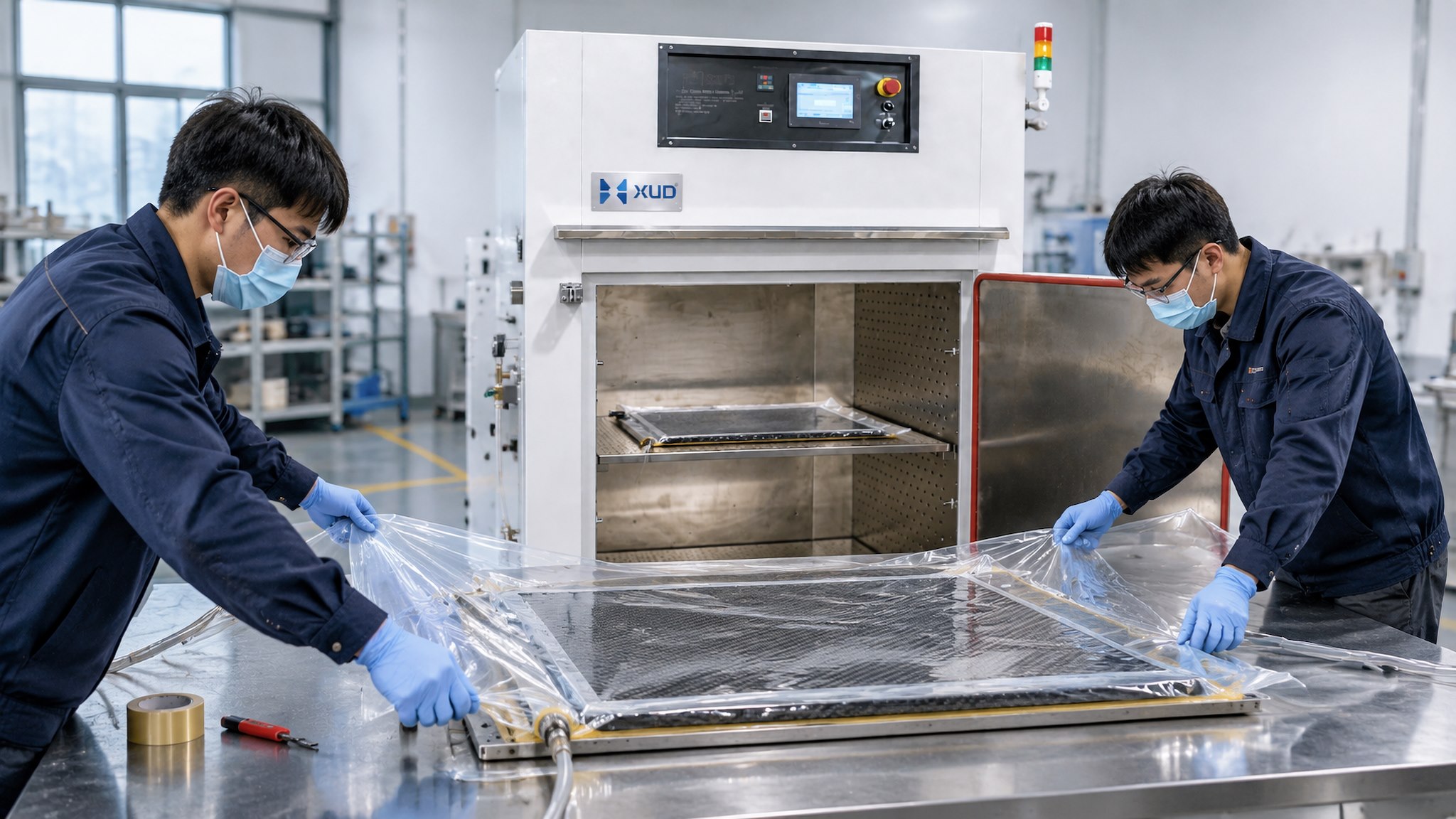
Vacuum bagging is a composite manufacturing technique used to compact a carbon fiber layup against a mold or tooling surface. The prepared laminate is covered with a sealed flexible bag, and air is removed through a vacuum line connected to a pump.
As the pressure inside the sealed bag decreases, the pressure difference between the bag interior and the surrounding environment pushes the bag against the laminate and mold. This helps consolidate the material and remove trapped air when the process is correctly designed.
For carbon fiber composite panels, vacuum bagging is useful because it helps maintain contact between the laminate and tooling surface over a relatively large area.
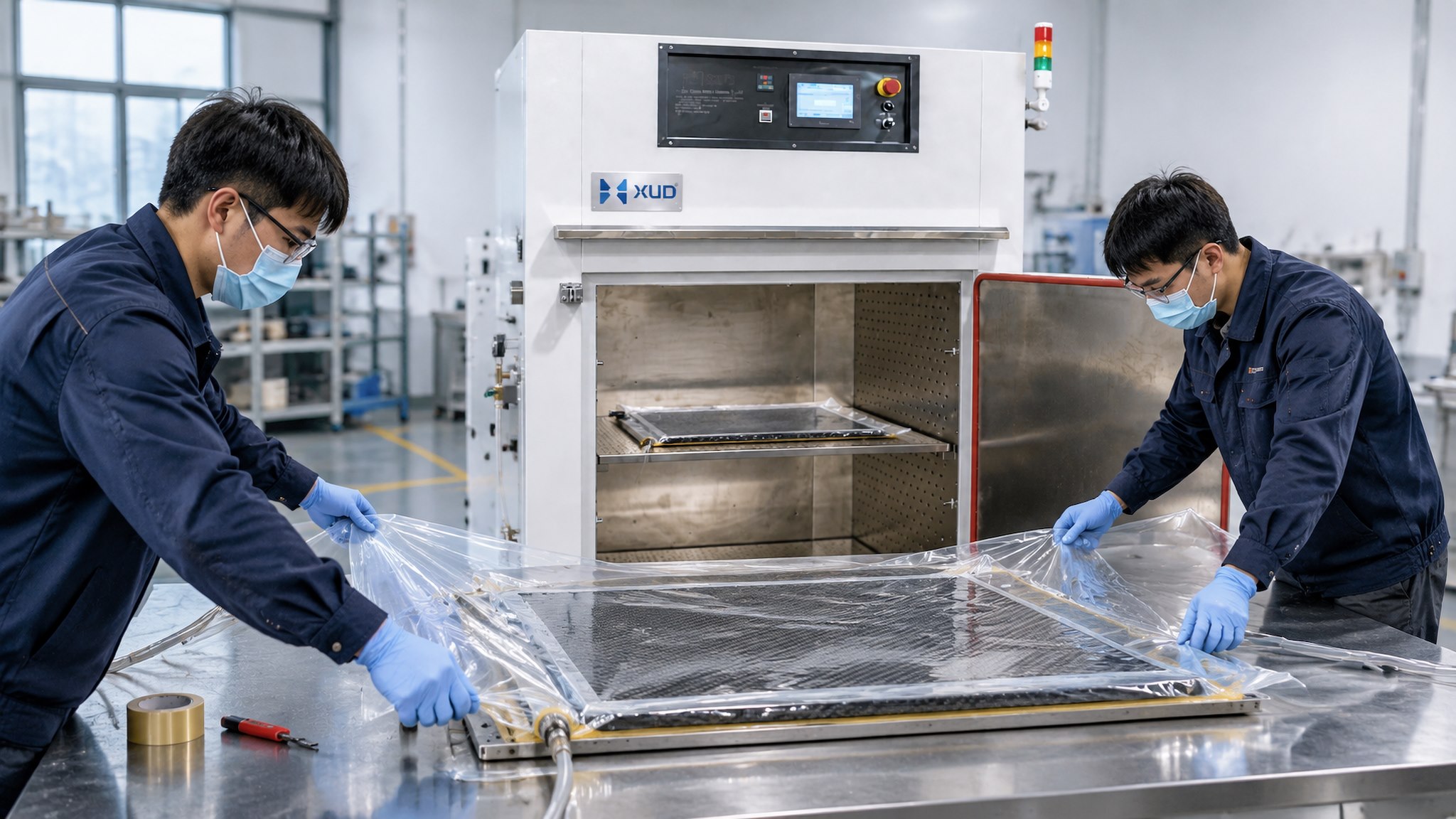
Vacuum bagging is a consolidation method, not a curing method by itself. The resin still needs to follow its specified temperature and time cycle. Whether oven-based vacuum bagging is suitable depends on the prepreg or resin system.
Successful bagging depends on more than whether a vacuum pump is running. Bag sealing, material arrangement, air paths, tooling condition and process timing all influence the result.
For an overview of prepreg curing requirements, read Part 01: How to Cure Carbon Fiber Prepreg in an Industrial Oven.
2. Vacuum Bagging Materials and Their Functions
A vacuum bagging assembly normally contains several materials. Each has a different function, and the correct combination depends on the laminate, resin system, tooling and approved manufacturing procedure.
| Material | Main Function | What to Check |
|---|---|---|
| Vacuum Bag Film | Creates a sealed enclosure around the layup | Temperature rating and flexibility |
| Sealant Tape | Seals the bag around the tooling perimeter | Adhesion and temperature compatibility |
| Release Film | Controls contact between the laminate and adjacent materials | Perforation and resin-release requirements |
| Breather Material | Provides an air path toward the vacuum outlet | Continuity and placement |
| Vacuum Port and Hose | Connects the bagging assembly to the vacuum system | Sealing and temperature compatibility |
| Mold or Tooling | Supports and defines the part geometry | Surface condition and thermal compatibility |
Why material compatibility matters
Bagging consumables must be suitable for the actual curing temperature and resin system. A material that performs well at room temperature may not maintain its properties during heating.
Sealant tape, bag film and vacuum hoses should be checked against the process temperature. If a material softens, loses adhesion or becomes unsuitable during heating, the vacuum system may not maintain the intended condition.
Do not select bagging materials only by price or appearance. Check the consumable supplier's technical specifications and compatibility recommendations.
3. Step-by-Step Vacuum Bagging Process for Composite Panels
The following workflow provides a general reference for vacuum bagging flat carbon fiber composite panels. The actual layup sequence and consumable arrangement must follow the material supplier's instructions and the manufacturer's validated process.
Clean and inspect the mold or tooling. Check for dust, foreign particles, surface damage and contamination that could affect the panel finish.
Place the prepreg plies according to the specified orientation and stacking sequence. Avoid wrinkles, unwanted overlaps and trapped foreign materials.
Install the specified release materials, breather layers and other consumables. Ensure that the intended air paths are not unintentionally blocked.
Place the bag film over the assembly and seal its perimeter using compatible sealant tape. Allow sufficient bag material for the panel geometry.
Connect the bagging port to the vacuum hose and external pump. Check the hose, fittings and connections for secure installation.
Apply vacuum according to the approved procedure. Observe the bag as it conforms to the layup and tooling. Check for leaks, bridging and blocked air paths.
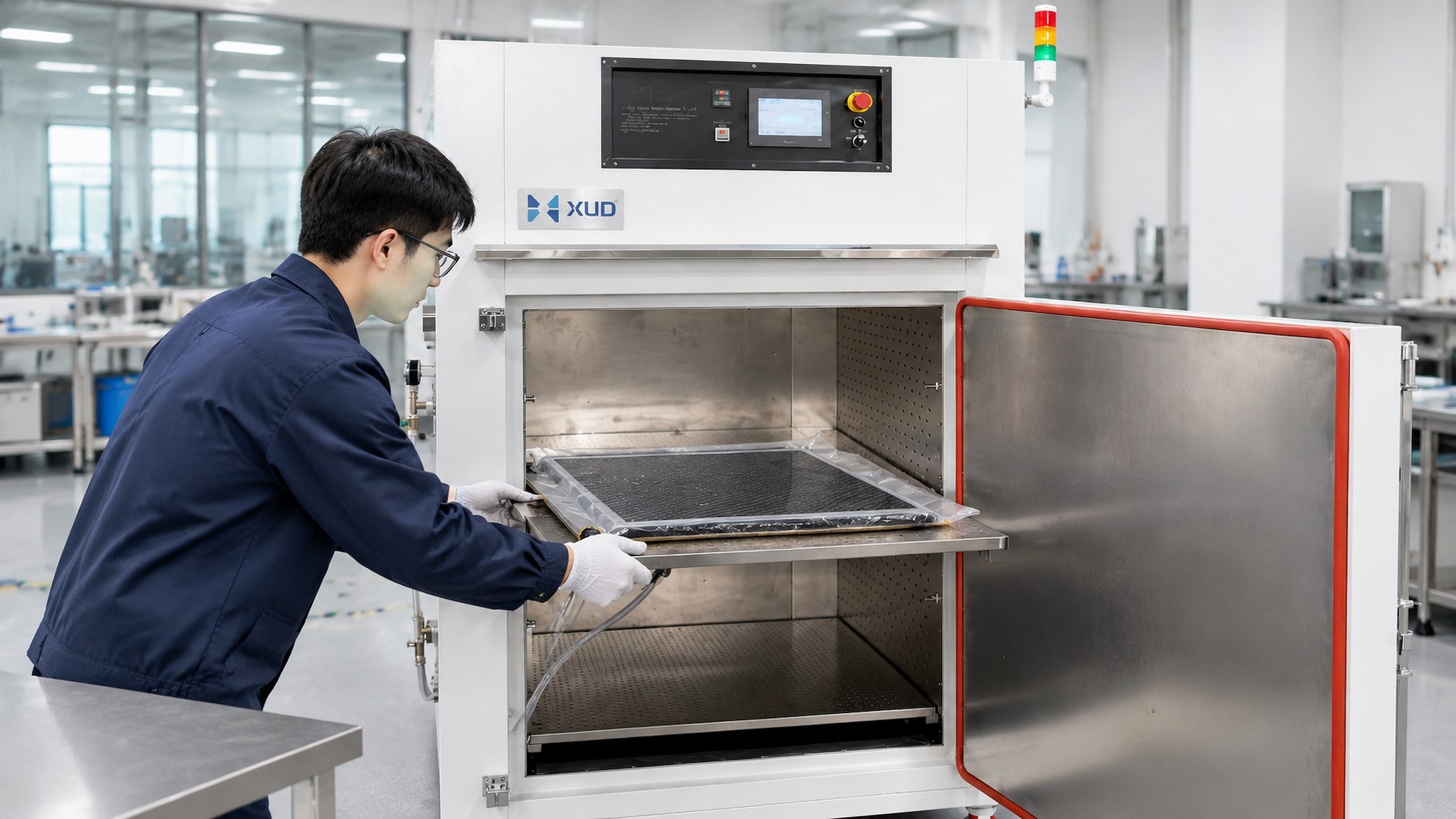
Starting the oven before the bagging assembly has been checked can make defects harder to correct. Complete the required leak and setup checks before beginning the heating cycle.
4. Vacuum Connections in an Industrial Oven
When vacuum bagged panels need to be cured in an industrial oven, the vacuum system must remain connected while the oven provides the required heating environment.
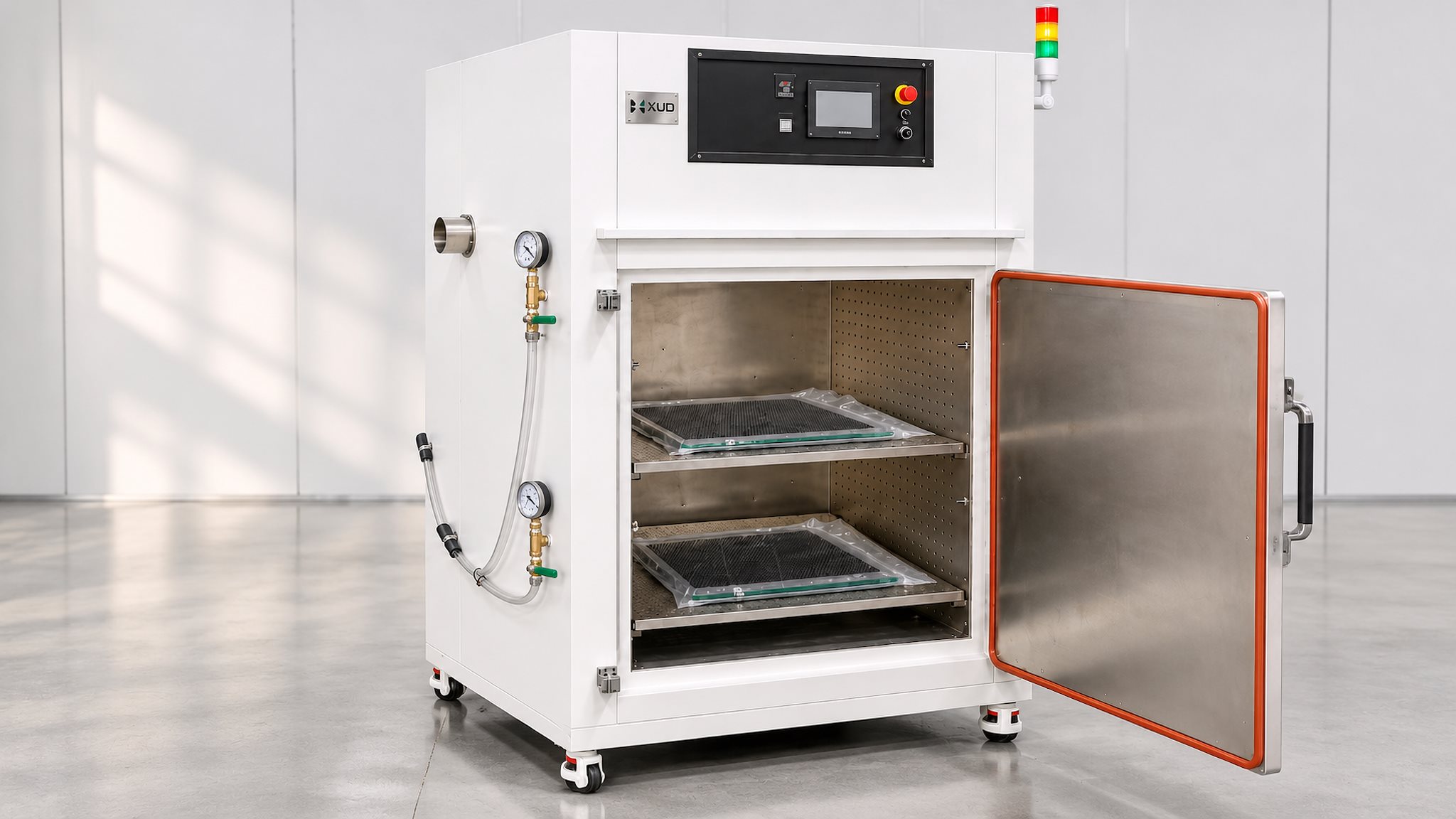
An oven designed for this application can be equipped with internal vacuum connection ports. The vacuum line passes through the designated connection point and connects to an external vacuum pump.
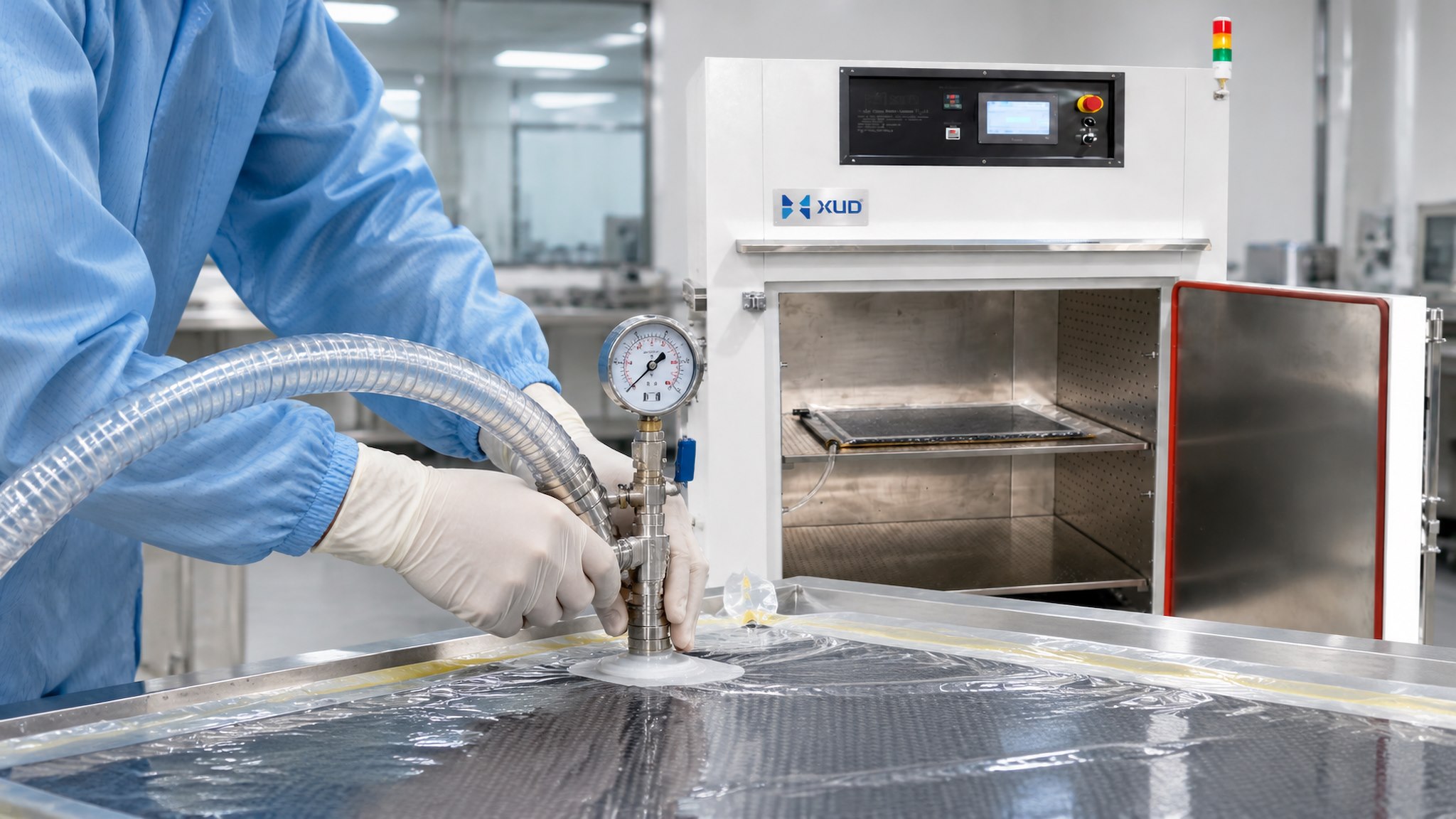
Typical Oven-Based Vacuum Connection
Conceptual arrangement only. Actual connection design depends on the oven and vacuum system configuration.
Four equipment details worth confirming
- Port quantity: Determine how many bagged parts or vacuum circuits need to operate at the same time.
- Port location: Consider the position of the tooling, workpiece and hose routing inside the chamber.
- Temperature compatibility: Check that hoses, fittings and sealing materials are suitable for the operating environment.
- Pump arrangement: Confirm whether the external pump is supplied separately or included in the quotation.
A useful design point is to consider vacuum hose routing before finalizing the oven chamber layout. Poorly planned routing can make loading and unloading inconvenient or interfere with the workpiece arrangement.
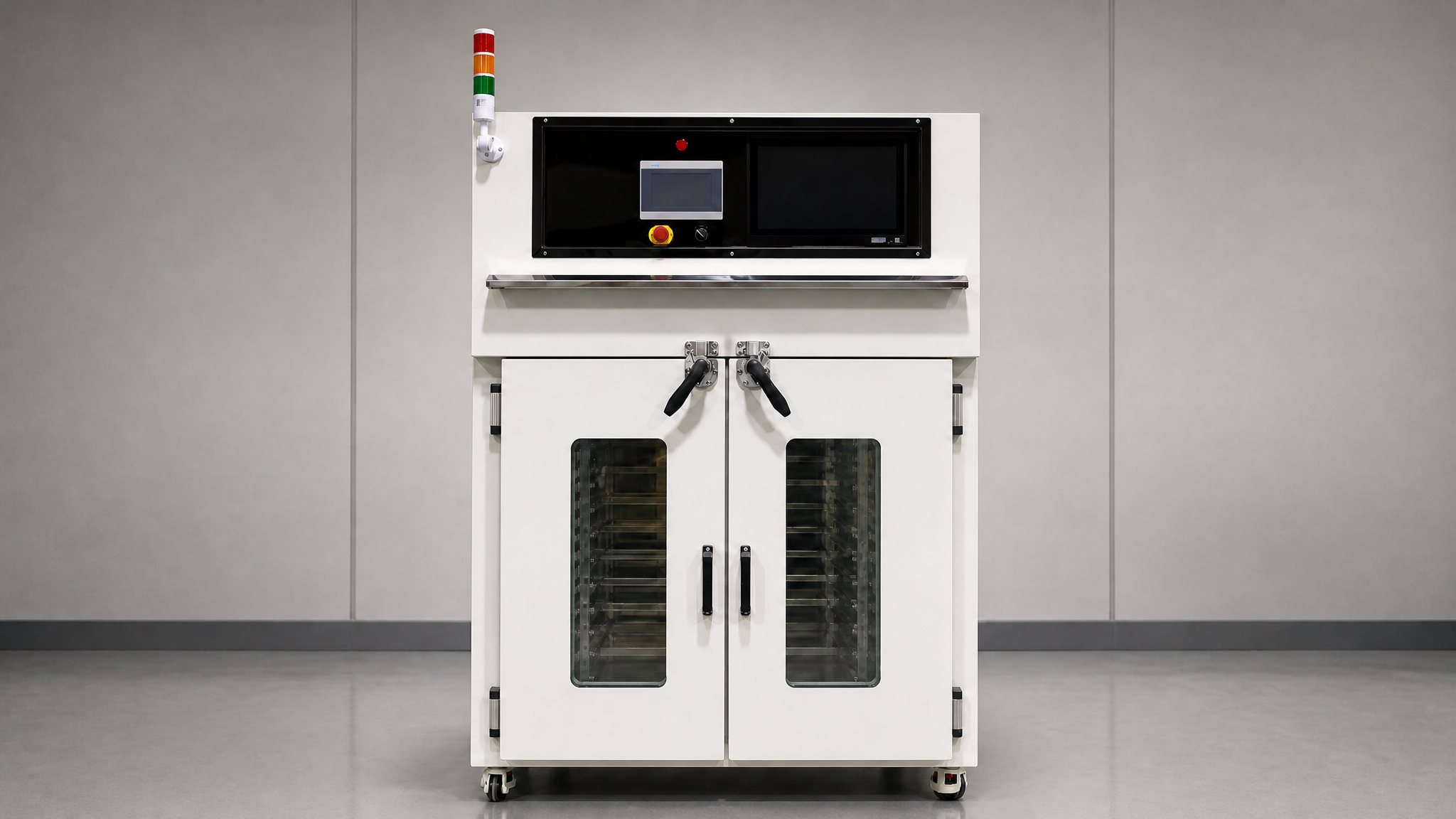
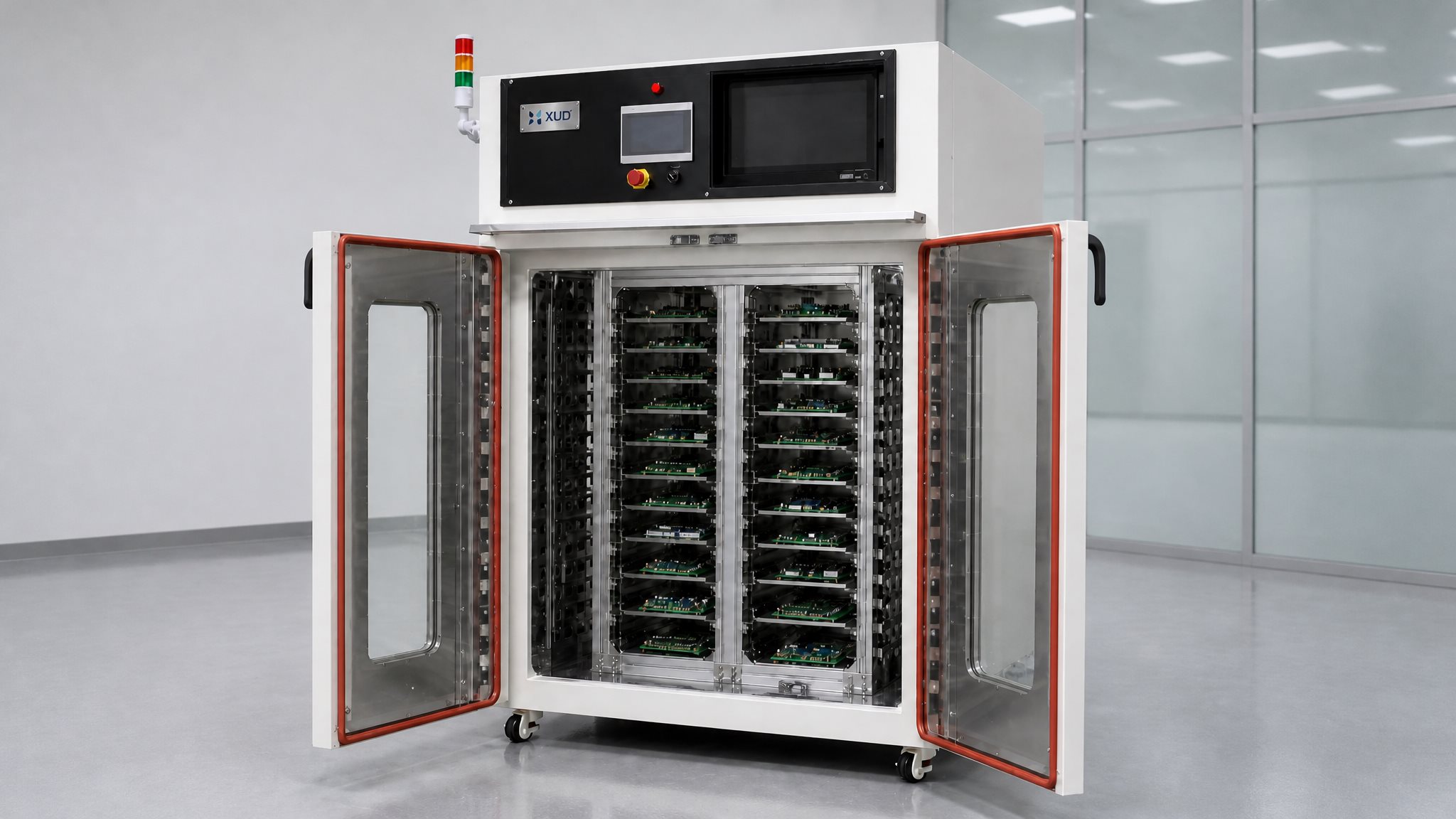
See the Xinyuanda Carbon Fiber Curing Oven for an equipment configuration with electric heating, hot air circulation and internal vacuum ports.
5. How to Check Vacuum Bag Leaks Before Curing
A vacuum pump running does not necessarily mean that the bagging assembly is leak-free. Air may enter through the sealant tape, bag film, connectors, hoses or other joints.
A leak check should therefore be treated as a separate process-control step rather than simply switching on the pump and proceeding to heating.
A practical leak-check sequence
- Inspect the bag film for visible punctures, tears or damaged areas.
- Check the perimeter seal and corners for incomplete bonding or wrinkles.
- Inspect vacuum ports, fittings and hose connections.
- Apply vacuum according to the process procedure and observe the bag's response.
- Perform the specified isolation or vacuum-decay check, if required by the process.
- Correct any identified leak and repeat the check before heating.
Record the vacuum condition and leak-check result before the curing cycle. If a finished panel has voids or surface defects, this record helps distinguish a bagging issue from a heating or material issue.
Acceptable vacuum levels, allowable leakage and test duration should be defined by the material supplier or the manufacturer's validated process. There is no single universal pass/fail value for every composite panel.
6. How Vacuum Bagging Affects Carbon Fiber Panel Quality
Vacuum bagging influences the contact between the laminate, bagging materials and mold. When the setup is correct, it can help reduce trapped air and improve laminate consolidation. However, vacuum alone cannot correct every manufacturing defect.
Panel thickness and layup structure
Thicker laminates may behave differently from thin panels during evacuation and heating. The number of plies, resin content, material tack and layup arrangement can affect how air moves through the assembly and how the laminate consolidates.
Panel dimensions and bagging layout
Large panels need sufficient bag material and a suitable sealing perimeter. The bag must conform to the tooling without creating excessive bridging or tension around corners and edges.
Airflow around the bagged panel
Inside an industrial oven, the bagged panel and its tooling should be positioned without unnecessarily blocking hot air circulation paths. A large mold or multiple stacked panels can change the way air moves through the chamber.
For this reason, oven evaluation should consider representative loading conditions rather than an empty chamber alone. The actual panel arrangement is part of the thermal process.
A panel may have a well-sealed vacuum bag and still show uneven curing if the workpiece temperature varies across its surface or thickness. Vacuum quality and thermal uniformity are two different process factors and should be checked separately.
7. Common Vacuum Bagging Problems and How to Avoid Them
| Problem | Possible Cause | Preventive Action |
|---|---|---|
| Vacuum loss | Damaged film, poor sealing or loose fittings | Inspect the bag and connection system |
| Bridging at corners | Insufficient bag allowance or unsuitable layout | Plan bag placement around tooling geometry |
| Trapped air | Blocked air paths or poor consumable arrangement | Review breather continuity and bagging sequence |
| Surface defects | Unsuitable release materials or contamination | Check consumable compatibility and surface preparation |
| Uneven curing | Uneven heating or unsuitable loading | Review airflow and actual part temperature |
When a defect appears, avoid changing the vacuum level, heating cycle and bagging layout simultaneously. Investigate each process stage separately so that the root cause can be identified.
8. Choosing an Industrial Oven for Vacuum Bagged Carbon Fiber Panels
The oven should be selected according to the panel dimensions, material curing cycle and vacuum system arrangement. A chamber that is large enough to hold the panel may still be unsuitable if the loading layout restricts airflow or makes vacuum connections difficult to access.
- Temperature capability: Confirm that the oven can meet the material's approved curing temperature and cycle requirements.
- Hot air circulation: Evaluate airflow around the actual panel and tooling arrangement.
- Vacuum ports: Confirm the required number and location of internal vacuum connections.
- Chamber dimensions: Allow space for the mold, bagged panel, hose routing and loading access.
- Control system: Consider whether programmable heating stages and process records are required.
- External pump: Clarify whether the pump is supplied separately or included in the quotation.
Xinyuanda Carbon Fiber Curing Oven
Xinyuanda offers customized industrial curing ovens for compatible carbon fiber prepreg and composite applications.
- Maximum operating temperature: up to 250°C.
- Electric heating.
- Hot air circulation.
- Internal vacuum ports for external vacuum pump connection.
- Customizable chamber dimensions and loading arrangements.
- For flat panels and complex-shaped composite parts, subject to process compatibility.
The external vacuum pump is not included as standard equipment unless specified in the quotation.
For a suitable equipment proposal, prepare the panel dimensions, mold dimensions, prepreg specifications, curing cycle, number of panels per batch and vacuum connection requirements.
9. Frequently Asked Questions
Q1: What is the purpose of vacuum bagging carbon fiber panels?
Vacuum bagging creates a sealed environment around the laminate and removes air from the bag. The pressure difference helps compact the layup against the mold and can reduce trapped air when the process is properly designed.
Q2: Can vacuum bagged carbon fiber panels be cured in an industrial oven?
Yes, when the prepreg or resin system is approved for oven-based vacuum bagging. The oven must meet the required thermal conditions and provide a suitable arrangement for the vacuum connections.
Q3: Does the industrial oven need a built-in vacuum pump?
Not necessarily. An oven can be designed with internal vacuum ports for connection to an external pump. Whether the pump is included depends on the equipment configuration and quotation.
Q4: How can I identify a vacuum bag leak?
Inspect the bag film, sealant tape, vacuum ports, fittings and hoses. Apply the specified leak-check procedure and observe whether the vacuum condition is maintained within the process requirements.
Q5: What information is needed to customize a vacuum bagging oven?
Useful information includes panel and mold dimensions, curing temperature, heating cycle, batch quantity, vacuum port quantity and the required loading arrangement.
Conclusion
Successful vacuum bagging depends on the complete process, not simply the vacuum pump. Bagging materials, sealing quality, air paths, tooling geometry and temperature conditions all contribute to the final panel quality.
When vacuum bagged carbon fiber panels are cured in an industrial oven, the vacuum connection arrangement and hot air circulation design should be considered together. The material supplier's approved process remains the reference for the actual curing conditions.
Continue with Part 03: Composite Curing Oven vs. Autoclave to compare the two equipment types.
Carbon Fiber Curing Guide
01. How to Cure Carbon Fiber Prepreg in an Industrial Oven
02. Vacuum Bagging Process for Carbon Fiber Composite Panels — You are reading this article
03. Composite Curing Oven vs. Autoclave: Key Differences
04. What to Look for When Buying a Carbon Fiber Curing Oven
05. How to Cure Complex-Shaped Carbon Fiber Composite Parts
06. How to Choose a Curing Oven for Composite Panels
Looking for a Vacuum Bagging Curing Oven?
Send us your composite panel dimensions, curing requirements and vacuum connection needs. Our team can help evaluate a suitable customized oven configuration.
WhatsApp: +86 18998007076
Email: annalan@xudoven.com
Composite Curing Oven vs. Autoclave: Key Differences
How to Cure Carbon Fiber Prepreg in an Industrial Oven: Temperature, Vacuum Bagging and Process Considerations
Related Article