How to Cure Carbon Fiber Prepreg in an Industrial Oven: Temperature, Vacuum Bagging and Process Considerations
How to Cure Carbon Fiber Prepreg in an Industrial Oven
Temperature, Vacuum Bagging and Process Considerations
Carbon fiber prepreg is widely used in composite manufacturing because it combines reinforcing fibers with a controlled amount of resin. However, the quality of the finished component depends on more than the carbon fiber material itself. The curing process plays a critical role in determining the final shape, surface quality and mechanical performance of the part.
For manufacturers considering an industrial oven, one important question is whether their prepreg can be cured using an oven-based process, particularly when vacuum bagging is involved.
The answer depends on the resin system, material specifications and required manufacturing process. Some prepreg systems are designed for vacuum-bag-only or out-of-autoclave (OOA) processing, while others require the additional pressure conditions provided by an autoclave.
This guide explains how to evaluate the curing process, determine suitable oven requirements and avoid common mistakes when curing carbon fiber composite components.
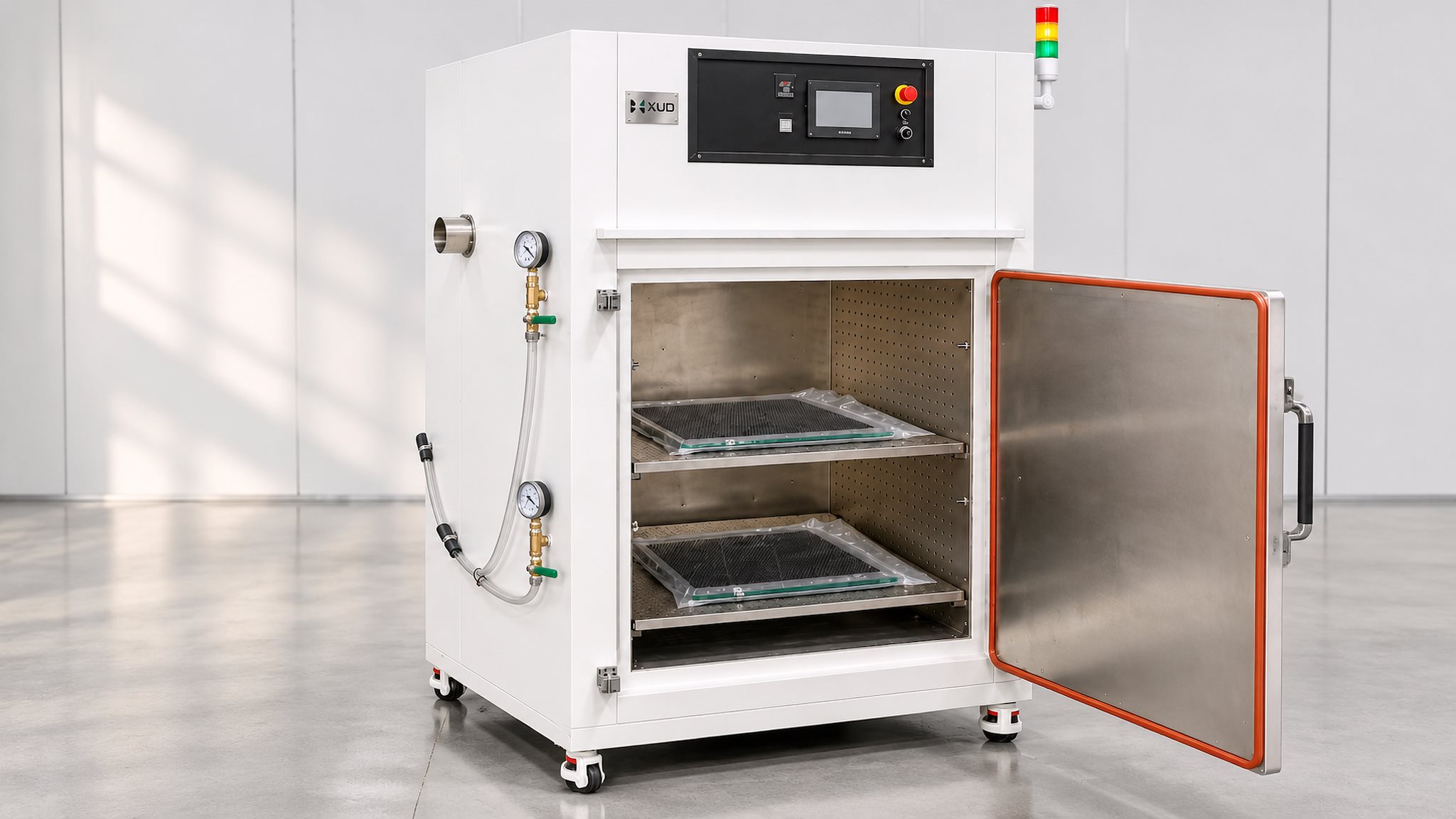
An industrial oven provides the required heating environment. Vacuum bagging provides a method of applying vacuum and consolidating the layup. Whether these two processes are sufficient depends on the specific prepreg system and its approved curing procedure.
In This Guide
1. Understanding Carbon Fiber Prepreg Curing
Carbon fiber prepreg consists of reinforcing carbon fibers that have already been impregnated with a partially cured resin system. Unlike dry carbon fiber fabric, prepreg contains a controlled resin content and is supplied with specific storage and processing requirements.
During curing, heat activates the resin's chemical reaction. The resin gradually develops its final structure and mechanical properties according to the specified curing cycle.
However, it is important to understand that carbon fiber itself does not determine the curing temperature. The resin system is usually the main factor that determines the required heating conditions.
Three factors determine the curing process
Different epoxy and other resin systems have different curing requirements, including temperature, time and processing conditions.
Thickness, shape, mold design and layup structure affect how heat reaches the material and how vacuum can be applied.
The recommended heating rate, dwell time, vacuum conditions and cooling procedure must be considered together.
Practical insight: Two carbon fiber products may look similar but require different curing conditions because they use different resin systems or have different laminate thicknesses. Selecting an oven based only on the phrase "carbon fiber curing" is therefore not enough.
2. How to Determine the Carbon Fiber Prepreg Curing Temperature
There is no single curing temperature suitable for all carbon fiber prepreg materials. Some systems use relatively low-temperature curing cycles, while others require higher temperatures. The correct values must come from the material manufacturer's technical data sheet and approved processing instructions.
Do not select a temperature based only on the oven's maximum rating
For example, an industrial oven with a maximum operating temperature of 250°C does not mean every prepreg should be cured at 250°C. The maximum temperature describes the equipment's capability, not the recommended curing temperature of the material.
Before defining an oven's temperature requirements, check the following information:
- Recommended curing temperature from the prepreg supplier.
- Required heating rate or temperature ramp.
- Specified holding time at the curing temperature.
- Required vacuum conditions during the process.
- Cooling requirements before removing the part.
- Any special restrictions on material storage and handling.
Do not increase the curing temperature simply to shorten production time. Excessive heating or an unsuitable temperature ramp may cause premature resin reaction, uneven curing or defects in the finished composite.
Why heating rate and holding time matter
Reaching the target temperature is only one part of the curing process. The material also needs sufficient time under the specified conditions for the resin reaction to progress as required.
Thicker laminates and complex-shaped parts may heat differently from thin, flat panels. The oven air temperature may reach its setpoint before the center of a thick workpiece reaches the required temperature.
For this reason, process validation should consider the actual part temperature, not only the temperature displayed by the oven controller. Where required, use suitable thermocouples and a validated temperature monitoring procedure to check representative locations on the workpiece.
3. Understanding the Vacuum Bagging Process
Vacuum bagging is commonly used in composite manufacturing to apply vacuum to a prepared layup. The material is placed on a mold or tooling, covered with a vacuum bag and sealed. A vacuum line connects the bagging system to a vacuum pump.
When air is removed from the sealed bag, the pressure difference between the inside and outside of the bag helps compact the laminate against the mold or tooling.
How does vacuum work together with an industrial oven?
In an oven-based vacuum bagging process, the oven supplies heat while the vacuum system maintains the required vacuum condition around the bagged workpiece.
For this setup, the oven needs suitable vacuum connection ports. The vacuum line can pass through the designated connection points so that the external pump can operate while the workpiece is heated.
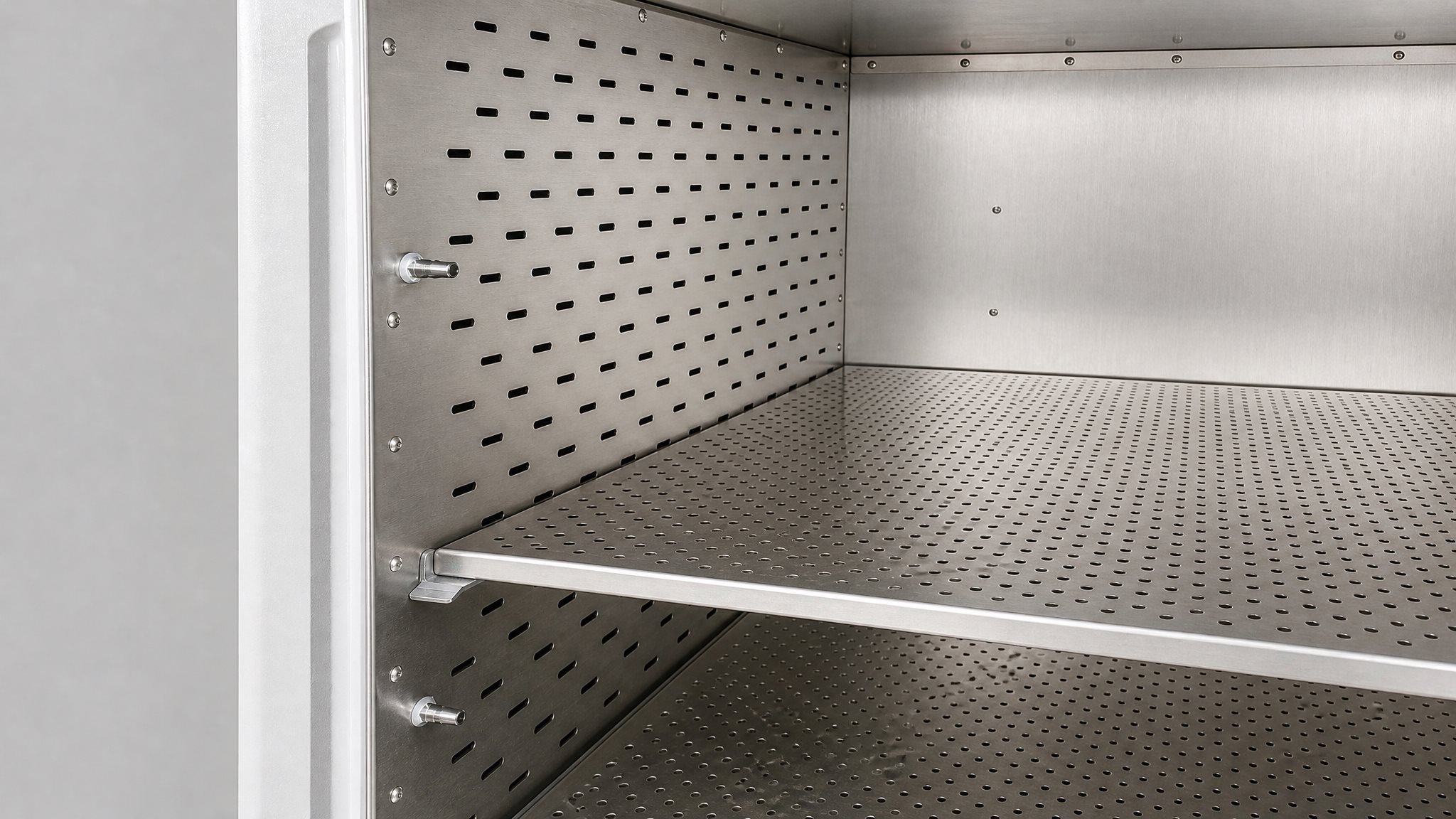
Typical Vacuum Bagging Arrangement
Conceptual process illustration. Actual hose routing, fittings, valves and pump arrangements depend on the equipment design.
Vacuum does not mean autoclave pressure
This distinction is particularly important when selecting curing equipment. Vacuum bagging applies a pressure difference across the bag, with the surrounding environment providing the external pressure. An autoclave, by contrast, is a pressure vessel that can apply additional controlled positive pressure around the vacuum-bagged component.
Therefore, an oven with vacuum ports should not automatically be treated as an autoclave replacement. It can be suitable for prepreg systems specifically approved for oven-based vacuum bagging, including certain out-of-autoclave materials.
Practical insight: Before purchasing an oven, confirm whether the prepreg supplier permits vacuum-bag-only curing. This single check can prevent a mismatch between the material's process requirements and the equipment being purchased.
4. How to Cure Carbon Fiber Prepreg in an Industrial Oven
Once the material requirements and equipment configuration have been confirmed, the curing process can be organized into several stages.
Prepare the Prepreg and Tooling
Check the material's storage history, shelf life and handling instructions. Prepare the mold, tooling and layup according to the approved manufacturing procedure.
Complete the Vacuum Bagging Setup
Arrange the required bagging materials and seal the assembly. Connect the vacuum line and check the sealing condition before starting the curing cycle.
Load the Workpiece into the Oven
Position the workpiece so that it is properly supported. Avoid blocking air circulation paths or placing parts too close together. Make sure the vacuum lines and fittings are suitable for the operating temperature.
Set the Approved Curing Cycle
Enter the required temperature and timing parameters based on the prepreg manufacturer's instructions. Apply vacuum according to the specified process procedure.
Monitor the Curing Process
Monitor the oven temperature and vacuum condition. For critical parts, verify the actual workpiece temperature using a suitable monitoring method.
Cool and Inspect the Finished Part
Follow the specified cooling procedure before releasing the vacuum and removing the component. Inspect the finished part for dimensional accuracy and visible defects.
Record the oven temperature, workpiece temperature where monitored, vacuum condition, cycle time and inspection results for each validated production run. This makes it easier to identify process variations between batches.
5. Industrial Oven vs. Autoclave: What Is the Difference?
Both industrial ovens and autoclaves are used in composite manufacturing, but they provide different processing environments. Choosing between them depends on the material system, product specifications and required consolidation conditions.
| Comparison | Industrial Oven | Autoclave |
|---|---|---|
| Heating | Provides controlled heating | Provides controlled heating |
| Vacuum Bagging | Can be configured with vacuum ports | Commonly used with vacuum bagging |
| Positive Pressure | Not provided by a standard oven | Can apply controlled external pressure |
| Suitable Materials | Materials approved for oven curing | Materials requiring autoclave processing |
| Equipment Structure | Heated chamber | Pressure-rated vessel |
An industrial oven with vacuum connections may be a suitable option for manufacturers using prepreg materials specifically designed for oven-based vacuum bagging. It is not automatically suitable for every prepreg system.
If the material specification requires additional positive pressure during curing, an ordinary industrial oven with vacuum ports cannot replace that requirement.
Selection rule: Start with the material's approved processing method, then choose the equipment. Do not choose the equipment first and assume the material can be adapted to it.
6. Common Carbon Fiber Curing Problems and Their Causes
When a composite part does not meet quality requirements, the problem may not come from the oven alone. Material handling, bagging quality, tooling, loading arrangements and curing parameters can all contribute.
| Observed Problem | Possible Cause | What to Check |
|---|---|---|
| Incomplete curing | Incorrect temperature or insufficient curing time | Material data sheet and actual part temperature |
| Air pockets or voids | Bag leaks or inadequate air removal | Bag sealing, vacuum lines and layup procedure |
| Uneven curing | Uneven part heating or unsuitable loading | Airflow paths and temperature distribution |
| Part deformation | Insufficient support or unsuitable process conditions | Tooling, support and curing procedure |
| Surface defects | Bagging materials, contamination or resin behavior | Surface preparation and consumable compatibility |
A useful troubleshooting method is to separate the problem into three areas: material and layup preparation, vacuum bagging performance, and oven heating conditions. Changing all three at the same time makes it difficult to identify the actual cause.
7. How to Select the Right Industrial Curing Oven for Carbon Fiber
Choosing a carbon fiber curing oven requires more than checking its maximum temperature. The equipment should match the actual workpiece, material process and production arrangement.
1. Confirm the required temperature range
Check the highest required curing temperature and the complete heating cycle. Leave a suitable equipment operating margin based on the manufacturer's design and your process requirements.
2. Evaluate hot air circulation
Hot air circulation helps distribute heat within the chamber. However, actual heating performance depends on the oven structure, airflow design, workpiece arrangement and loading conditions. For demanding processes, evaluate temperature distribution under representative loading conditions.
3. Consider the vacuum connection arrangement
If vacuum bagging is part of the process, check the number and positions of vacuum ports, hose routing and the temperature suitability of all related fittings. Confirm whether the vacuum pump is supplied separately or included in the equipment quotation.
4. Design around the actual workpiece
Flat panels and complex-shaped components may require different loading arrangements. Consider the workpiece dimensions, mold size, clearance, support structure and number of parts processed per batch.
5. Check the control and monitoring requirements
Consider whether the process requires programmable heating stages, temperature recording, workpiece temperature monitoring or vacuum monitoring. These requirements should be confirmed before finalizing the equipment configuration.
Xinyuanda Carbon Fiber Curing Oven
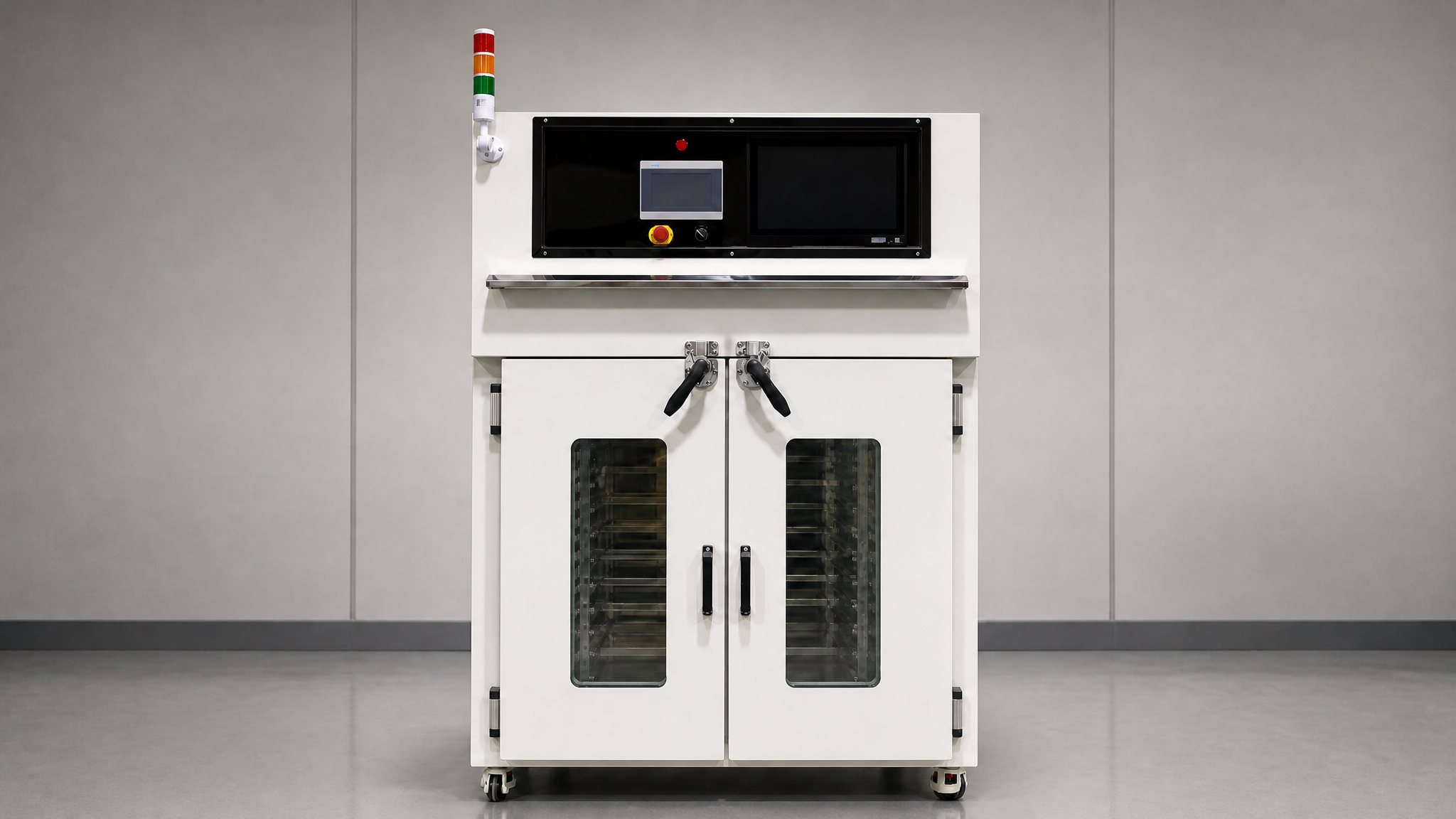
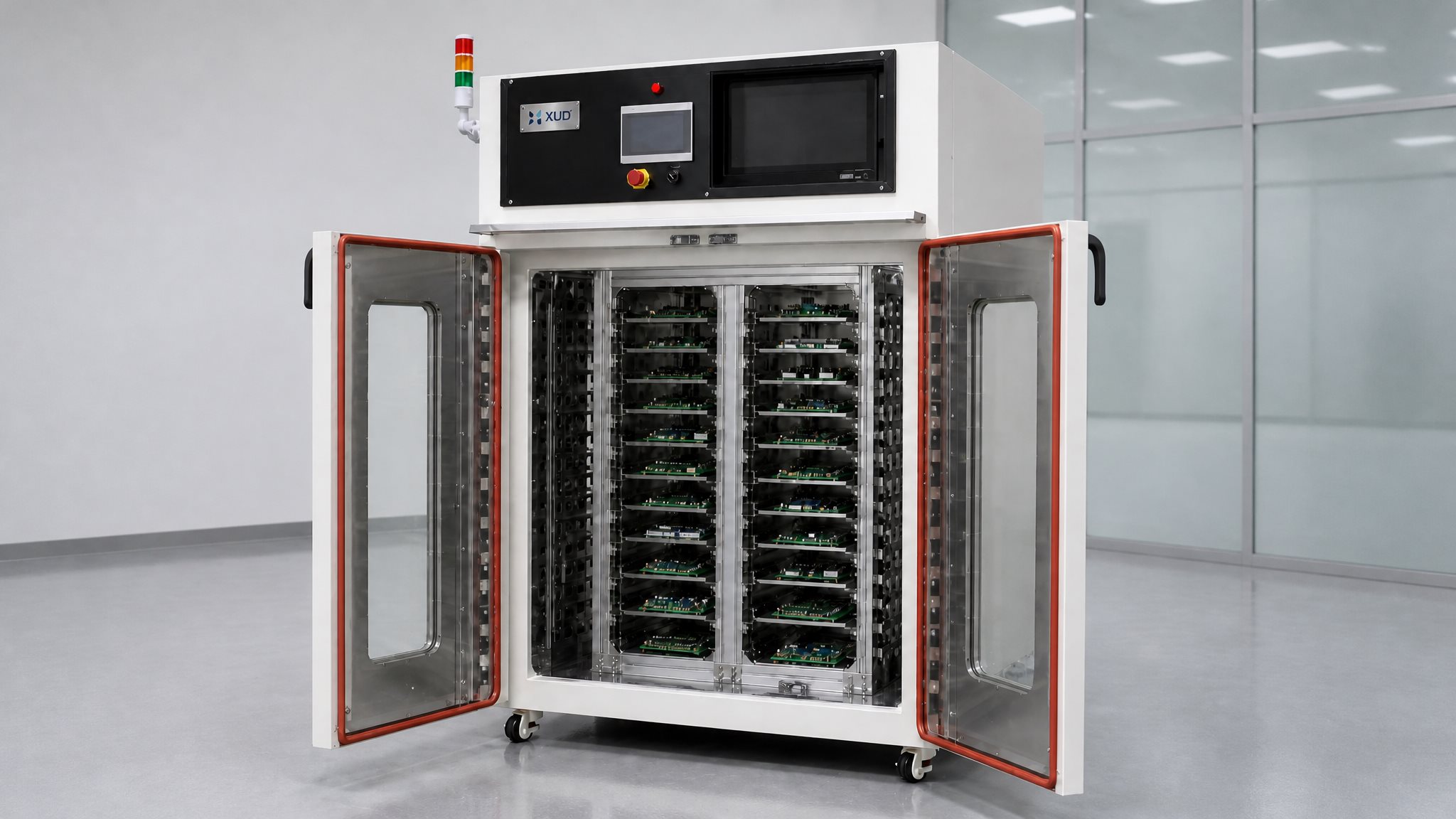
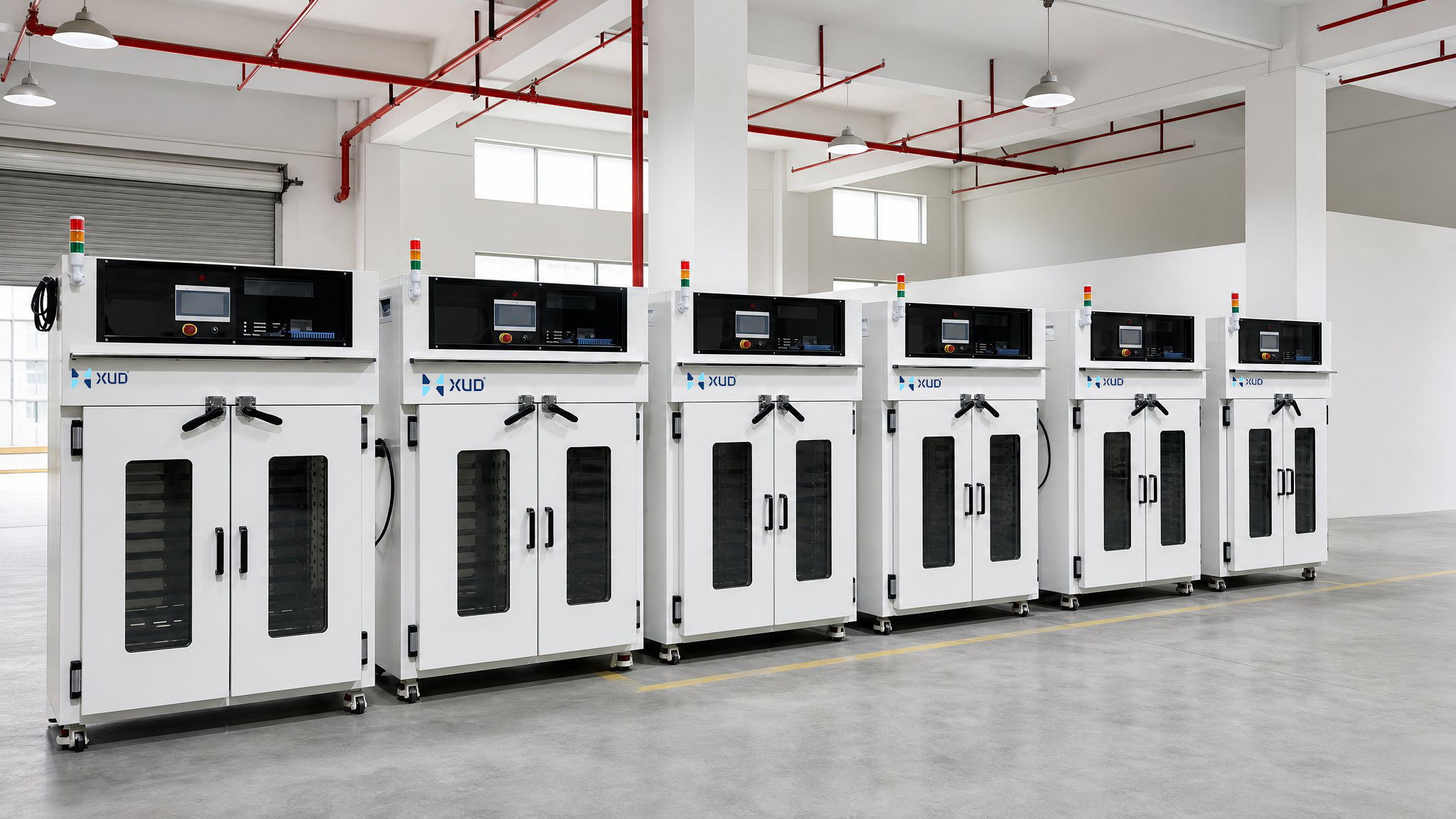
Xinyuanda provides customized industrial curing ovens for compatible carbon fiber prepreg and composite applications. The current configuration features:
- Maximum operating temperature up to 250°C.
- Electric heating system.
- Hot air circulation.
- Internal vacuum ports for external vacuum pump connection.
- Customizable chamber dimensions and loading arrangements.
- Suitable for flat panels and complex-shaped parts, subject to process compatibility.
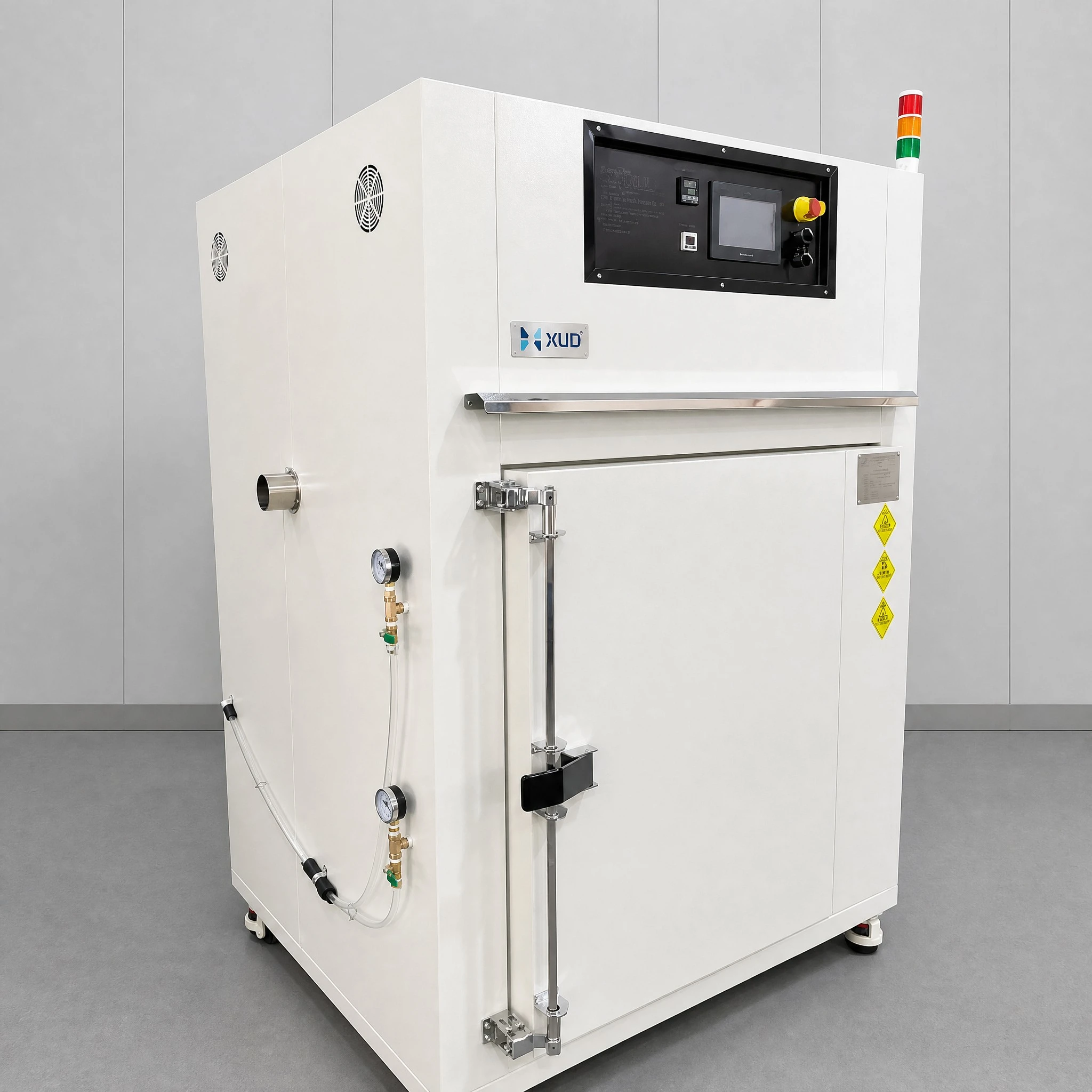
For an accurate equipment recommendation, provide the material type, curing specification, maximum workpiece dimensions, batch quantity and vacuum bagging requirements. These details are more useful than simply asking for a standard oven size.
8. Frequently Asked Questions
Q1: Can carbon fiber prepreg be cured in a regular industrial oven?
Some prepreg materials can be cured in an industrial oven, especially those designed for oven-based or vacuum-bag-only processing. However, materials requiring autoclave pressure cannot automatically be processed in a standard oven. Always confirm the approved process with the material supplier.
Q2: What temperature is needed to cure carbon fiber prepreg?
The required temperature varies depending on the resin system. Follow the prepreg manufacturer's technical data sheet for the curing temperature, heating rate and holding time.
Q3: Is a vacuum pump necessary for carbon fiber curing?
A vacuum pump is required when the approved manufacturing process uses vacuum bagging. It removes air from the sealed bag and helps consolidate the laminate. The exact vacuum requirements depend on the material and process specification.
Q4: Can an industrial oven with vacuum ports replace an autoclave?
Not in every application. An oven with vacuum ports provides heating and vacuum bagging connections, but a standard oven does not provide the additional positive pressure of an autoclave. It is suitable only when the material and process are approved for oven-based vacuum bagging.
Q5: Can one curing oven process both flat panels and complex-shaped carbon fiber parts?
A customized oven may accommodate both types of workpieces. However, chamber dimensions, loading fixtures, support methods and vacuum port arrangements should be designed around the actual part geometry.
Q6: Does the carbon fiber curing oven include a vacuum pump?
The described oven configuration includes internal vacuum ports for connection to an external vacuum pump. The pump is not included as standard equipment unless it is specifically listed in the quotation.
Conclusion
Successful carbon fiber prepreg curing depends on matching the material system, vacuum bagging procedure and heating conditions. An industrial oven can provide a suitable curing environment for compatible prepreg materials, but it must be configured around the actual production process.
The most important step is to confirm the prepreg manufacturer's curing requirements before selecting the equipment. Temperature capability alone does not determine whether an oven is suitable.
For manufacturers processing flat composite panels or complex-shaped carbon fiber parts, a customized oven with electric heating, hot air circulation and suitable vacuum connections can be a practical solution when the material is approved for this process.
Carbon Fiber Curing Guide
The remaining articles will be added as they are published.
Need a Carbon Fiber Curing Oven for Your Production?
Share your composite material specifications, workpiece dimensions and curing requirements with us. Xinyuanda can help evaluate a suitable customized oven configuration.
WhatsApp: +86 18998007076
Email: annalan@xudoven.com
How to Load PCB Assemblies in a Multi-Layer Drying Oven for Consistent Drying
Related Article