PCB Drying Oven Selection: 7 Questions Electronics Manufacturers Should Ask Before Buying
PCB EQUIPMENT BUYING GUIDE
PCB Drying Oven Selection: 7 Questions Electronics Manufacturers Should Ask Before Buying
A practical equipment selection guide covering chamber capacity, temperature control, airflow, tray configuration, exhaust requirements and production needs.
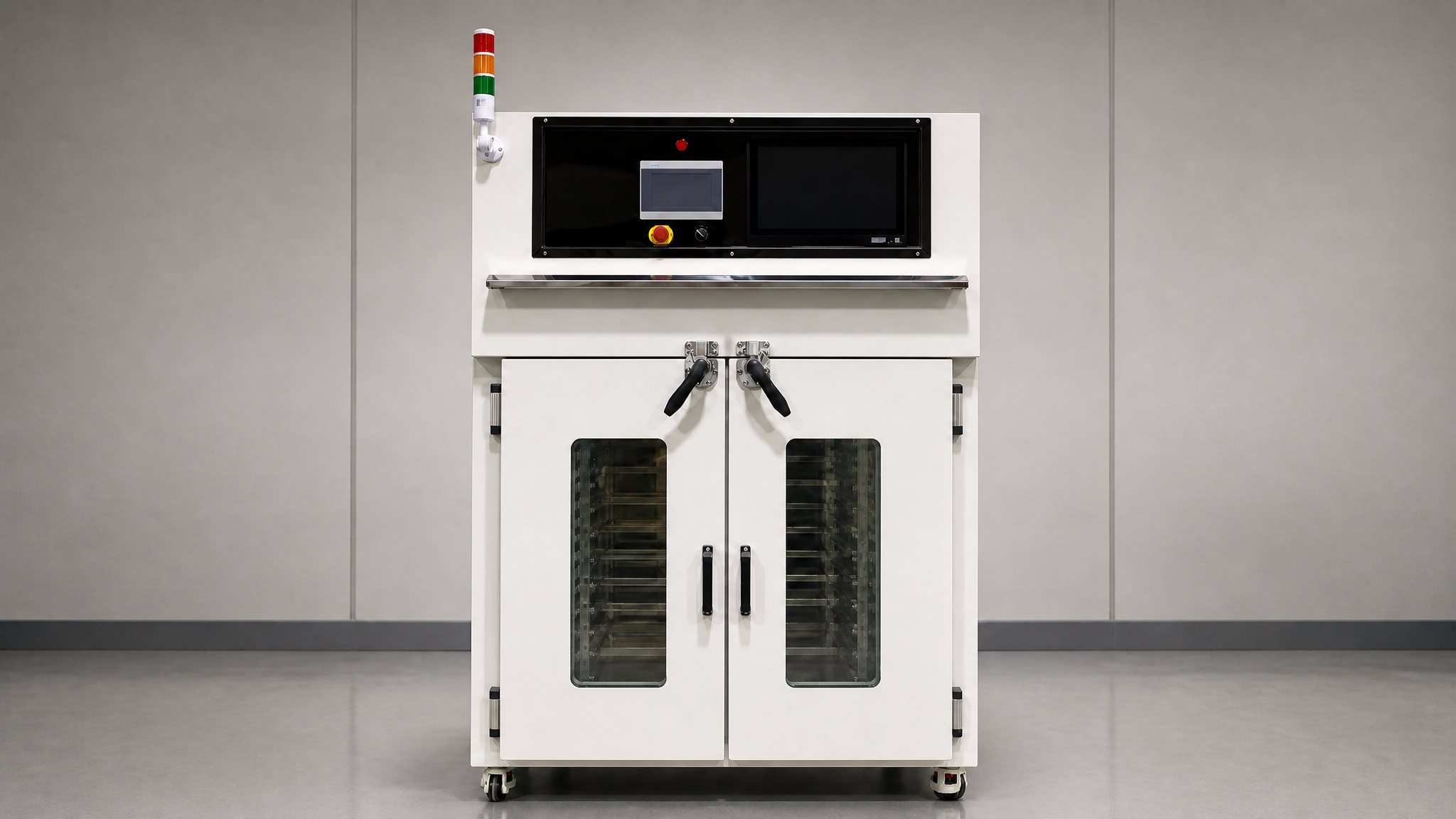
Choosing a PCB drying oven is not simply a matter of comparing equipment prices or selecting a model with the highest working temperature. For electronics manufacturers, the more important question is whether the oven configuration matches the actual PCB products, drying process and production capacity.
An oven that is too small may limit batch output. An unsuitable tray arrangement may restrict airflow. A temperature range that looks attractive on a specification sheet may not match the thermal limitations of the electronic components being processed.
Before requesting a quotation, electronics manufacturers should evaluate the following seven questions. Answering them in advance makes equipment comparison more meaningful and helps prevent unnecessary modifications after production begins.
In This Article
- What Type of PCB Drying Process Do You Need?
- What Are Your PCB Dimensions and Batch Capacity?
- What Working Temperature Range Is Required?
- Does the Oven Need Forced Hot Air Circulation?
- Which Control System and Operating Functions Are Needed?
- What Exhaust and Safety Requirements Should Be Considered?
- What Should You Confirm Before Ordering?
- Frequently Asked Questions
1. What Type of PCB Drying Process Do You Need?
Start with the product and the purpose of drying. The term "PCB drying" can describe different manufacturing operations, and not every process requires the same oven configuration.
Drying Bare Printed Circuit Boards
Bare PCBs may absorb moisture during storage or handling. In some manufacturing processes, controlled baking is used to reduce moisture in the board material before subsequent operations such as soldering.
The required conditions depend on the laminate material, layer construction, surface finish, storage history and the requirements of the next production stage.
Drying PCB Assemblies After Cleaning
Assembled PCBs may require drying after aqueous cleaning or another compatible cleaning process. In this application, liquid may remain around connectors, component gaps, through-holes and other difficult-to-reach areas.
The equipment and process must consider both moisture removal and the temperature limitations of the installed components. Cleaning-agent compatibility and any chemical safety requirements must also be reviewed.
Important selection point: Do not automatically apply bare-PCB baking parameters to assembled PCB products after cleaning. Confirm the product condition, drying objective and process requirements first.
If your application involves removing moisture after PCB cleaning, you can also read our related guide: How to Dry PCB Assemblies After Cleaning Without Exposing Components to Excessive Heat.
2. What Are Your PCB Dimensions and Batch Capacity?
Chamber size is one of the most important factors in PCB drying oven selection. However, choosing an oven based only on the dimensions of one PCB is a common mistake.
Manufacturers should calculate the complete loading arrangement, including the number of boards per batch, tray dimensions, spacing between products and clearance required for air circulation.
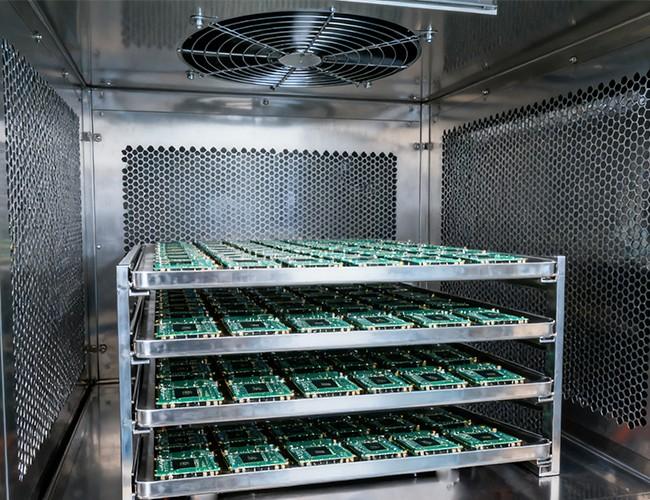
Start with the Actual Loading Arrangement
Before deciding on the working chamber dimensions, consider:
- PCB dimensions: Maximum length, width and thickness of the products.
- Product quantity: How many PCBs need to be processed in one batch?
- Tray dimensions: What usable loading area is required for each tray?
- Tray spacing: Is there enough clearance for suitable airflow between loading levels?
- Product arrangement: Are the boards placed flat, vertically or in dedicated fixtures?
- Handling requirements: Will operators load trays manually or use a trolley or other handling equipment?
For example, an oven designed for small electronic control boards may not be suitable for larger assembled circuit boards, even if both applications require a similar temperature range.
Calculate Capacity from Production Demand
It is useful to estimate the required daily output before selecting the oven.
A simple preliminary calculation is:
Daily Output = Boards per Batch × Completed Batches per Day
For instance, if a production line needs to process 300 boards per day, the equipment capacity should be evaluated according to the number of boards per batch and the realistic number of completed cycles per working day.
Remember to include loading time, heating time, drying time, cooling requirements and unloading time. The actual production capacity is determined by the complete operating cycle, not just the chamber volume.
For batch production, a multi-layer tray rack can provide organized loading space and make better use of the chamber. The number of tray levels and spacing should be designed around the actual PCB dimensions and airflow requirements.
3. What Working Temperature Range Is Required?
Maximum working temperature is one of the most visible specifications on an oven quotation. However, a higher maximum temperature does not automatically mean that the oven is better for PCB drying.
The correct temperature range should be determined by the actual product and manufacturing process.
Before selecting an oven, check the following information:
- PCB material: Identify the substrate and its relevant thermal limitations.
- Component specifications: Confirm the allowable temperature exposure of installed electronic components, connectors and other sensitive parts.
- Cleaning medium: Determine whether the process uses water-based cleaning agents or solvent-based products.
- Required drying result: Define the condition the product must reach before moving to the next manufacturing stage.
- Process duration: Evaluate temperature and exposure time together.
Do Not Confuse the Oven's Maximum Temperature with the Process Temperature
An oven may be capable of reaching a high temperature, but the PCB assembly may require a much lower operating setting.
For example, our customizable PCB drying oven has a working temperature range from ambient temperature to 250°C. This describes the equipment's available temperature range, not a recommended drying setting for every PCB product.
The actual operating temperature and drying duration must be established using product specifications, component limitations and process validation.
What to ask the manufacturer: Can the equipment be configured for the temperature range required by your process? How will the actual product temperature and chamber conditions be checked during testing?
4. Does the Oven Need Forced Hot Air Circulation?
Air circulation affects how heated air moves through the working chamber. For a multi-layer batch drying oven, it is important to consider how air reaches products placed at different tray levels and positions.
Forced hot air circulation uses a fan to move heated air through the chamber. When the circulation path and loading arrangement are properly designed, it helps distribute heat around the products.
Evaluate Airflow Together with Tray Design
Do not evaluate the circulation fan as an isolated component. The actual airflow conditions depend on the complete chamber configuration.
- Tray spacing: Closely positioned trays may restrict airflow between loading levels.
- PCB orientation: Product placement can affect the exposure of different surfaces to circulating air.
- Loading density: Overloading the chamber may create blocked airflow areas.
- Chamber structure: Air inlet, return path and internal circulation arrangement influence how air moves.
- Actual production load: Equipment performance should be evaluated with a representative loading arrangement.
One useful question is not simply "Does the oven have a circulation fan?" but rather "Can the airflow arrangement work effectively with our actual tray layout and loading quantity?"
If temperature uniformity is an important purchase requirement, discuss the measurement method, test locations, loading conditions and acceptable limits with the manufacturer before ordering. Do not assume that forced circulation alone guarantees a specific temperature uniformity result.
5. Which Control System and Operating Functions Are Needed?
The control system affects how operators manage the equipment and repeat the selected drying conditions.
For industrial PCB drying applications, manufacturers should consider the control functions required by their production procedures rather than choosing a control system based only on its appearance.
Touchscreen and PLC Control
A touchscreen combined with a PLC provides an operating interface for managing equipment parameters. Depending on the actual control configuration, the system may allow operators to set working temperatures, monitor operating status and manage equipment functions.
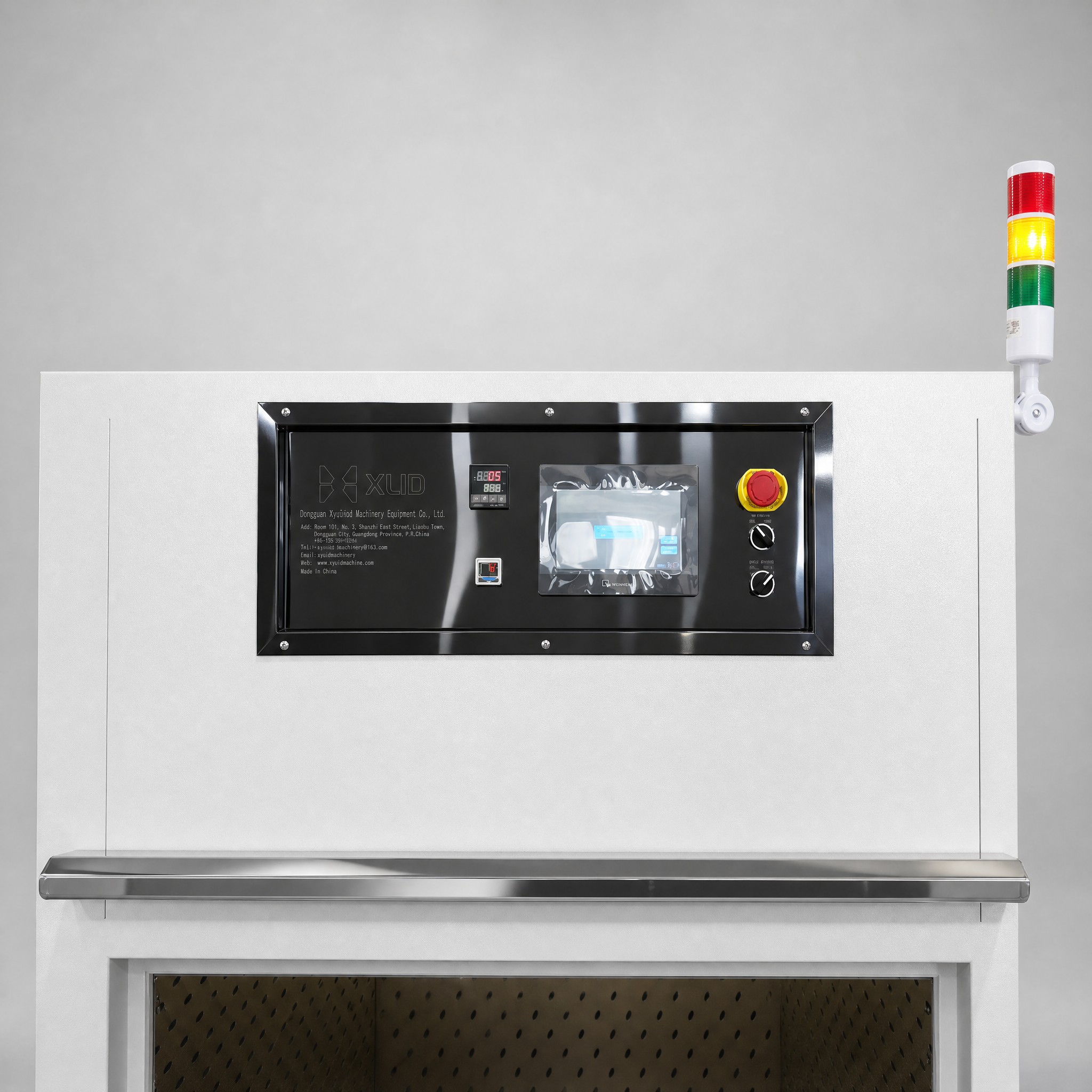
Before confirming the order, clarify:
- What temperature setting and adjustment functions are included?
- How is the current operating temperature displayed?
- Are temperature alarms or abnormal-condition notifications required?
- Does the production process require programmable temperature stages?
- Is data recording or production traceability required?
- Are recipe storage or communication functions necessary?
Not every oven includes every function as standard. If data logging, recipe management, multi-stage programs or remote monitoring are important to your production process, specify these requirements before the control system is finalized.
For manufacturers handling different PCB products, clearly defined operating procedures and documented process settings can also help reduce differences between production batches.
6. What Exhaust and Safety Requirements Should Be Considered?
Exhaust configuration is an important part of industrial drying oven selection, especially when the drying process involves water-based cleaning agents, residual moisture or chemical vapors.
However, air circulation and exhaust perform different functions.
Air Circulation
Moves heated air through the working chamber to support heat distribution around the loaded products.
Exhaust
Allows chamber air to be discharged according to the equipment design and process requirements.
A natural exhaust arrangement should not be confused with forced exhaust ventilation, active dehumidification or precise humidity control. If the process releases a significant amount of moisture or vapor, the exhaust requirements need to be evaluated accordingly.
Check the Cleaning Agent Before Selecting the Oven
This is particularly important for PCB assemblies after cleaning.
Water-based cleaning processes and solvent-based cleaning processes may have very different equipment and safety requirements. If flammable or volatile solvents are involved, the solvent properties, safety data sheet (SDS), maximum vapor release, exhaust requirements and applicable protection measures must be reviewed before selecting the heating equipment.
Safety reminder: Do not assume that a standard industrial hot air oven is suitable for every solvent-based PCB cleaning process. Equipment suitability must be confirmed through a proper process and safety assessment. Special ventilation or explosion-protection measures may be necessary.
7. What Should You Confirm Before Ordering?
After evaluating the drying process, chamber capacity, temperature, airflow, control system and exhaust requirements, the next step is to prepare a clear technical specification for the manufacturer.
A quotation based only on the words "PCB drying oven" may leave many important details undefined. A more complete inquiry helps the manufacturer understand the actual application and propose a suitable configuration.
PCB Drying Oven RFQ Checklist
Before requesting a quotation, prepare the following information:
Providing this information allows the equipment manufacturer to evaluate chamber dimensions, heating configuration, tray arrangement, circulation, exhaust and control requirements more accurately.
A Practical Point: Ask for a Configuration Based on Your Actual Products
For custom industrial equipment, the most useful quotation is not necessarily the one with the longest specification list. It is the one that clearly explains how the proposed configuration relates to your product dimensions, batch quantity and drying requirements.
If possible, provide product drawings, photographs, sample loading arrangements and relevant process information. These details can help the manufacturer understand the application before finalizing the oven design.
XINYUANDA EQUIPMENT EXAMPLE
Custom PCB Drying Oven with Multi-Layer Tray Racks
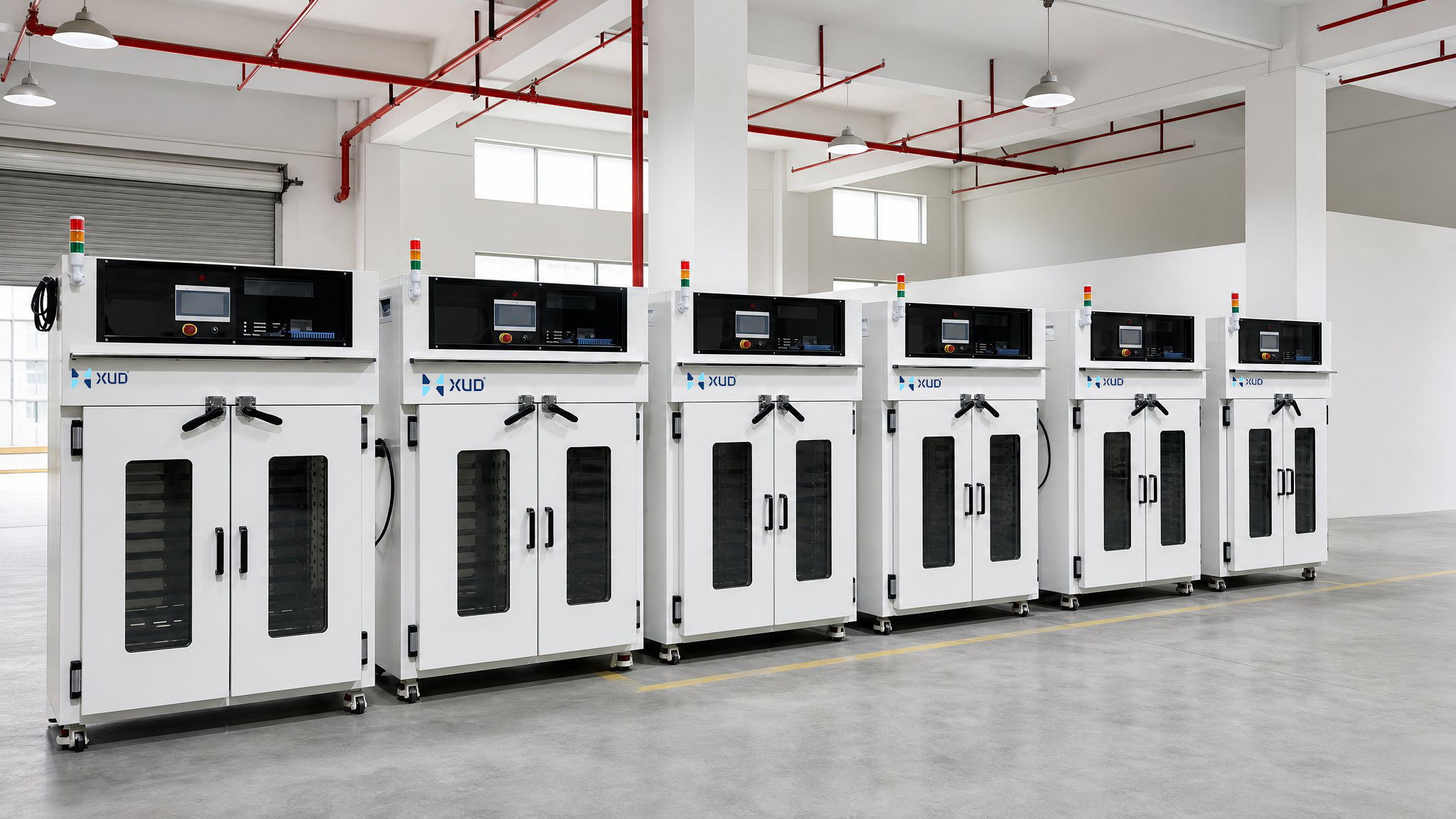
For manufacturers looking for a batch drying solution, Xinyuanda offers a customizable PCB drying oven with the following actual configuration:
- Electric heating system
- Working temperature: ambient temperature to 250°C
- Forced hot air circulation
- Natural exhaust
- Touchscreen + PLC control
- Double-door cabinet structure
- Multi-layer tray racks
- Customizable chamber dimensions and tray arrangement
The equipment configuration can be discussed according to PCB dimensions, batch capacity and production requirements. Actual process settings should be confirmed for the products being processed.
8. Frequently Asked Questions About PCB Drying Oven Selection
Q1: How do I choose the right PCB drying oven?
Start by identifying the PCB type, drying purpose, product dimensions, batch quantity, temperature requirements and cleaning medium. Then evaluate chamber size, tray configuration, airflow, exhaust, control functions and safety requirements. The oven should be selected according to the actual production process rather than its maximum temperature alone.
Q2: What temperature should a PCB drying oven have?
The required temperature range depends on PCB materials, component specifications and the purpose of drying. The oven's maximum temperature is not necessarily the correct operating temperature. Actual process settings should be established through technical specifications and process validation.
Q3: Is forced hot air circulation necessary for PCB drying?
Forced hot air circulation can help distribute heated air throughout the chamber, especially when products are loaded on multiple tray levels. Whether a particular configuration is suitable depends on chamber design, loading density, tray spacing and the required process conditions.
Q4: How many PCB boards can one drying oven process at a time?
Capacity depends on PCB dimensions, tray size, tray quantity, product orientation and required airflow clearance. Manufacturers should provide actual product dimensions and target batch quantities so that the working chamber and loading arrangement can be designed appropriately.
Q5: Can a PCB drying oven be customized?
Yes. Industrial PCB drying ovens can be customized according to chamber dimensions, tray levels, tray spacing, heating configuration, circulation arrangement, electrical specifications and control requirements. The final configuration should be based on the actual production application.
Conclusion: Select the Oven Around Your Production Process
The right PCB drying oven should be selected according to the product, drying objective and production requirements. Chamber capacity, temperature range, airflow, tray arrangement, control functions and exhaust design all need to work together.
Before purchasing, take time to define the actual PCB dimensions, batch quantity, cleaning medium and required drying conditions. A clear technical specification helps avoid choosing equipment that is either unnecessarily large or unsuitable for the intended application.
As a manufacturer of customized industrial drying equipment, Xinyuanda can discuss PCB drying oven configurations according to different product dimensions and production needs.
CUSTOM INDUSTRIAL OVEN SOLUTIONS
Need a PCB Drying Oven for Your Production Line?
Send us your PCB dimensions, batch capacity and drying requirements. Our team can help discuss a suitable customized oven configuration.
WhatsApp: +86 189 9800 7076
Email: annalan@xudoven.com
How to Dry PCB Assemblies After Cleaning Without Exposing Components to Excessive Heat
Related Article