Continuous Mesh Belt Oven for Heating and Drying Metal Fasteners
In fastener manufacturing and metal parts processing, heating and drying are often important steps before products move to the next production stage. Bolts, nuts, screws, washers, and other small metal components may need to be dried after washing or heated under controlled conditions as part of a production process.
When production volume increases, manually handling products in batch ovens can become time-consuming. A continuous mesh belt oven provides an alternative by transporting parts through a heated chamber at a controlled speed. This allows products to be processed continuously rather than loaded and unloaded in separate batches.
Choosing a suitable mesh belt oven involves more than selecting a heating temperature. Product size, loading density, belt speed, airflow, moisture removal, and the required production capacity all influence the final result.
This guide explains how to evaluate a continuous mesh belt oven for heating and drying metal fasteners, with a focus on practical equipment selection and production requirements.
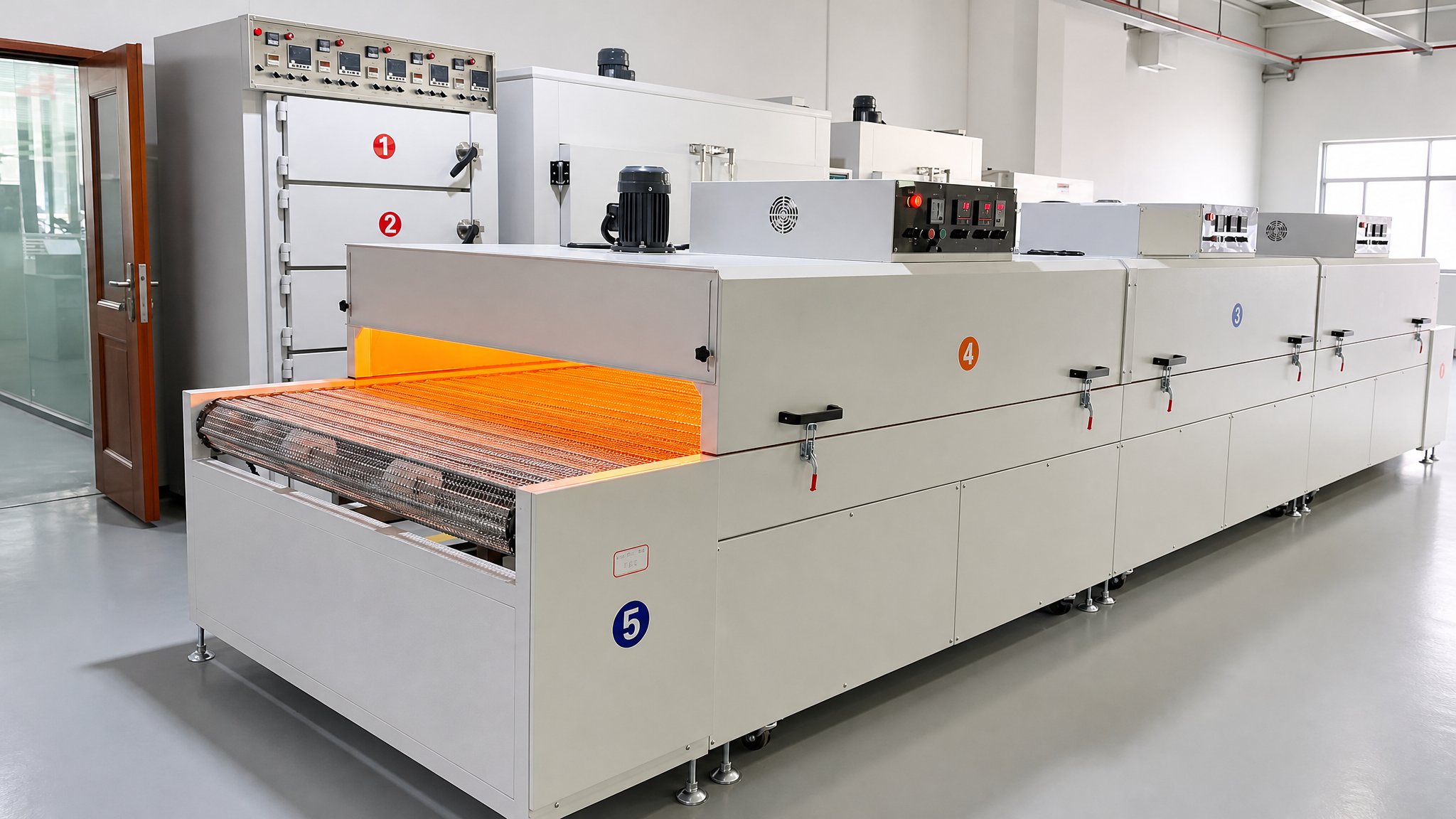
1. Which Metal Fasteners Can Be Processed?
A mesh belt oven can be considered for many small and medium-sized metal components that can be safely transported on a conveyor belt. Typical products include:
- Bolts and screws: Metal fasteners in different lengths, diameters, and head designs.
- Nuts: Hex nuts and other metal nuts, subject to their dimensions and loading requirements.
- Washers: Flat washers and similar small components.
- Stamped metal parts: Small metal components produced through stamping or forming processes.
- Other hardware components: Metal fittings and small mechanical parts suitable for mesh belt transportation.
Product suitability depends on more than the material itself. The dimensions, weight, shape, surface condition, and quantity of parts loaded onto the belt all affect transportation and heating performance.
For example, very small components may fall through mesh openings if the belt specification is unsuitable. Long or irregularly shaped parts may overlap or become tangled when they are loaded too closely together.
Before selecting equipment, it is advisable to evaluate actual product samples or drawings and confirm that the belt structure can support stable transportation.
2. Typical Heating and Drying Applications
2.1 Drying Metal Fasteners After Washing
Metal fasteners may go through washing or cleaning processes to remove dust, processing residues, or other contaminants. After washing, residual water may remain on product surfaces, especially in threads, grooves, holes, and contact areas.
A continuous mesh belt drying oven can transport these components through a heated chamber to help remove surface moisture. The required drying conditions depend on the product geometry, amount of residual moisture, loading arrangement, and the required final condition.
2.2 Continuous Heating of Metal Components
Some manufacturing processes require metal components to reach a specified temperature before the next production step. A conveyor oven can provide continuous transportation and controlled heating, helping production teams maintain a more consistent processing routine.
The required temperature and residence time should be determined according to the actual material and process requirements. They should not be selected simply by copying settings used for another product.
2.3 Drying Other Industrial Metal Parts
In addition to fasteners, mesh belt ovens may be suitable for drying small metal hardware, stamped components, and other parts that can be transported reliably on a mesh conveyor.
For products with oil, chemical residues, or special surface treatments, the process must be evaluated separately. The composition of the residue, ventilation requirements, and potential safety risks should be reviewed before the equipment is specified.
3. How a Continuous Mesh Belt Oven Works
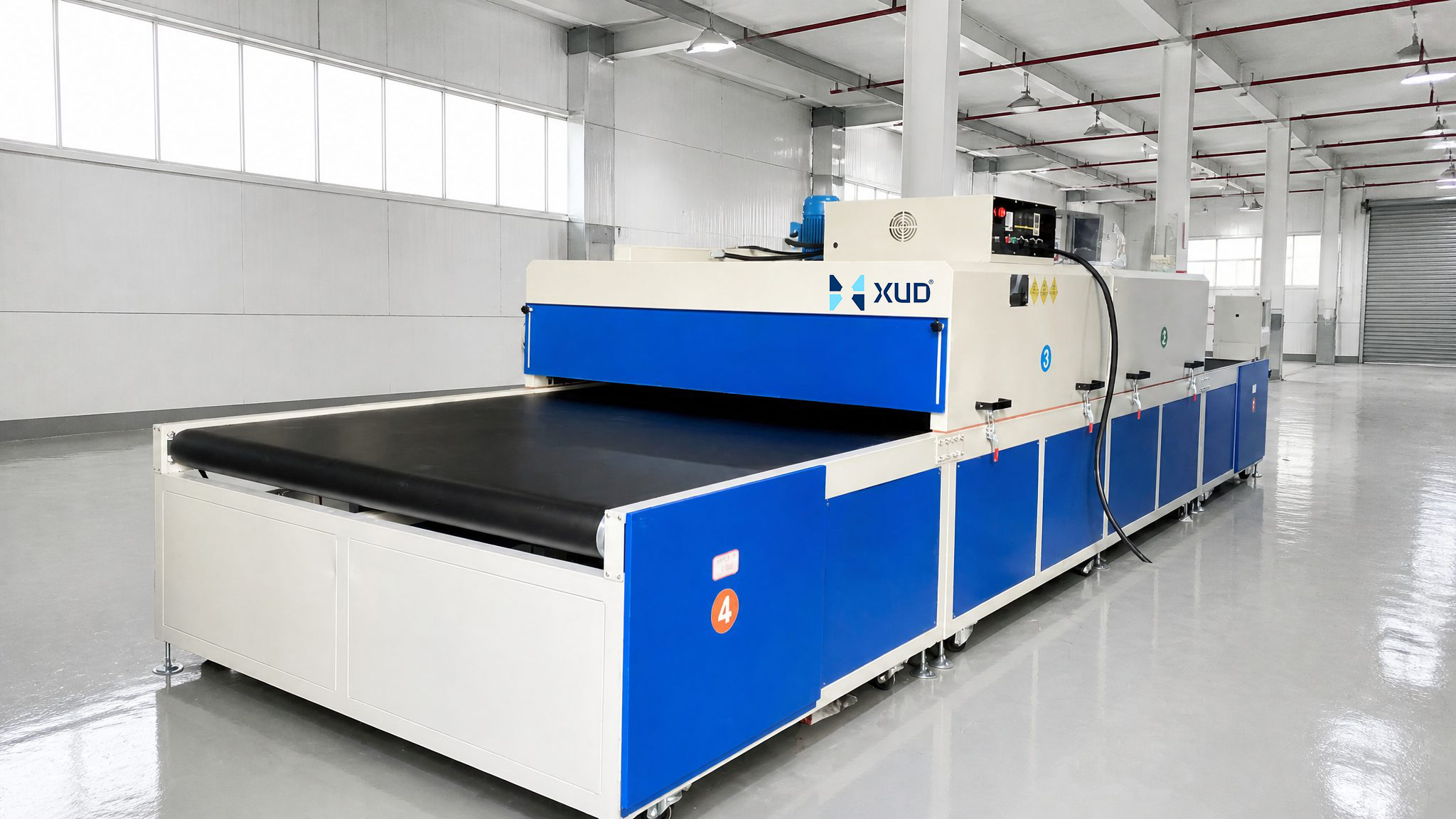
A continuous mesh belt oven uses a moving conveyor to carry products through a heated chamber. Instead of processing one batch at a time, products enter from the feeding end, pass through the heating area, and leave from the discharge end.
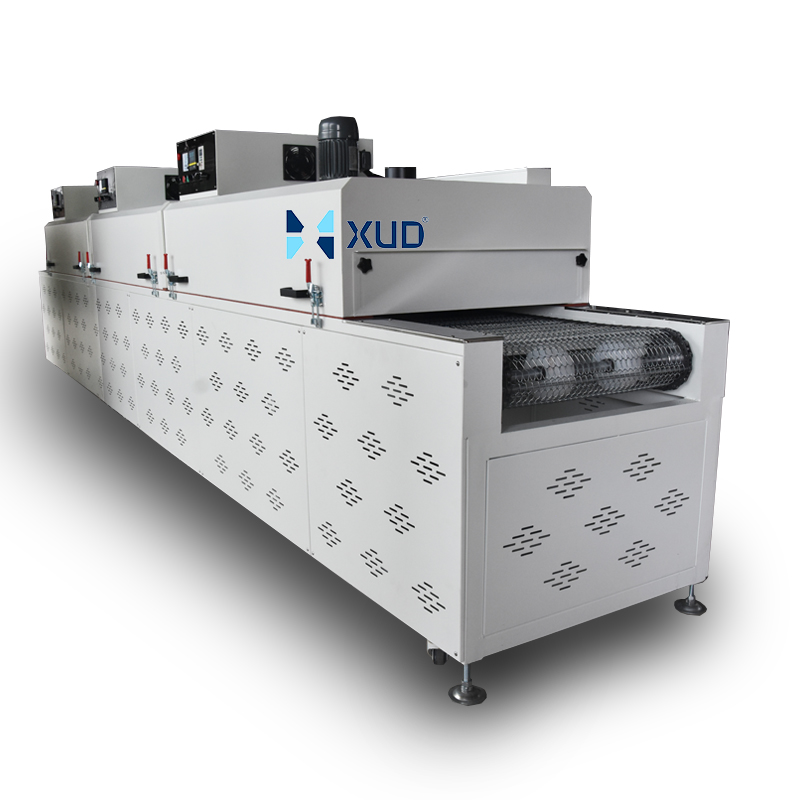
A typical system may include the following components, depending on the required configuration:
- Feeding section: Products are placed onto the mesh belt manually or through a suitable feeding arrangement.
- Mesh belt conveyor: The belt transports products through the oven at an adjustable or specified speed.
- Heating chamber: The chamber provides the required heating environment for the products.
- Air circulation system: Circulation fans and air ducts can distribute heated air through the processing area.
- Temperature control system: Temperature sensors and controllers monitor and regulate the heating process.
- Discharge section: Processed products leave the oven for collection or the next production step.
For applications involving moisture removal, the ventilation and exhaust arrangement also deserves attention. Heated air can carry moisture away from product surfaces, but the oven must have an appropriate air exchange design for the actual moisture load.
Depending on production requirements, the oven may be designed with different heating zones, conveyor dimensions, air circulation arrangements, and feeding or discharging methods.
4. Five Factors to Consider When Selecting a Mesh Belt Oven
4.1 Product Dimensions and Weight
The size and weight of each component affect how it is transported and heated. Small screws, heavy bolts, and flat washers have different loading characteristics.
Product dimensions also determine the appropriate mesh opening, belt structure, and usable conveyor width. If products are likely to fall through the belt or become trapped in its openings, the conveyor design needs to be adjusted.
4.2 Loading Density and Product Spacing
Loading too many parts onto the belt may reduce airflow around individual components. Products can overlap, block one another, or create areas where moisture is difficult to remove.
For drying applications, it is important to consider how products are distributed across the belt. A suitable loading arrangement should allow heated air to reach the required product surfaces.
For small fasteners, a sample loading test can help determine a practical loading density before finalizing the equipment dimensions.
4.3 Conveyor Speed and Heating Time
Conveyor speed determines how long products remain inside the heating chamber. A slower belt provides a longer processing time, while a faster belt increases the number of products transported within a given period.
However, increasing belt speed does not automatically mean higher effective production. If products leave the oven before reaching the required drying or heating condition, the actual process result may be unacceptable.
The required belt speed should therefore be established through process testing, considering the heating chamber length and the target processing time.
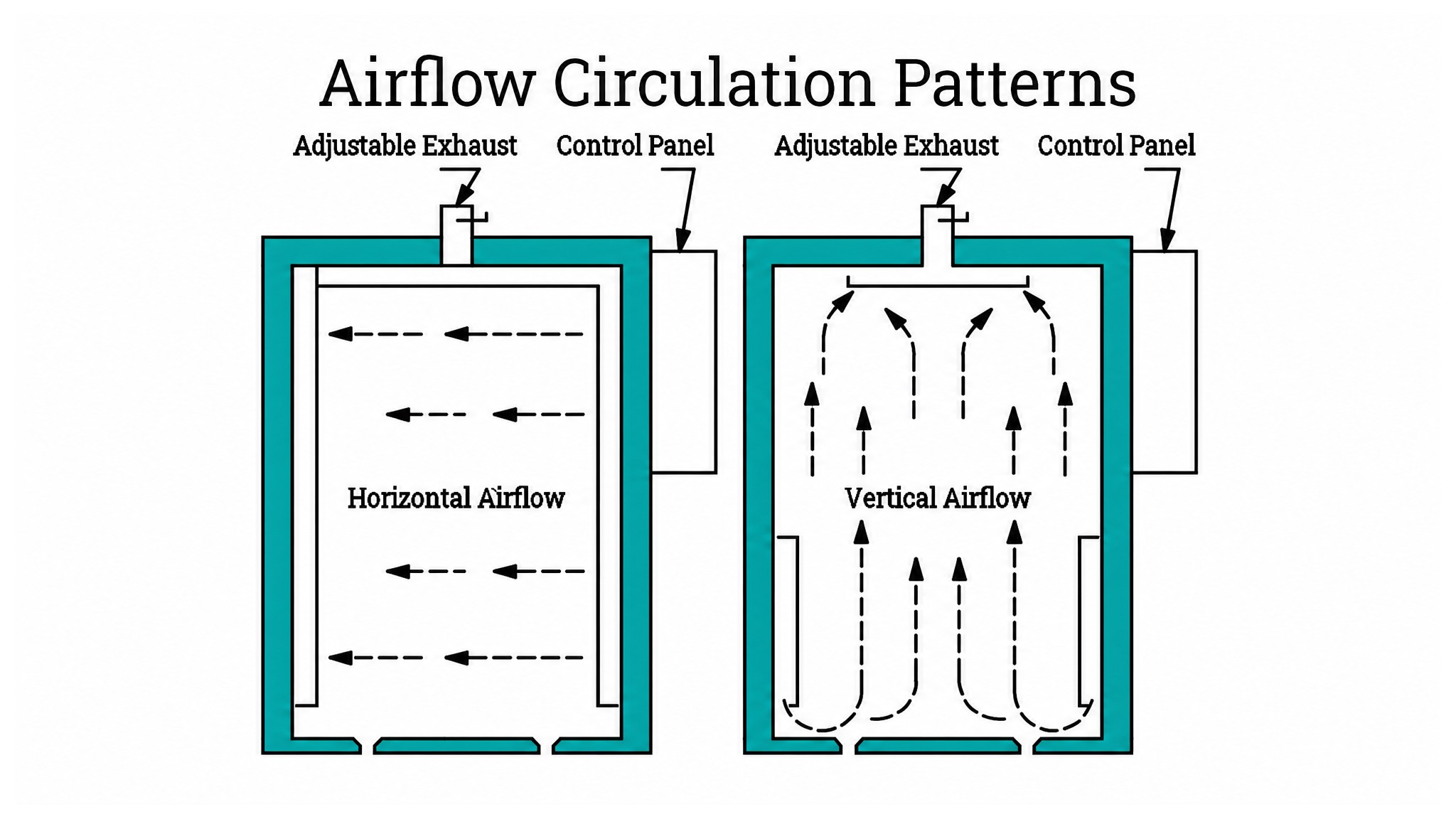
4.4 Air Circulation and Temperature Uniformity
Temperature uniformity is particularly important when products are distributed across a wide conveyor belt or loaded in multiple rows.
Airflow should be evaluated at different positions inside the chamber, including the left, center, and right sides of the conveyor. The airflow arrangement should also consider the product loading height and the possibility of blocked air passages.
For critical applications, temperature measurements at multiple positions and product-level testing can help verify whether the oven meets the required process conditions.
4.5 Moisture Exhaust and Ventilation
When wet metal fasteners enter a drying oven, moisture evaporates into the chamber atmosphere. If the moisture is not removed effectively, humidity inside the oven may increase and affect drying performance.
The ventilation design should be based on the amount of water entering the oven, the required drying time, and the operating conditions. Products that carry cleaning agents, oils, or other volatile substances require additional process and safety assessment.
5. How to Estimate Production Capacity
Production capacity is one of the most important factors when choosing a continuous mesh belt oven. An oven that is too small may become a production bottleneck, while an oversized system may increase equipment investment and operating costs unnecessarily.
For an initial estimate, the theoretical mass throughput can be calculated using the following formula:
Theoretical Throughput (kg/h)
= Usable Belt Width (m) × Loading Density (kg/m²) × Belt Speed (m/min) × 60
For example, this formula can be used to estimate how much product may pass through the oven per hour based on the usable loading area, average loading density, and conveyor speed.
For piece-count production, another useful calculation is:
Pieces per Hour
= Pieces per Minute × 60
These calculations provide an initial reference rather than a guaranteed production output. Actual capacity depends on product spacing, loading stability, required residence time, heating performance, and unloading arrangements.
Important: A higher theoretical throughput is not useful if products cannot achieve the required drying or heating result. The final design should be verified through product testing under realistic loading conditions.
6. Mesh Belt Oven vs. Batch Oven
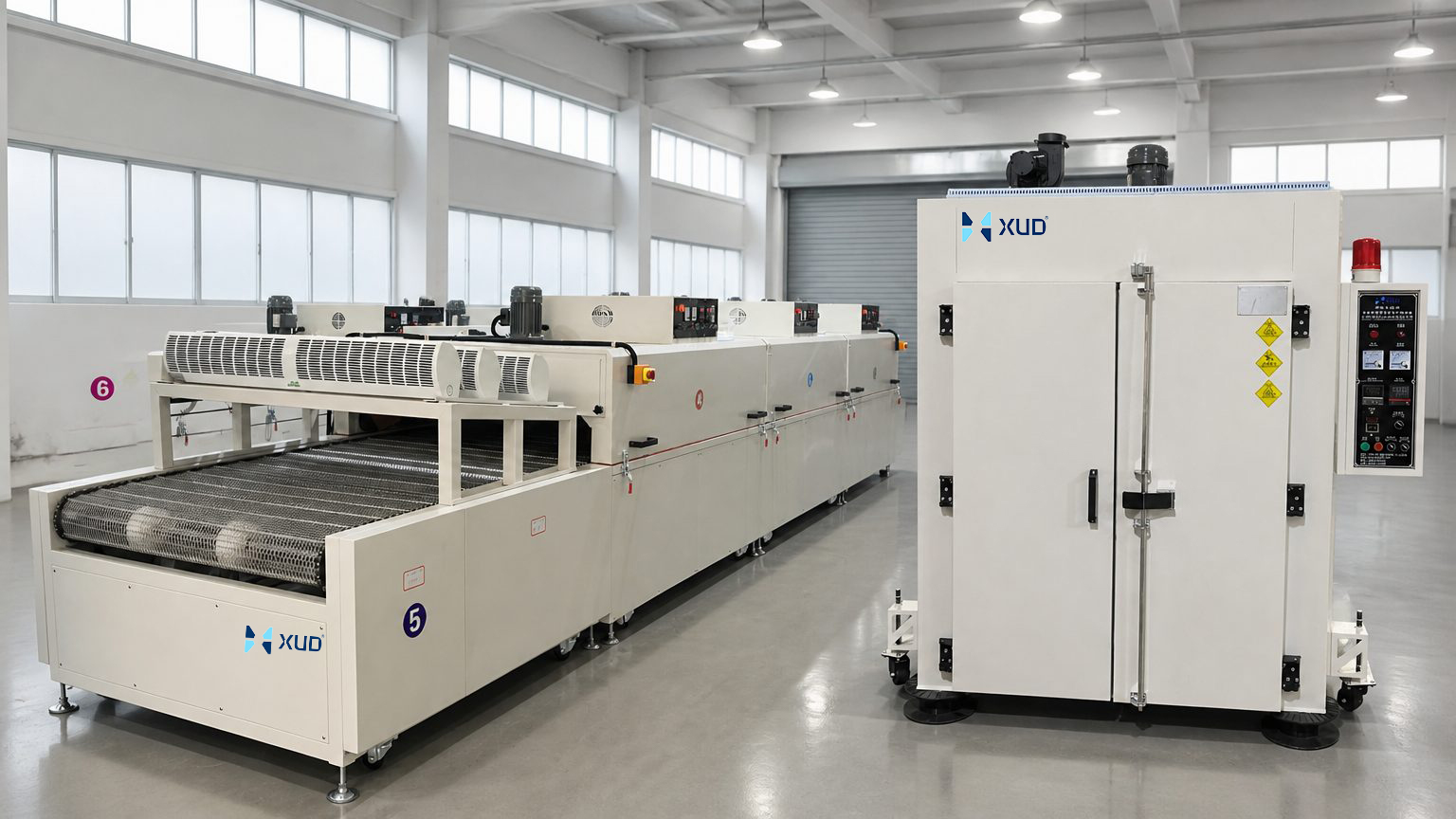
Both mesh belt ovens and batch ovens can be used for industrial heating and drying. The main difference is how products are loaded, transported, and processed.
| Comparison | Mesh Belt Oven | Batch Oven |
|---|---|---|
| Processing method | Continuous transportation | Separate batches |
| Product handling | Products move through the chamber on a belt | Products are loaded and unloaded for each cycle |
| Production suitability | Suitable for stable, repeated production flows | Suitable for batch-based or varied production |
| Product flexibility | Best when product size and process conditions are relatively consistent | Can be more flexible for different batch sizes and product types |
| Automation | Can be integrated with feeding and discharge systems | May require more batch handling |
A mesh belt oven may be a practical choice when products are processed continuously in relatively stable quantities. A batch oven may be more suitable when production involves frequent product changes, smaller batches, or irregular processing schedules.
The best choice depends on actual production organization, product characteristics, available floor space, and investment considerations.
7. Common Operating Problems and Solutions
7.1 Uneven Drying Across the Belt
Possible causes: Uneven airflow, excessive loading density, overlapping products, or inconsistent product distribution.
What to check: Compare product results at different belt positions. Review the air circulation arrangement and adjust loading density or product spacing where necessary.
7.2 Products Remain Wet After Processing
Possible causes: Insufficient residence time, excessive moisture entering the oven, unsuitable temperature settings, or inadequate moisture exhaust.
What to check: Measure the moisture condition before and after processing. Review belt speed, loading quantity, ventilation, and the actual drying requirements.
7.3 Products Accumulate or Overlap on the Belt
Possible causes: Irregular feeding, unsuitable belt width, product movement during transportation, or excessive loading.
What to check: Evaluate the feeding method, belt speed, mesh structure, and product arrangement. If necessary, consider a different loading method or conveyor design.
7.4 Product Surface Discoloration
Possible causes: Excessive temperature, prolonged exposure to heated air, or changes in the product surface condition.
What to check: Confirm the material and surface requirements before setting process conditions. Test representative samples and determine whether the selected heating environment is suitable.
These issues should be investigated through actual product testing rather than solved by changing temperature settings alone.
8. What Information Is Needed for Customization?
A continuous mesh belt oven should be designed around the products and production process, not simply selected from a standard equipment size.
To evaluate a suitable solution, manufacturers should provide the following information:
- Product information: Product name, material, dimensions, weight, and photos or drawings.
- Product condition: Whether parts are dry, wet after washing, oily, or carrying other residues.
- Processing purpose: Drying, moisture removal, or general heating.
- Temperature requirement: Required operating temperature and acceptable temperature variation, if specified.
- Production capacity: Required output in kg/h or pieces/h.
- Conveyor requirements: Preferred belt width, loading arrangement, and feeding or discharging method, if known.
- Factory conditions: Available installation space and local electrical supply.
- Automation requirements: Manual feeding, automatic feeding, automatic collection, or integration with an existing production line.
Based on this information, the oven structure, heating method, conveyor dimensions, circulation system, and control configuration can be evaluated.
For suitable applications, electric heating or gas heating may be considered according to the required process, factory utilities, and operating conditions.
Providing actual product samples or clear product photos is especially helpful. It allows the equipment design to consider product distribution, belt opening size, loading density, and the required processing time more accurately.
9. Frequently Asked Questions
Q1: Can a continuous mesh belt oven dry bolts, nuts, and screws?
Yes, it may be suitable for drying many types of metal fasteners, including bolts, nuts, and screws. The final design depends on product dimensions, weight, loading conditions, and the required drying result.
Q2: Can different sizes of fasteners be processed in the same oven?
Different sizes may be processed in the same oven if they are compatible with the conveyor structure and process conditions. However, very different product dimensions or drying requirements may require separate settings or production arrangements.
Q3: How do I determine the required production capacity?
Start with the required output in kilograms per hour or pieces per hour. Then consider product weight, belt loading density, usable belt width, conveyor speed, and the required processing time. Actual capacity should be confirmed through product testing.
Q4: Can the oven dry fasteners after washing?
A mesh belt oven can be evaluated for drying residual surface moisture after washing. The amount of water carried into the oven, product geometry, loading arrangement, and ventilation requirements must be considered when determining the configuration.
Q5: How can uniform heating and drying be achieved?
Uniform results depend on the heating chamber design, air circulation, temperature control, product spacing, and conveyor speed. Testing products at different positions across the belt can help verify actual performance.
Conclusion
A continuous mesh belt oven can help manufacturers improve the handling and processing efficiency of metal fasteners and other small metal components that require continuous heating or drying.
At Dongguan Xinyuanda Machinery Equipment Co., LTD., we focus on industrial oven and drying equipment solutions. If you are planning a continuous heating or drying process for bolts, nuts, screws, or other metal components, you can contact us with your product details and production requirements for an equipment evaluation.
Contact Xinyuanda
Company: Dongguan Xinyuanda Machinery Equipment Co., LTD.
WhatsApp: +86 18998007076
Email: annalan@xudoven.com
Website: www.xudoven.com
Types of Laboratory Ovens: A Complete Guide to Designs, Functions, and Applications
Related Article