Types of Laboratory Ovens: A Complete Guide to Designs, Functions, and Applications
Laboratory ovens are essential pieces of equipment used in research laboratories, quality control departments, testing facilities, and industrial laboratories. They provide controlled heating conditions for processes such as drying, sample conditioning, and heat treatment.
However, not all laboratory ovens work in the same way. Different designs offer different heating methods, airflow patterns, temperature ranges, and operating environments. Choosing the right type is important for achieving consistent results, protecting samples, and improving process efficiency.
Table of Contents
- What Is a Laboratory Oven?
- How Are Laboratory Ovens Classified?
- Different Types of Laboratory Ovens and How They Work
- Comparison of Different Laboratory Oven Types
- How to Choose the Right Laboratory Oven
- Common Mistakes When Selecting a Laboratory Oven
- Custom Laboratory Oven Solutions for Specific Requirements
- Frequently Asked Questions
1. What Is a Laboratory Oven?
A laboratory oven is a temperature-controlled heating device used to heat, dry, condition, or process samples and materials in a laboratory environment. It typically consists of an insulated chamber, heating elements, a temperature control system, and, depending on the design, an air circulation system.
The temperature inside the chamber is controlled according to the requirements of the application. Users can set a target temperature and processing time, allowing samples to be treated under repeatable conditions.
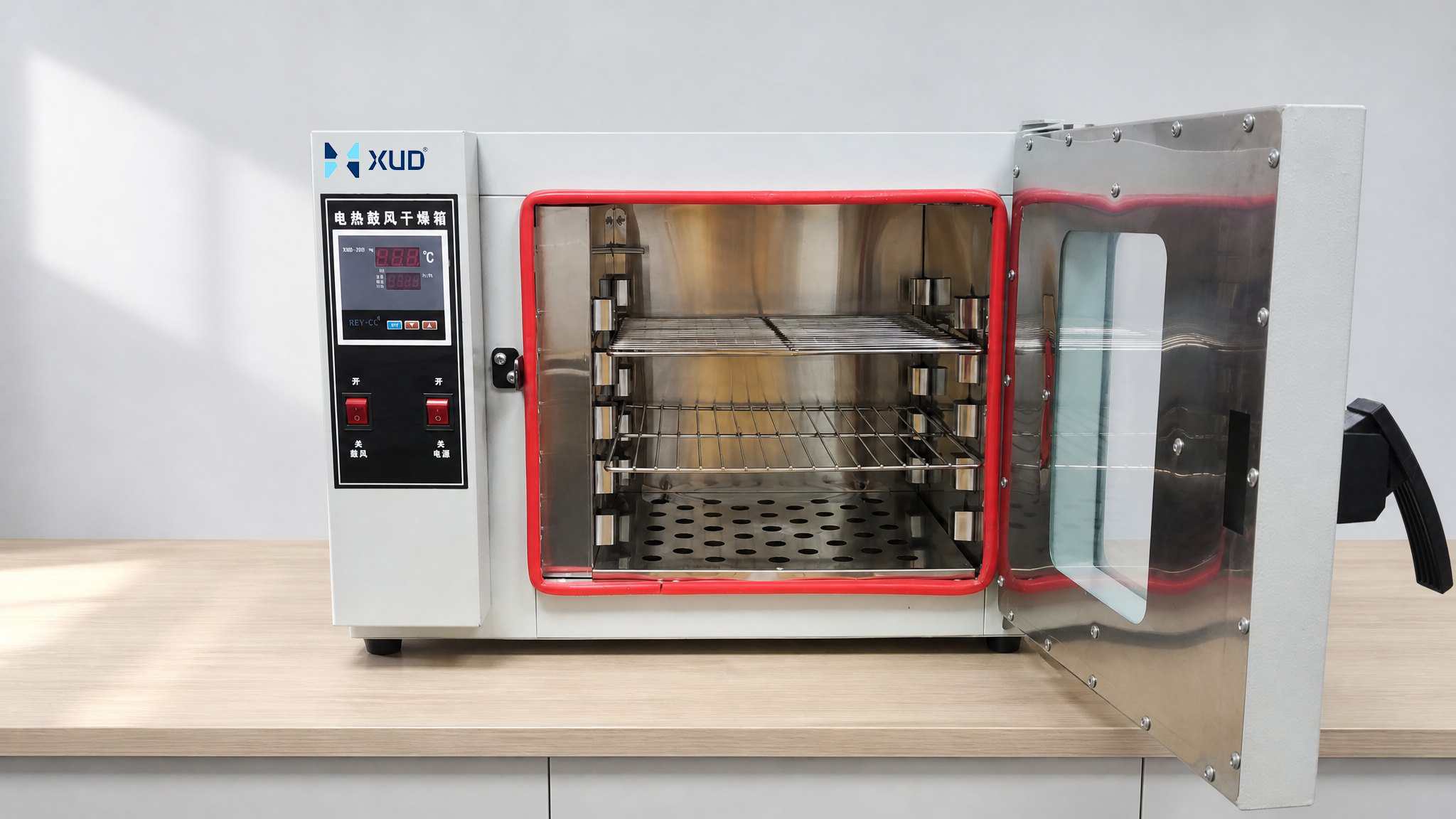
Basic Functions of a Laboratory Oven
- Drying: Removing moisture or residual liquids from suitable materials and samples.
- Heating: Raising the temperature of samples to a specified level.
- Conditioning: Preparing materials under controlled temperature conditions before testing or further processing.
- Heat treatment: Applying controlled heating processes to materials when the required temperature and process conditions are suitable for the equipment.
- Testing and evaluation: Supporting laboratory procedures that require consistent thermal conditions.
Laboratory Oven vs. Industrial Oven
Laboratory ovens and industrial ovens share the same basic purpose of providing controlled heating, but they are generally designed for different operating requirements.
| Comparison | Laboratory Oven | Industrial Oven |
|---|---|---|
| Main purpose | Laboratory testing and sample processing | Production and industrial processing |
| Capacity | Usually smaller chamber capacity | Can be designed for large batches or continuous production |
| Configuration | Often standardized laboratory configurations | Can be customized for specific processes |
| Typical applications | Sample drying, conditioning, and testing | Component drying, curing, and material processing |
2. How Are Laboratory Ovens Classified?
Laboratory ovens can be classified in several ways.
Classification by Air Circulation
- Natural convection ovens: Air moves through natural heat-driven circulation without a circulation fan.
- Forced air convection ovens: A fan circulates heated air throughout the chamber to improve temperature distribution.
Classification by Working Environment
- Standard atmospheric ovens: Operate under normal atmospheric pressure.
- Vacuum ovens: Use a vacuum system to reduce chamber pressure during processing.
Classification by Contamination Control
- Standard laboratory ovens: Designed for general laboratory heating and drying applications.
- Cleanroom or dust-controlled ovens: Designed with additional measures to reduce particle contamination, subject to the required cleanliness specification.
Classification by Temperature and Chamber Structure
Laboratory ovens can also be grouped according to their operating temperature range, chamber size, number of chambers, and internal configuration. For example, some applications require a compact single-chamber oven, while others need a larger chamber with multiple shelves or customized loading arrangements.
When comparing laboratory oven types, it is therefore useful to consider several classification dimensions rather than relying on a single product name.
3. Different Types of Laboratory Ovens and How They Work
Among the different laboratory oven designs, forced air convection ovens, laboratory drying ovens, and vacuum laboratory ovens are commonly considered for different heating and drying requirements. Each type has its own operating principle and application range.
3.1 Forced Air Convection Laboratory Oven
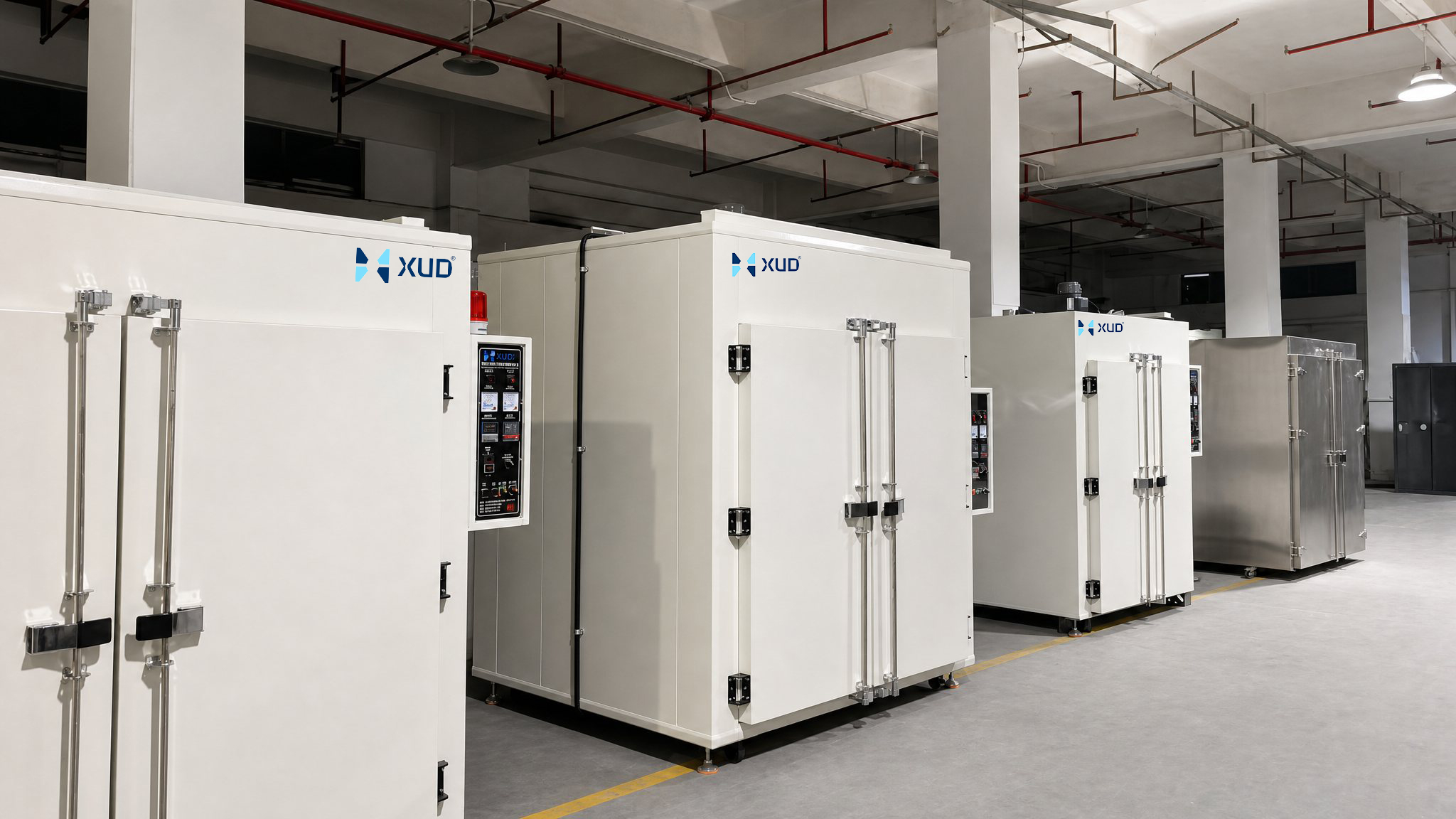
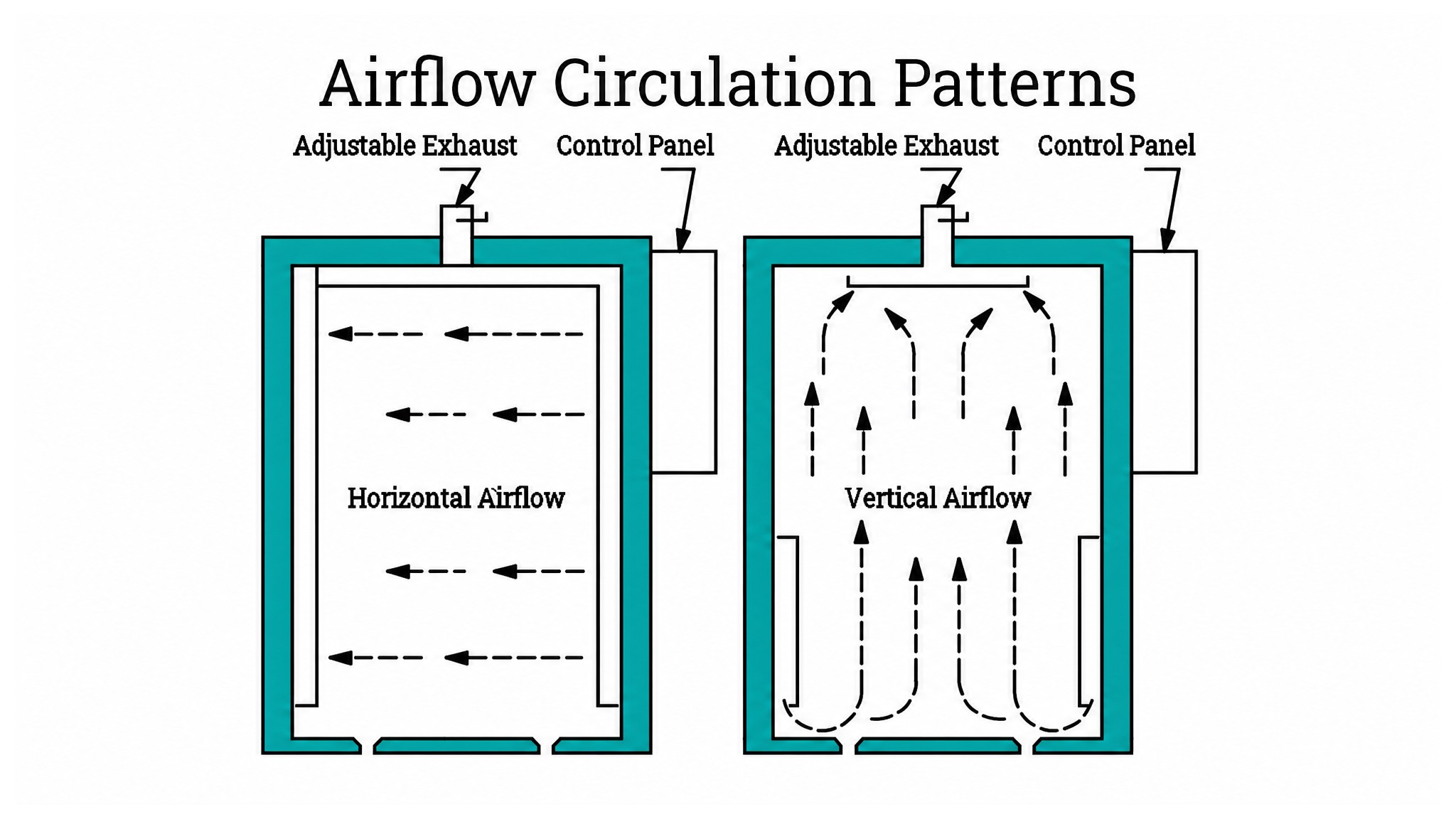
A forced air convection laboratory oven uses a fan to circulate heated air throughout the chamber. The circulating air transfers heat to samples and helps reduce temperature differences between different areas of the chamber.

How It Works
Electrical heating elements heat the air inside or around the chamber. A circulation fan then moves the heated air through the chamber and around the samples. The temperature controller monitors the temperature and regulates the heating system to maintain the selected setpoint.
Key Characteristics
- Forced air circulation supports more consistent temperature distribution.
- Suitable for applications involving multiple samples or loaded shelves.
- Airflow can influence drying speed and heat transfer.
- The airflow design should match the material and sample arrangement.
Advantages and Limitations
The main advantage is improved air movement and temperature distribution compared with many natural convection designs. However, strong airflow may not be suitable for very lightweight powders, loose samples, or materials that are easily disturbed. In these cases, airflow speed and chamber layout should be considered carefully.
Typical Applications
Forced air convection ovens are commonly considered for drying laboratory samples, conditioning materials, heating components, and processes that require consistent temperature conditions across a loaded chamber.
3.2 Laboratory Drying Oven
A laboratory drying oven is designed primarily to remove moisture or residual liquids from suitable samples and materials through controlled heating. It is widely used in laboratories where drying conditions need to be repeatable.

How It Works
The heating system raises the chamber temperature to a selected level. Heat is transferred to the samples, allowing moisture to evaporate. Depending on the oven design, air may circulate naturally or through a fan-assisted system. Moist air is then released or managed through the oven's ventilation arrangement.
Key Characteristics
- Designed for controlled drying processes.
- Available with different chamber sizes and shelf arrangements.
- Temperature and drying time can be adjusted according to the material.
- Can use natural or forced air circulation depending on the model.
Advantages and Limitations
Laboratory drying ovens provide a practical solution for routine drying and moisture removal. Their operating procedures are generally straightforward. However, conventional atmospheric drying may not be suitable for heat-sensitive materials that degrade at the required drying temperature. It may also be unsuitable for materials that release hazardous or flammable vapors unless the equipment is specifically designed and approved for that purpose.
Typical Applications
Typical applications include drying suitable glassware, metal components, mineral samples, test specimens, and other materials that can withstand the selected temperature and atmospheric operating conditions.
3.3 Vacuum Laboratory Oven
A vacuum laboratory oven is designed to heat materials inside a sealed chamber while reducing the internal pressure. Lower pressure can allow certain materials to release moisture or volatile substances at lower temperatures than would be required under normal atmospheric conditions.

How It Works
Samples are placed inside the vacuum chamber, and the chamber is sealed. A vacuum pump reduces the internal pressure to the required level. The heating system then raises the material temperature according to the process settings. Temperature, pressure, and processing time need to be controlled according to the material and application.
Key Characteristics
- Operates under reduced pressure.
- Can support drying at lower temperatures for suitable materials.
- Requires a sealed chamber and a compatible vacuum system.
- Process performance depends on pressure, temperature, material properties, and loading conditions.
Advantages and Limitations
A vacuum oven can be useful for heat-sensitive materials and processes where reduced-pressure drying is required. However, it generally involves more complex equipment and operating procedures than a standard laboratory oven. Not every material or solvent is suitable for vacuum processing. Flammable, explosive, or hazardous vapors require a specifically engineered and approved system, together with appropriate safety measures.
Typical Applications
Vacuum laboratory ovens may be used for drying certain electronic components, specialty materials, and samples that require reduced-pressure processing. Suitability should always be confirmed against the material's safety data and process requirements.
4. Comparison of Different Laboratory Oven Types
Understanding the differences between laboratory oven types can make equipment selection easier. The following table summarizes their main operating characteristics.
| Oven Type | Heating / Operating Method | Main Advantages | Considerations |
|---|---|---|---|
| Forced Air Convection Oven | Fan-assisted heated air circulation | Improved air movement and temperature distribution | Airflow may affect lightweight or sensitive samples |
| Laboratory Drying Oven | Controlled heating with natural or forced air circulation | Practical for routine drying applications | Material must tolerate the operating temperature and environment |
| Vacuum Laboratory Oven | Heating under reduced pressure | Can support lower-temperature drying for suitable materials | Higher system complexity and specific safety requirements |
Which Laboratory Oven Is the Most Versatile?
There is no single laboratory oven that is ideal for every application. A forced air convection oven can be a practical choice when consistent air circulation is important. A laboratory drying oven is suitable for routine moisture removal, while a vacuum oven is more appropriate when the process requires reduced pressure.
The best choice depends on the material, the required process conditions, and the performance expectations. It is more useful to match the oven to the application than to select equipment based only on a general product category.
Can One Laboratory Oven Perform Multiple Functions?
Some ovens can support several processes, such as heating, drying, and conditioning, provided that the chamber design, temperature range, airflow, and control system meet the requirements of each process. However, an ordinary oven should not be assumed to perform vacuum drying or specialized hazardous-material processing without the appropriate design.
5. How to Choose the Right Laboratory Oven
1. Understand the Material Characteristics
Start by identifying the material to be processed. Consider its size, shape, weight, moisture content, heat sensitivity, and any substances it may release during heating. These characteristics influence the required heating method, airflow, chamber arrangement, and safety measures.
2. Define the Required Process Parameters
Temperature is only one part of the process. You should also define the target temperature, temperature uniformity requirements, heating time, drying time, operating cycle, and whether the process requires natural convection, forced circulation, or reduced pressure.
If the process requires a specific temperature distribution, discuss the actual measurement points and acceptable temperature variation with the equipment supplier. Do not assume that the controller setpoint alone represents the temperature at every position inside the chamber.
3. Consider Chamber Size and Loading Arrangement
The chamber should accommodate the samples with sufficient space for the intended airflow and heat transfer. Consider the dimensions of individual samples, the number of pieces per batch, shelf spacing, loading method, and available laboratory space.
4. Check the Heating and Control System
Review the heating power, temperature controller, sensors, timer, over-temperature protection, and electrical supply. The required control functions should reflect the process rather than simply adding unnecessary features.
5. Evaluate Safety and Operating Conditions
Consider ventilation, exhaust requirements, material compatibility, electrical protection, and any special hazards associated with the process. If samples release flammable or hazardous vapors, a standard laboratory oven may not be suitable. Obtain a proper engineering assessment before selecting the equipment.
6. Common Mistakes When Selecting a Laboratory Oven
Choosing Based on Temperature Range Alone
A suitable maximum temperature does not guarantee that an oven can meet the required temperature uniformity, airflow, or processing time. Evaluate the complete process requirements.
Ignoring Sample Loading Conditions
Overloading the chamber or arranging samples too closely can restrict airflow and affect heating performance. Chamber capacity should be selected based on the actual loading arrangement, not just the external dimensions.
Selecting the Wrong Air Circulation Method
Forced air circulation is not automatically the best option for every material. Some samples may be disturbed by excessive airflow, while other processes require more active air movement.
Overlooking Safety Requirements
Materials that release flammable vapors, corrosive substances, or other hazardous emissions require specific engineering considerations. A standard drying oven should not be used for such processes unless it has been appropriately designed and approved.
Not Confirming the Actual Process Before Ordering
Providing only a required temperature is often insufficient. Suppliers also need to understand the sample dimensions, batch quantity, processing time, and operating conditions to recommend a suitable configuration.
7. Custom Laboratory Oven Solutions for Specific Requirements
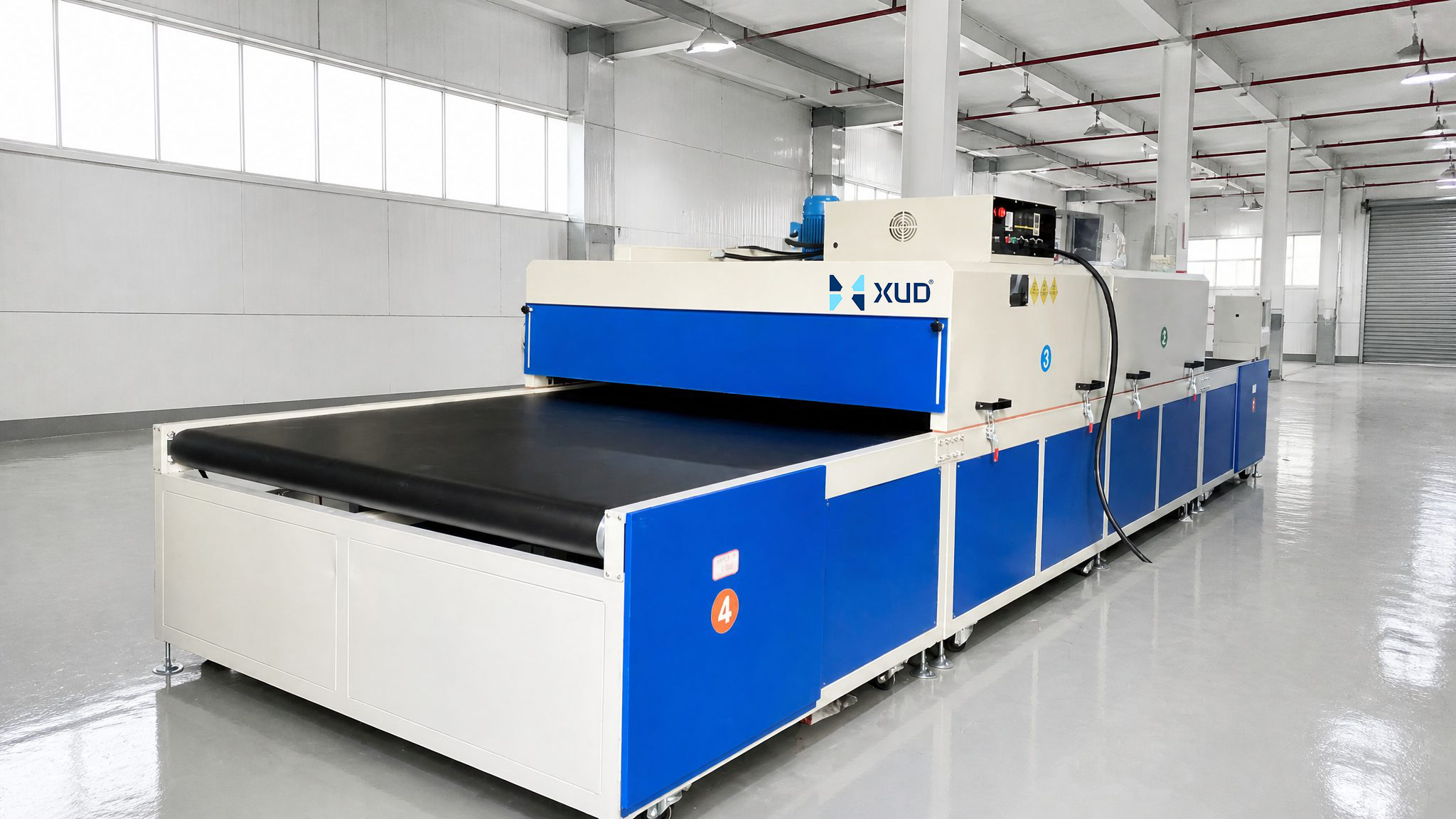
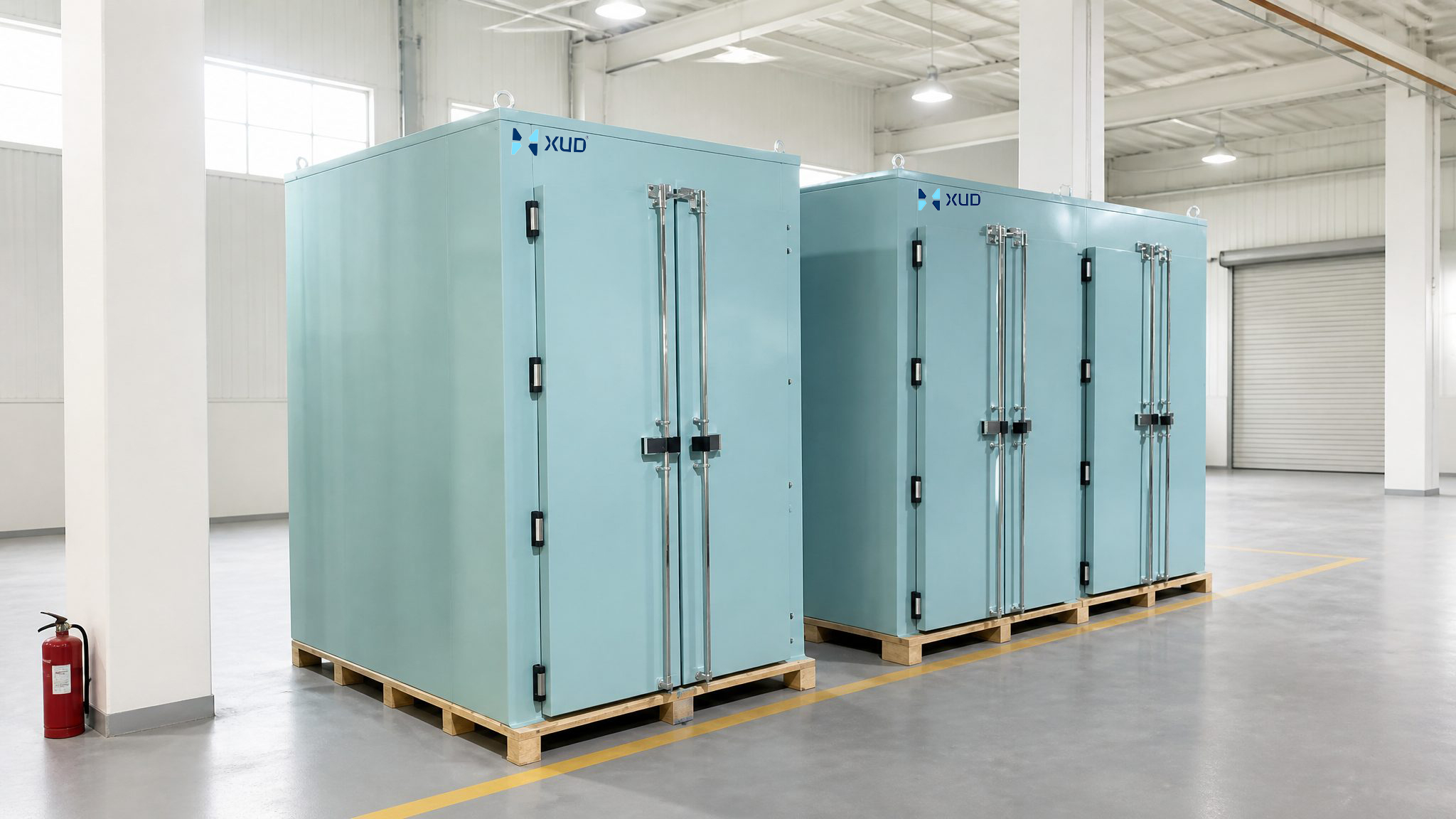
Standard laboratory ovens can meet many routine heating and drying requirements. However, some applications need a customized chamber size, special shelf arrangement, specific airflow design, or a particular temperature control configuration.
At Dongguan Xinyuanda Machinery Equipment Co., LTD., we provide industrial oven and drying equipment solutions based on customers' actual processing requirements. Our equipment configurations can be discussed according to the material, chamber dimensions, temperature requirements, and production or testing process.
Customization Options
- Heating method: Electric heating or other suitable heating configurations according to the application.
- Air circulation: Natural convection or forced air circulation, depending on the required heat distribution.
- Chamber dimensions: Customized internal dimensions to accommodate specific samples or components.
- Internal structure: Shelf quantity, shelf spacing, trays, and loading arrangements.
- Temperature control: Controller and sensor configurations selected according to the process requirements.
- Electrical configuration: Power supply and electrical components matched to the customer's local requirements.
What Information Should You Provide for a Custom Oven?
- Material name and application.
- Sample or product dimensions and weight.
- Required operating temperature.
- Required heating or drying time.
- Quantity of samples per batch.
- Air circulation or special atmosphere requirements.
- Available electrical power supply and frequency.
- Any special safety or environmental requirements.
Photos, drawings, or sample specifications are also helpful when evaluating chamber dimensions and loading arrangements. With these details, the equipment configuration can be assessed more accurately before quotation.
8. Frequently Asked Questions About Laboratory Ovens
What are the main types of laboratory ovens?
Common laboratory oven types include forced air convection ovens, natural convection ovens, laboratory drying ovens, and vacuum laboratory ovens. They can also be classified by temperature range, chamber structure, and contamination control requirements.
Which laboratory oven is suitable for heat-sensitive materials?
A vacuum laboratory oven may be suitable for certain heat-sensitive materials because reduced pressure can allow moisture removal at lower temperatures. However, suitability depends on the material, its properties, and the required process conditions.
Can a laboratory oven be customized?
Yes. Depending on the manufacturer and application, customization may include chamber dimensions, shelf arrangements, heating method, air circulation, temperature control, and electrical configuration. The required specifications should be confirmed before production.
Company: Dongguan Xinyuanda Machinery Equipment Co., LTD.
WhatsApp: +86 18998007076
Email: annalan@xudoven.com
Website: www.xudoven.com
© Dongguan Xinyuanda Machinery Equipment Co., LTD. | Industrial Oven & Drying Equipment Manufacturer
Electric Constant Temperature Drying Oven Operating Guide
Related Article