What Information Should You Prepare Before Ordering a Rubber Curing Oven?
What Information Should You Prepare Before Ordering a Rubber Curing Oven?
A practical RFQ preparation guide for manufacturers planning a customized industrial rubber oven.
Ordering a customized rubber curing oven involves more than choosing a chamber size or asking for a price. The equipment needs to match the actual products, production process, loading arrangement, factory utilities, and operating requirements.
When the initial inquiry contains only a general request such as "one rubber curing oven" or "an oven for rubber parts," the manufacturer may not have enough information to determine the suitable chamber dimensions, heating capacity, loading structure, or control configuration.
A more complete inquiry helps reduce misunderstandings, makes quotations easier to compare, and gives both parties a clearer basis for discussing the equipment design.
This article focuses on preparing a technical inquiry package for an oven manufacturer. It is not another general oven selection guide. The goal is to help buyers turn their production requirements into clear information that can be used for equipment design and quotation.
In This Article
- Define the Exact Process the Oven Must Perform
- Prepare Product Information and Drawings
- Provide the Actual Heating Process Requirements
- Clarify Production Capacity and Batch Requirements
- Show the Loading and Handling Arrangement
- Check Factory Utilities and Installation Conditions
- Confirm Control, Monitoring and Safety Requirements
- Clarify Quotation Scope and Acceptance Criteria
- A Practical Rubber Curing Oven RFQ Checklist
- Frequently Asked Questions
1. Define the Exact Process the Oven Must Perform
Before discussing equipment dimensions or heating power, explain what happens to the rubber products before and after they enter the oven.
The term "rubber curing" may be used broadly in customer inquiries, but different factories may be referring to different production stages. For example, an oven may be required for an additional heating stage after molding, a material-specific post-curing process, or another controlled heating application.
These processes should not be treated as interchangeable. If the product requires primary vulcanization under pressure inside a mold, a conventional hot-air oven should not be specified as a replacement for the required molding equipment.
To avoid misunderstanding, explain the following:
- What process takes place before the products enter the oven?
- Are the products already molded or initially vulcanized?
- Is the oven used for post-curing, additional heating, drying, or another defined process?
- What should happen to the products after the heating cycle?
- Are there any material supplier instructions or customer process specifications?
If your application involves post-curing, our article When Do Rubber Parts Need Post-Curing After Molding? explains when this additional heating stage may be required.
2. Prepare Product Information and Drawings
The oven manufacturer needs to understand the products that will be heated. A product photograph is useful, but dimensions and physical details make the information much more actionable.
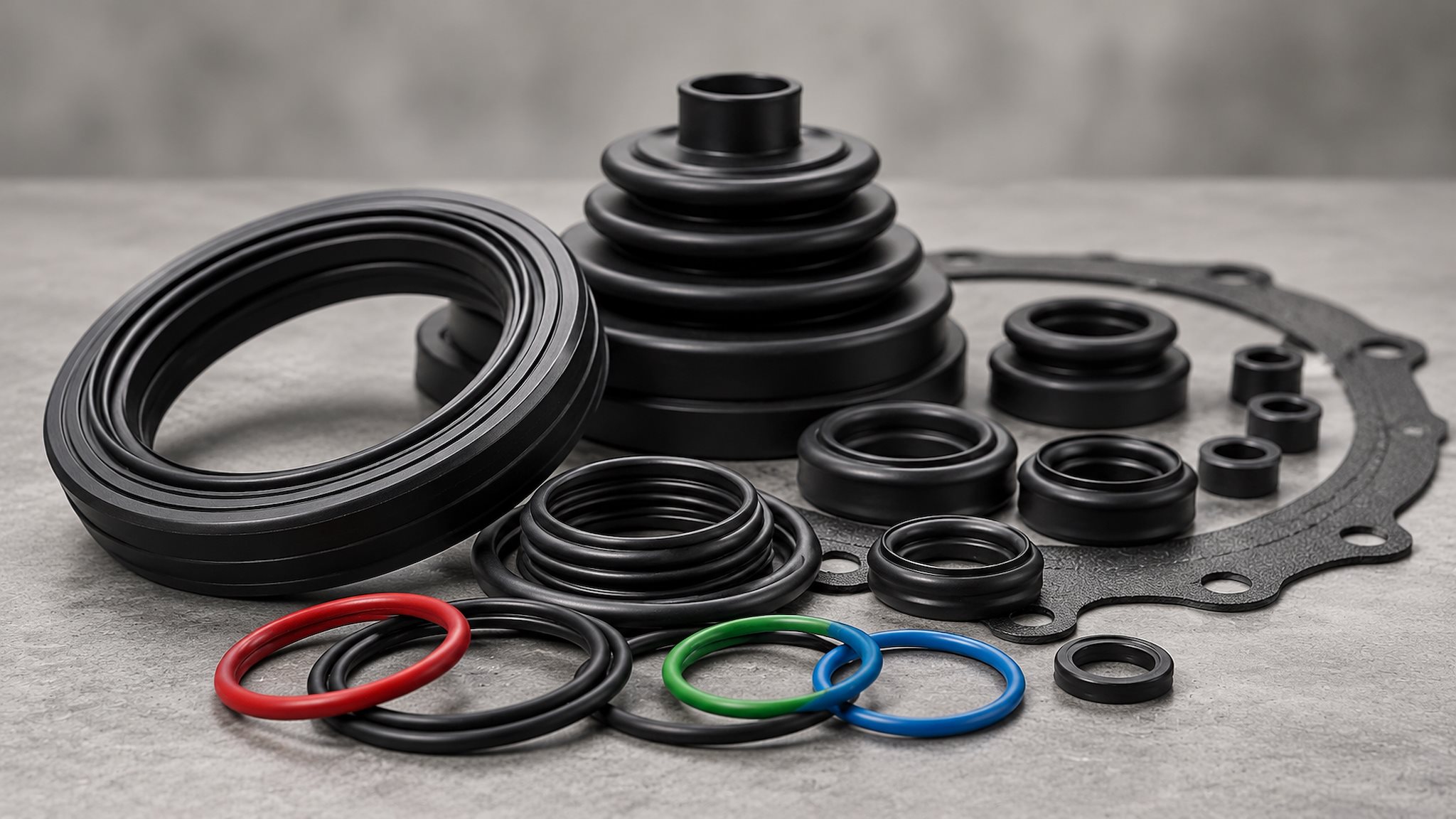
For each main product type, prepare the following information:
| Information | What to Provide | Why It Matters |
|---|---|---|
| Product photos | Front, side and top views | Helps identify shape and handling needs |
| Dimensions | Length, width and height | Helps estimate chamber and rack dimensions |
| Product weight | Weight per piece | Helps assess tray and trolley loading requirements |
| Material | Rubber type or compound information, if available | Helps identify process limitations |
| Product variation | Different sizes or product models | Helps evaluate whether one chamber can accommodate them |
For irregular products, a simple dimensioned sketch or 3D drawing can be more useful than a photograph alone. If products have protruding sections, fragile surfaces, or areas that must not touch the tray, mark these details clearly.
Practical recommendation: If your factory manufactures several rubber products, provide information for the largest product, the heaviest product, and the product with the most difficult loading requirements. These may not be the same product.
For a broader explanation of how product characteristics influence equipment selection, see How to Choose an Industrial Rubber Curing Oven for Rubber Components.
3. Provide the Actual Heating Process Requirements
One of the most important parts of an oven inquiry is the heating process specification. Providing only a maximum temperature is not enough to define the required equipment.
Where available, provide the following process information:
- Target temperature: The required operating temperature for the process.
- Heating duration: The specified holding time or total process time.
- Heating rate: Whether the process requires a controlled temperature increase or a particular warm-up period.
- Temperature tolerance: The acceptable temperature deviation, if defined by the process specification.
- Product temperature requirements: Whether the product itself must reach a specified temperature, rather than relying only on chamber air temperature.
- Cooling requirements: Whether products can cool naturally after heating or need a defined cooling arrangement.
- Exhaust requirements: Whether ventilation or removal of process vapors is required.
Clarify whether the specified holding time starts when the chamber reaches its set temperature or when a representative product reaches the required temperature. These are different process definitions and can lead to different control and validation requirements.
If the process specification is not yet finalized, tell the manufacturer what is known and what still needs confirmation. Do not invent a temperature or heating time simply to complete the inquiry.
For applications where temperature consistency is important, it is also useful to clarify how temperature performance should be evaluated. Our guide to rubber curing oven temperature uniformity explains the difference between controller readings, chamber air temperature and product temperature.
4. Clarify Production Capacity and Batch Requirements
Two factories processing similar rubber products may need very different oven sizes because their production schedules and batch quantities are different.
Instead of simply asking for a large oven, describe the actual production target:
- How many pieces need to be processed in one batch?
- What is the total product weight per batch?
- How many batches are expected per shift or per day?
- How many working hours are available each day?
- Will the oven process one product model or several models?
- Is production volume expected to increase in the future?
It is also important to distinguish between the required batch capacity and the desired daily output. A factory may need to process a smaller batch more frequently, or a larger batch less frequently. The equipment arrangement and handling system may be different in each case.
5. Show the Loading and Handling Arrangement
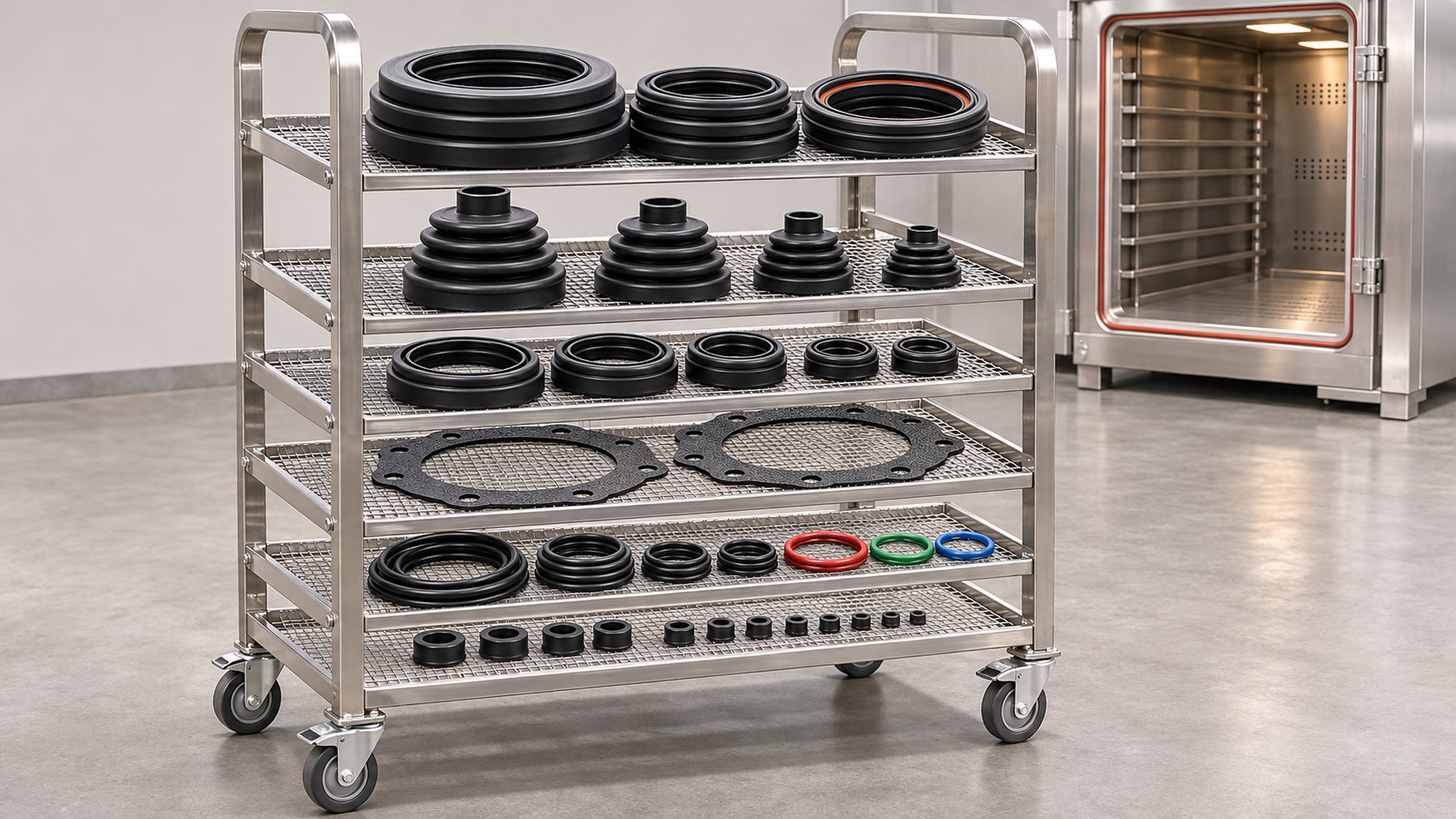
A loading sketch can help an oven manufacturer understand the space needed for products, trays, racks and trolleys. It also helps identify handling issues before the equipment is manufactured.
When preparing the inquiry, indicate:
- Whether products are placed directly on trays or on dedicated fixtures.
- Whether multiple layers are required.
- Whether products can be stacked or must remain separated.
- Whether operators load products manually or use a trolley.
- Whether the loading trolley must enter the oven together with the products.
- Whether products need to be loaded from one side or transferred through the chamber.
If possible, send a photograph of the current loading method or draw a simple top-view and side-view layout. Even a basic sketch showing the number of trays and approximate spacing can help avoid incorrect assumptions.
For example, a customer may request a multi-layer oven but not specify the height of the products or the required clearance between trays. Without this information, the proposed number of layers may not suit the actual products.
For more detailed guidance on loading patterns and circulation access, see How to Load Rubber Parts in a Curing Oven Without Blocking Airflow.
6. Check Factory Utilities and Installation Conditions
An oven may meet the process requirements but still be unsuitable for a factory if the available utilities or installation space are not considered early enough.
Prepare the following site information:
Electrical supply
- Available voltage.
- Single-phase or three-phase supply.
- Frequency, such as 50 Hz or 60 Hz.
- Available electrical capacity, if known.
Gas supply, if gas heating is preferred
- Available gas type, such as natural gas or LPG.
- Available supply pressure and capacity, if known.
- Local requirements for gas installation, combustion air and exhaust.
Workshop and installation space
- Available floor space: length, width and height.
- Doorway and access dimensions for equipment delivery.
- Available space for loading and unloading.
- Location of exhaust outlets or ventilation connections.
- Any restrictions on equipment height, floor loading or movement.
Electric and gas heating options can both be considered for rubber oven projects. The suitable choice depends on the factory's available utilities, operating conditions and local installation requirements.
Practical tip: If the oven will be installed in an existing workshop, photographs of the installation area are useful. Include the access route, nearby walls, columns and utility connection points whenever possible.
7. Confirm Control, Monitoring and Safety Requirements
Different production environments need different levels of control and documentation. A basic temperature controller may be sufficient for some applications, while other projects may require programmable operation or additional temperature records.
Before requesting a quotation, consider whether you need:
- Temperature controller: Basic temperature setting and regulation.
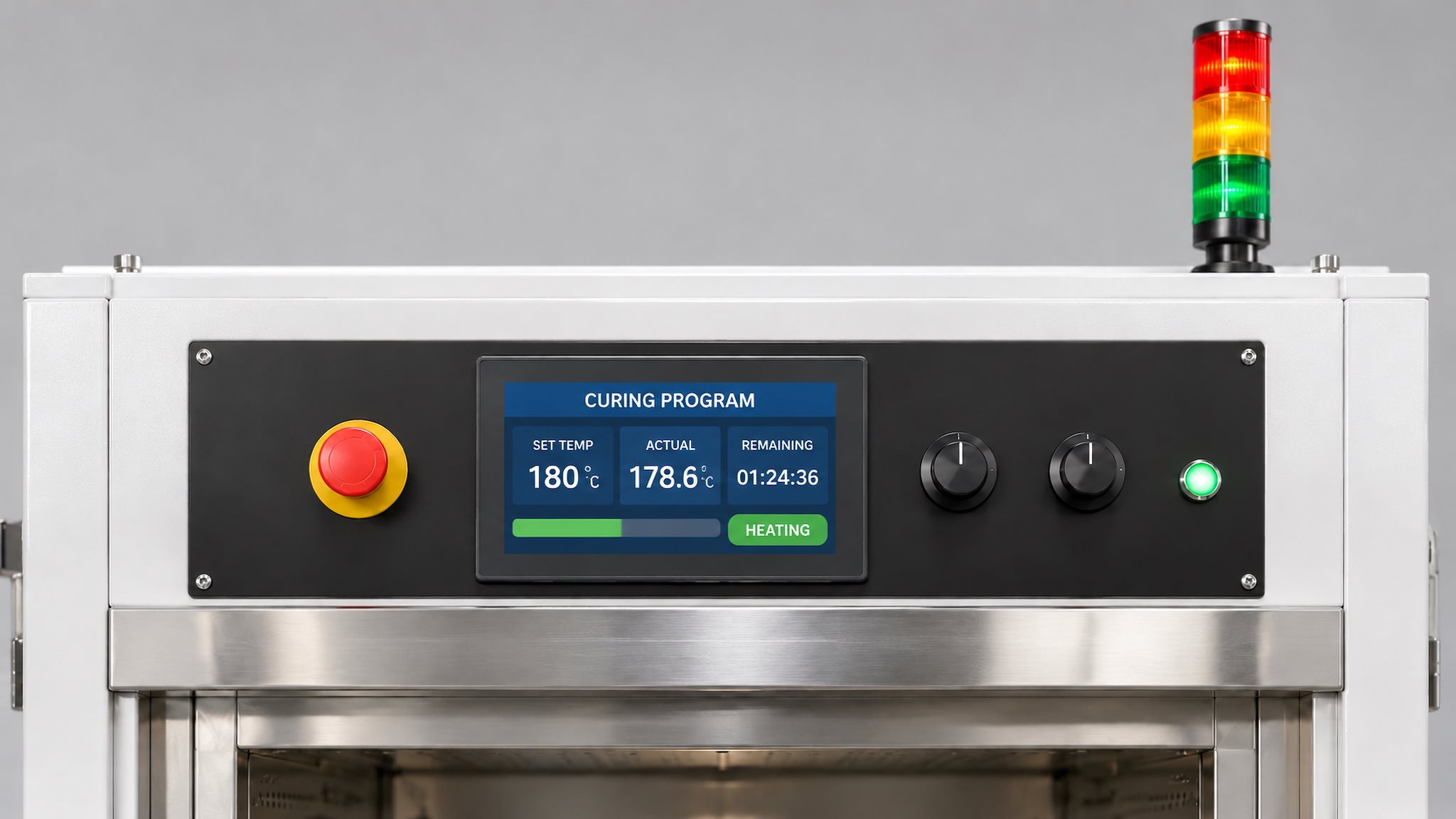
- PLC touchscreen: A programmable control interface for operating the oven.
- Timer functions: Timing based on the agreed process sequence.
- Multiple temperature stages: Different setpoints or holding stages, if required by the process.
- Temperature recording: Data logging or records for production traceability.
- Alarm functions: Notifications for defined abnormal operating conditions.
- Safety provisions: Emergency stop, over-temperature protection and other project-specific safety requirements.
Do not assume that every option is included in a standard quotation. Ask the manufacturer to identify which control and safety functions are included, optional, or outside the proposed scope.
If your factory follows a particular internal standard or customer audit requirement, provide the relevant specification before the equipment design is finalized.
8. Clarify Quotation Scope and Acceptance Criteria
A technically suitable oven quotation should make clear not only what equipment is supplied, but also what performance and delivery conditions are included.
When comparing quotations from different manufacturers, check whether they are based on the same assumptions.
| Quotation Item | What to Confirm |
|---|---|
| Equipment dimensions | Internal chamber and external dimensions |
| Heating system | Electric or gas heating and installed capacity |
| Loading structure | Trays, racks, trolley quantity and configuration |
| Temperature performance | Specified operating range and agreed uniformity criteria |
| Control system | Controller, PLC, touchscreen and recording options |
| Delivery scope | Packing, shipping, installation and commissioning responsibilities |
| Testing and documents | Factory test, drawings, manuals and agreed inspection records |
Define how the oven will be checked before acceptance
Temperature uniformity, for example, should not be treated as a number without test conditions. Ask the supplier to clarify the measurement method, measuring locations, test temperature, stabilization period and whether the test is performed with an empty chamber or under a specified load.
If the production process requires a loaded test, discuss the representative product or test load in advance. The test arrangement should reflect the intended production conditions as closely as practical.
Also confirm what documents will be provided, who is responsible for installation and commissioning, and which items are included in the delivery scope.
For additional background on production variation and process verification, see Why Rubber Parts Have Different Results After the Same Oven Cycle.
9. A Practical Rubber Curing Oven RFQ Checklist
To make the inquiry process easier, the following checklist can be used when contacting an oven manufacturer. You do not need to have every answer immediately. Provide the available information and identify any items that still need technical confirmation.
Rubber Curing Oven Inquiry Information
A. Product Information
- Product name or application:
- Rubber material or compound:
- Product dimensions:
- Weight per product:
- Product photos or drawings available:
B. Process Requirements
- Process purpose:
- Required temperature:
- Heating or holding time:
- Temperature tolerance, if specified:
- Product temperature requirement, if applicable:
- Exhaust or cooling requirements:
C. Production Requirements
- Quantity per batch:
- Total product weight per batch:
- Expected batches per day:
- Number of product models:
D. Equipment Preferences
- Preferred oven type: single-door / double-door / trolley-type / multi-layer
- Heating method: electric / gas / need recommendation
- Loading method: trays / racks / trolley / other
- Control system requirements:
- Special safety or documentation requirements:
E. Factory Information
- Voltage / phase / frequency:
- Gas type and supply information, if applicable:
- Available installation space:
- Country of installation:
- Target delivery schedule:
F. Quotation and Acceptance
- Required technical documents:
- Temperature test or inspection requirements:
- Installation and commissioning expectations:
- Shipping destination and delivery terms:
Sending this information together with product photographs, drawings and a simple loading sketch gives the manufacturer a much clearer starting point for preparing a suitable technical proposal.
10. Frequently Asked Questions
Can I request a quotation without product drawings?
Yes. You can begin with product photographs, approximate dimensions, product weight and a description of the process. Drawings and more accurate measurements can be provided later to support detailed equipment design.
Do I need to know the exact oven size before contacting a manufacturer?
No. In many customized projects, the manufacturer determines the suitable chamber dimensions after reviewing product size, batch quantity, loading arrangement and available workshop space.
Should I choose electric or gas heating before requesting a quotation?
If you already have a preference, include it in your inquiry. If you are unsure, provide your available electricity and gas information so the manufacturer can discuss the suitable option with you.
What if my rubber heating process has not been finalized?
Provide the available material information, supplier recommendations and product requirements. The process conditions should be confirmed by the responsible process engineer or material supplier before the oven is finalized for production.
Can one customized oven handle several rubber product models?
It may be possible, depending on the product dimensions, process compatibility, loading arrangements and batch requirements. Provide the information for each product model so the manufacturer can evaluate the proposed chamber and loading structure.
Planning a Customized Rubber Curing Oven?
Dongguan Xinyuanda Machinery Equipment Co., LTD. manufactures industrial ovens for rubber product heating and curing-related applications. We can discuss customized chamber dimensions, electric or gas heating, single-door or double-door designs, trolley loading and multi-layer configurations according to your production requirements.
WhatsApp: +86 18998007076
Email: annalan@xudoven.com
Technical note: Final oven configuration and process suitability should be confirmed using the actual rubber material, product specifications, validated heating requirements, loading conditions and factory utilities. This article is a purchasing and inquiry preparation guide, not a universal rubber curing procedure.
Why Rubber Parts Have Different Results After the Same Oven Cycle
Related Article