When Do Rubber Parts Need Post-Curing After Molding?
When Do Rubber Parts Need Post-Curing After Molding?
Understanding secondary vulcanization, post-molding requirements, and the role of industrial rubber post-curing ovens.
After rubber parts are molded, some products may require an additional heating stage known as post-curing. This step is not necessary for every rubber component. Whether it is required depends on the rubber compound, molding process, product design, performance requirements, and the material supplier's recommendations.
For manufacturers, the important question is not simply whether post-curing is possible, but whether it is necessary for the specific product and how to carry it out consistently. This guide explains the practical differences between primary vulcanization and post-curing, and when an industrial rubber post-curing oven may be useful.
Post-curing is an additional heating process used for certain rubber materials and applications. It does not replace the primary molding and vulcanization process.
In This Article
1. What Is Rubber Post-Curing?
Rubber post-curing, also called secondary vulcanization in some applications, is an additional controlled heating stage performed after the initial molding or curing process.
Depending on the rubber formulation, this additional treatment may help complete certain material reactions, reduce residual volatile substances, or achieve specified material properties. The actual purpose and expected result vary with the compound and product requirements.
Post-curing is therefore a material- and application-dependent process. It should be based on the rubber supplier's technical recommendations and verified against the finished product's quality requirements, rather than applied automatically to every molded rubber part.
2. Primary Vulcanization vs. Post-Curing
Although both processes involve heat, they serve different roles in rubber production.
| Aspect | Primary Vulcanization | Post-Curing |
|---|---|---|
| Production stage | During the main molding or curing operation | After the initial curing stage |
| Typical equipment | Molding press or other primary curing system | A suitable industrial post-curing oven, when required |
| Main purpose | Form the required vulcanized rubber product | Meet additional material or product specifications |
| Process basis | Molding and compound specifications | Material-specific post-curing requirements |
An industrial oven designed for post-curing is not a substitute for a rubber molding press when the product requires primary vulcanization under pressure. The two types of equipment have different functions in the production process.
3. When May Rubber Parts Need Post-Curing?
Some molded rubber products require an additional heating stage to meet their specified performance or production requirements. Typical considerations include:
- Material requirements: Certain rubber compounds have supplier-defined post-curing recommendations.
- Specified product properties: The finished component may need to meet particular physical, mechanical, or application-related specifications.
- Residual substances: For some formulations, post-curing may be used as part of a process to reduce residual volatile substances.
- Quality requirements: The customer's specification or validated production procedure may include a post-curing stage.
Different rubber materials can respond differently to additional heat. A process suitable for one compound should not automatically be transferred to another. Always confirm whether post-curing is required with the material supplier or the responsible process engineer.
4. Why Temperature and Time Control Matter
When post-curing is required, the heating process needs to be repeatable. An oven's displayed temperature alone does not tell the whole story. Product dimensions, loading quantity, tray arrangement, and air circulation can all influence how heat reaches the parts.
For example, thick rubber components may take longer to heat through than thin components. If parts are placed too close together, air circulation around them may be restricted. A heavily loaded oven may also behave differently from an oven running with a small load.
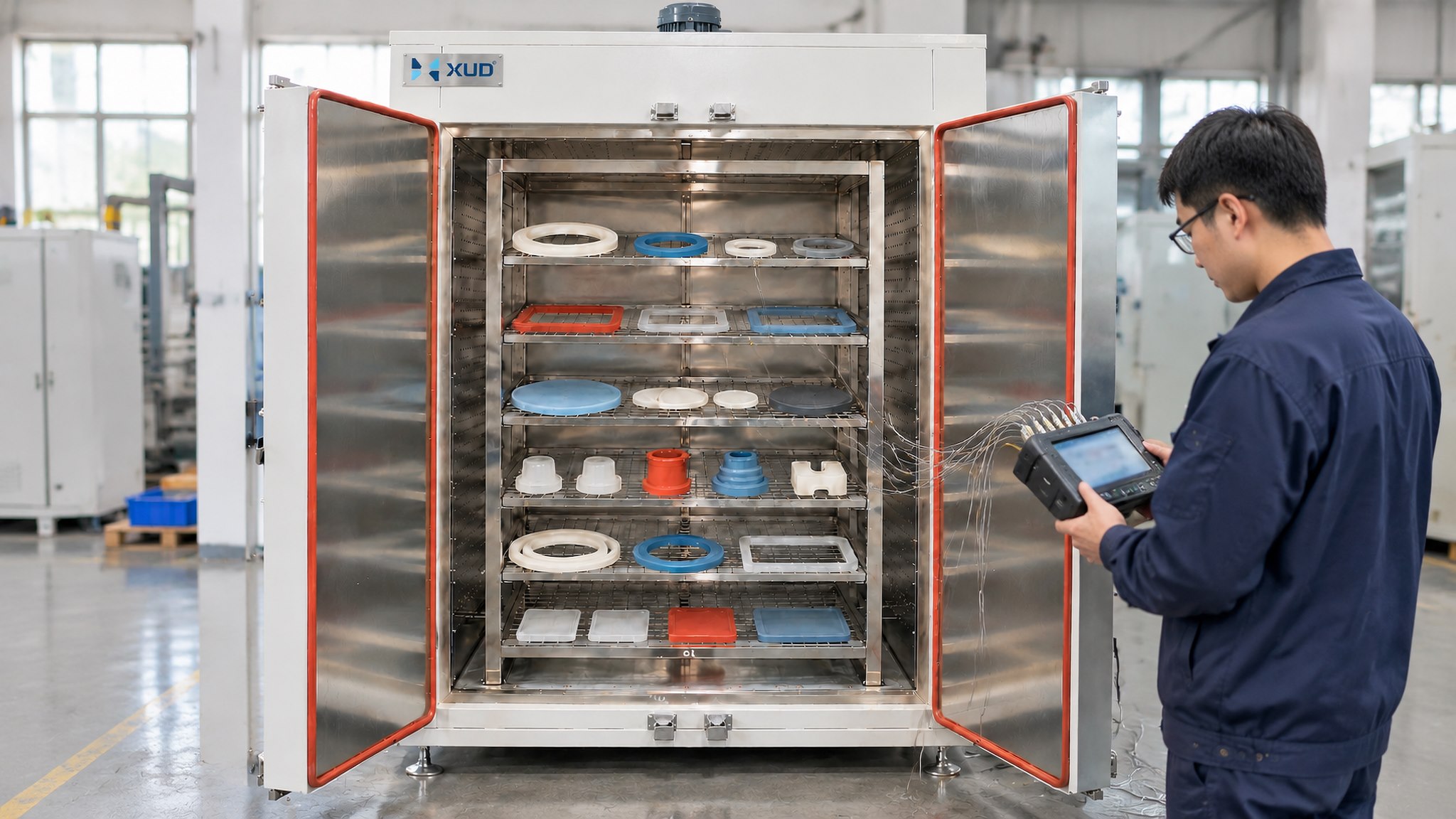
Manufacturers should validate the process using representative products and loading conditions. Temperature measurements at suitable locations, product inspection, and production records can help determine whether the selected cycle is appropriate.
For more details, see our guide to rubber curing oven temperature uniformity and our article on loading rubber parts without blocking airflow.
5. When Is an Industrial Post-Curing Oven Suitable?
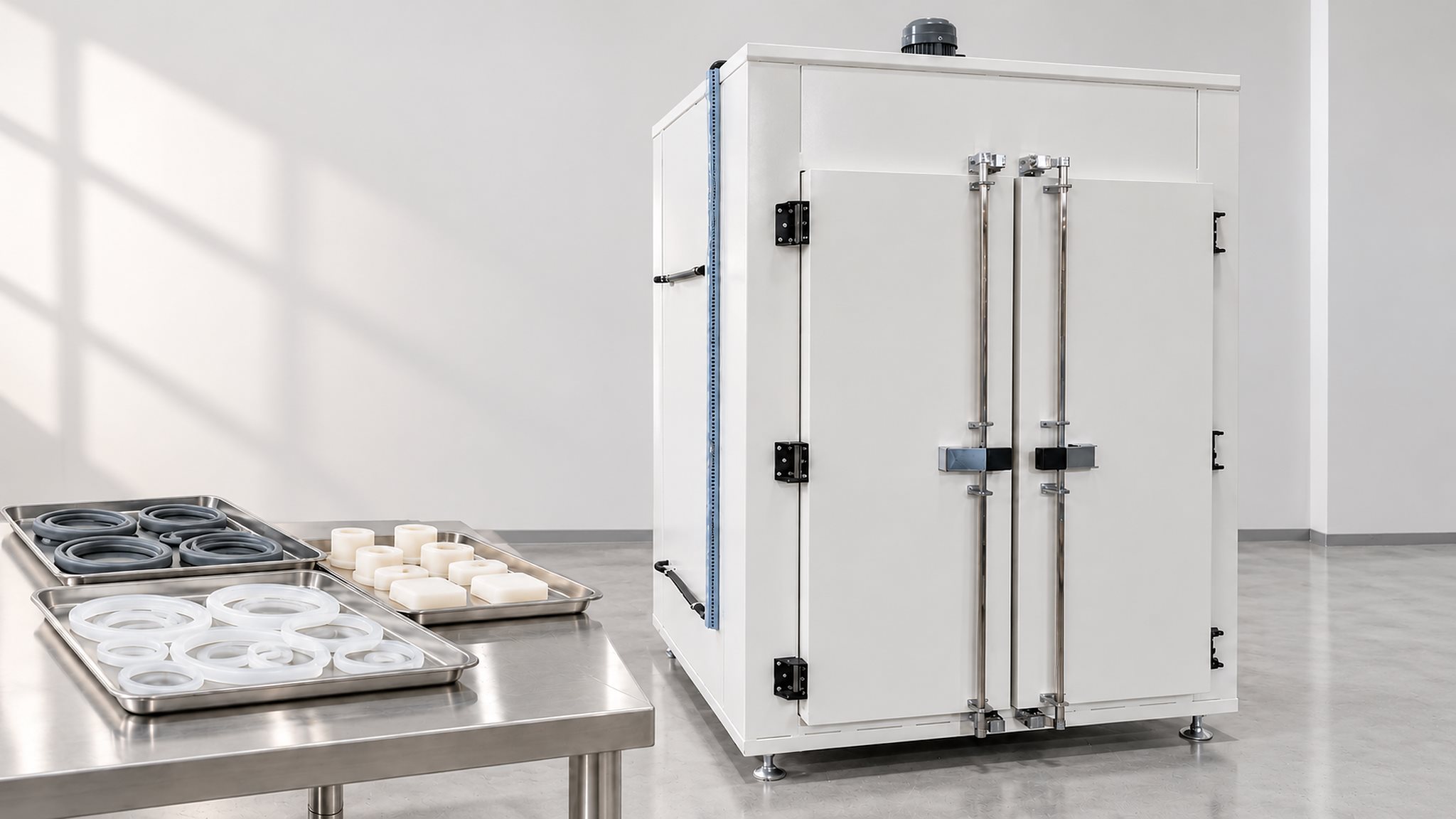
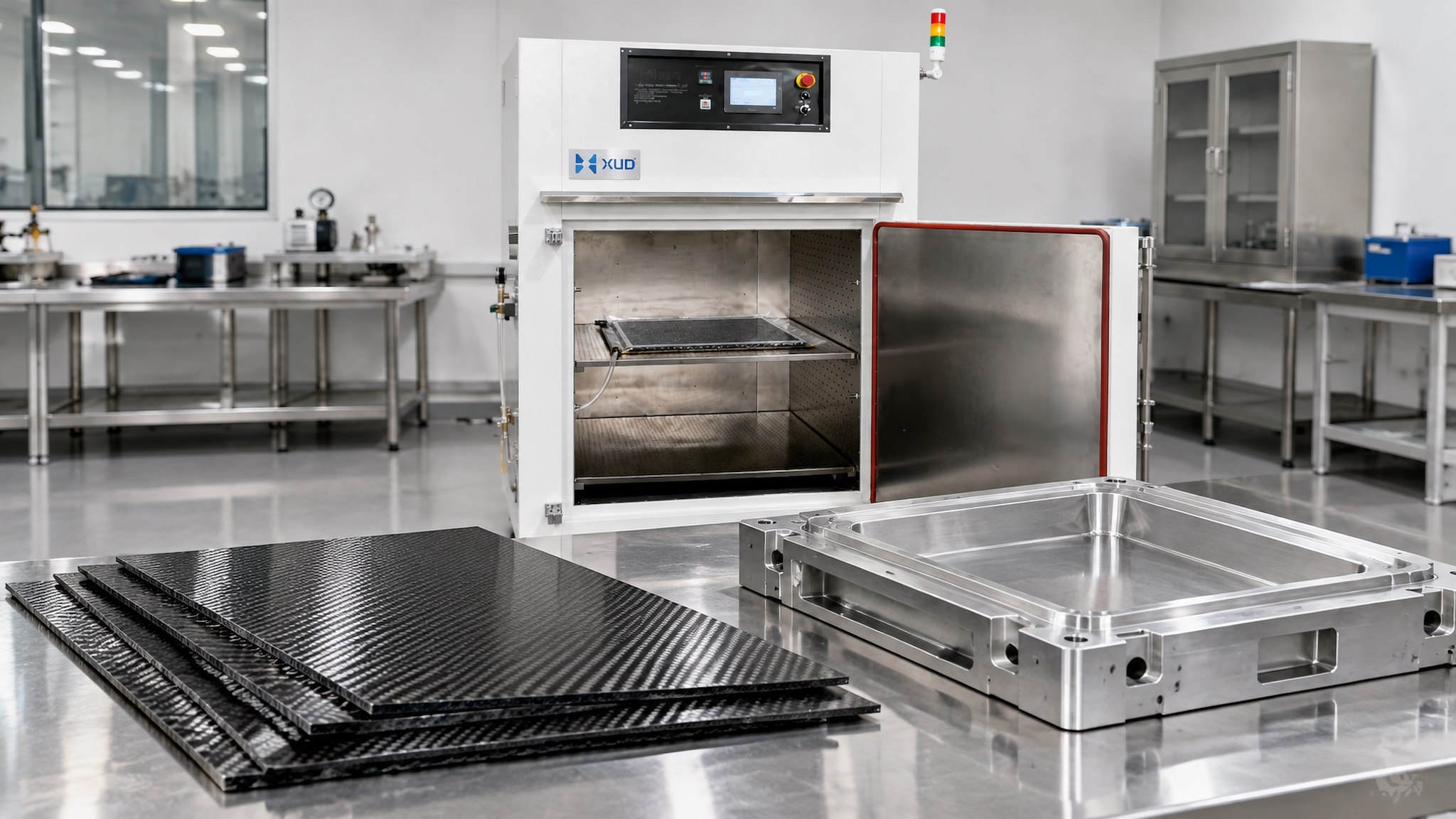
When the validated production process requires additional heating after molding, an industrial rubber post-curing oven can provide a controlled chamber for batch heating.
Depending on the product and factory layout, manufacturers may consider different configurations:
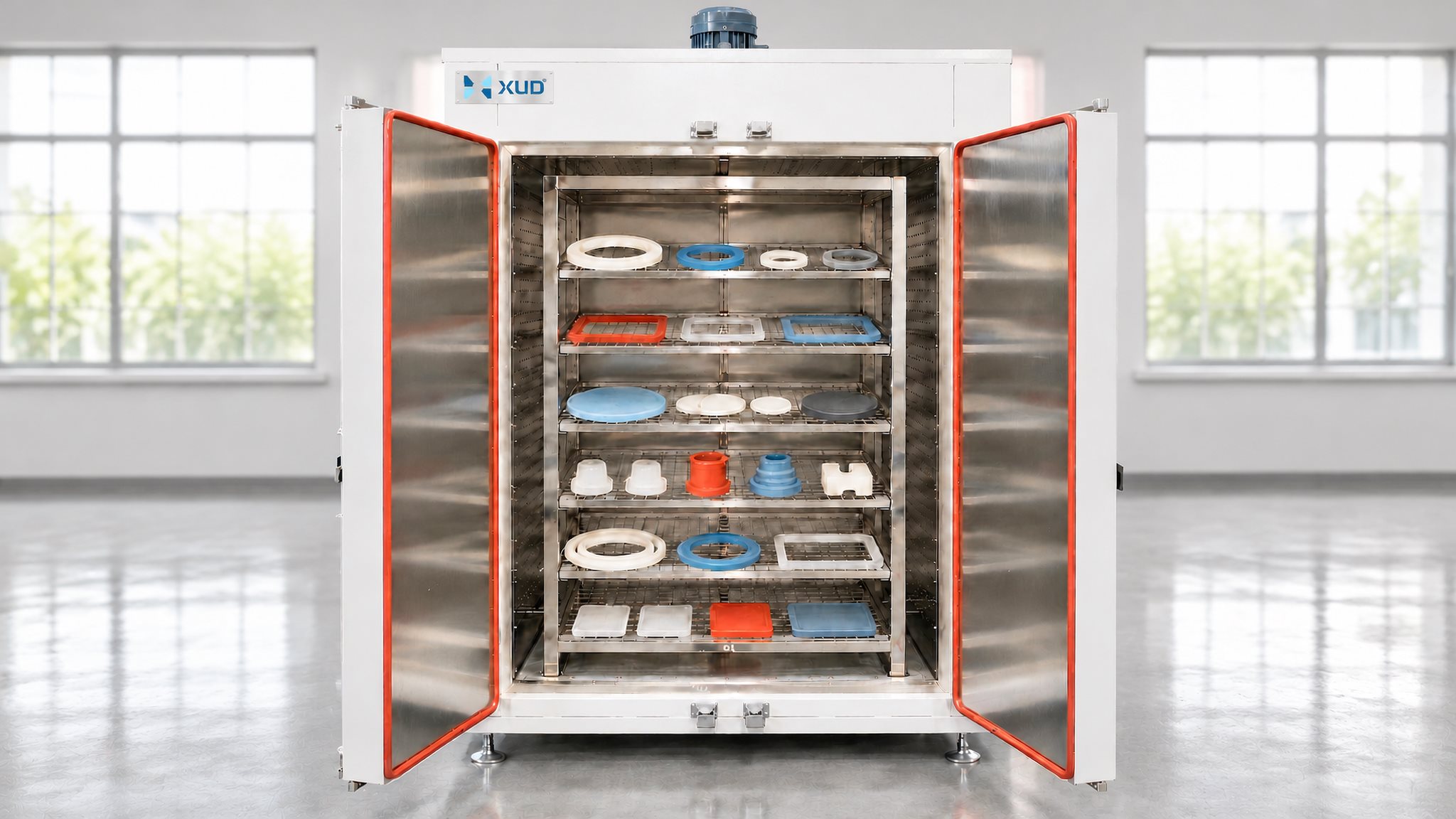
- Single-door or double-door cabinet ovens: Suitable for different loading and unloading arrangements.
- Trolley-type ovens: Useful when products are loaded onto racks or trays and moved into the chamber by trolley.
- Multi-layer ovens: Help organize products across several levels when the part dimensions and airflow requirements allow.
- Electric or gas heating: The heating method can be selected according to factory utilities, operating preferences, and project requirements.
For rubber applications, our industrial oven configurations can be customized according to product size, loading method, required working temperature, and production capacity. The maximum working temperature of our rubber curing oven range can reach 300°C, subject to the selected configuration and project specifications.
Explore our Rubber Curing Oven page for equipment details.
6. What to Confirm Before Choosing an Oven
Before selecting a post-curing oven, prepare the following information:
- Rubber material or compound type.
- Product dimensions, weight, and shape.
- Required post-curing temperature and duration, based on the validated process.
- Quantity of products per batch.
- Preferred loading method, such as trays, racks, or trolleys.
- Factory power supply or gas availability.
- Any special requirements for ventilation, temperature recording, or control.
These details help the oven manufacturer assess chamber size, heating capacity, airflow arrangement, and loading configuration more accurately.
7. Frequently Asked Questions
Is post-curing necessary for all rubber products?
No. The need for post-curing depends on the rubber compound, product specification, and validated manufacturing process. Some products do not require an additional heating stage.
Can an industrial oven replace a rubber molding press?
No. A post-curing oven is generally used for an additional heating stage after molding. It does not replace the primary molding and vulcanization equipment when pressure and mold forming are required.
Can different rubber products use the same post-curing cycle?
Not necessarily. Different compounds, dimensions, and product requirements may need different process conditions. Each application should be checked and validated before production.
Can the oven be customized for different rubber products?
Yes. Chamber dimensions, door arrangement, trolley loading, tray levels, heating method, and control configuration can be considered according to the application.
Looking for a Rubber Post-Curing Oven?
Dongguan Xinyuanda Machinery Equipment Co., LTD. provides customizable industrial rubber curing ovens with electric or gas heating options, cabinet, trolley-type, and multi-layer configurations.
WhatsApp: +86 18998007076
Email: annalan@xudoven.com
Process note: Post-curing conditions must be determined according to the rubber compound supplier's recommendations and the finished product's requirements. The information in this article is for general equipment-selection guidance, not a universal curing recipe.
How to Load Rubber Parts in a Curing Oven Without Blocking Airflow
Related Article