Why Rubber Parts Have Different Results After the Same Oven Cycle
Why Rubber Parts Have Different Results After the Same Oven Cycle
Understanding the factors behind inconsistent heating results in rubber components.
In rubber production, operators may use the same oven temperature, heating time, and operating procedure but still find differences between finished products. Some parts meet the required specifications, while others show different physical properties or require additional inspection.
This does not necessarily mean that the oven is malfunctioning. The final result can be affected by several factors, including rubber compound characteristics, product thickness, initial product temperature, loading quantity, and the actual temperature experienced by the parts during heating.
Understanding these factors helps manufacturers investigate production variation more systematically instead of simply increasing the oven temperature or extending the heating time.
The oven's set temperature and heating time are process settings. They do not automatically guarantee that every rubber component experiences exactly the same thermal conditions.
In This Article
1. Why the Same Oven Settings May Produce Different Results
An industrial oven is usually controlled according to a temperature setting and a defined heating cycle. However, the actual heating history of a rubber part depends on more than the controller setting.
For example, the temperature sensor measures the temperature at its installation location. It does not directly measure the temperature at the center of every product in the chamber. Products with different shapes, thicknesses, and loading positions may heat at different rates.
There is also a difference between repeating the same settings and repeating the same production conditions. If the number of products, their initial temperature, or their arrangement changes, the heating behavior may change as well.
For a related explanation of chamber temperature distribution, see our article on rubber curing oven temperature uniformity.
2. Material and Compound Differences
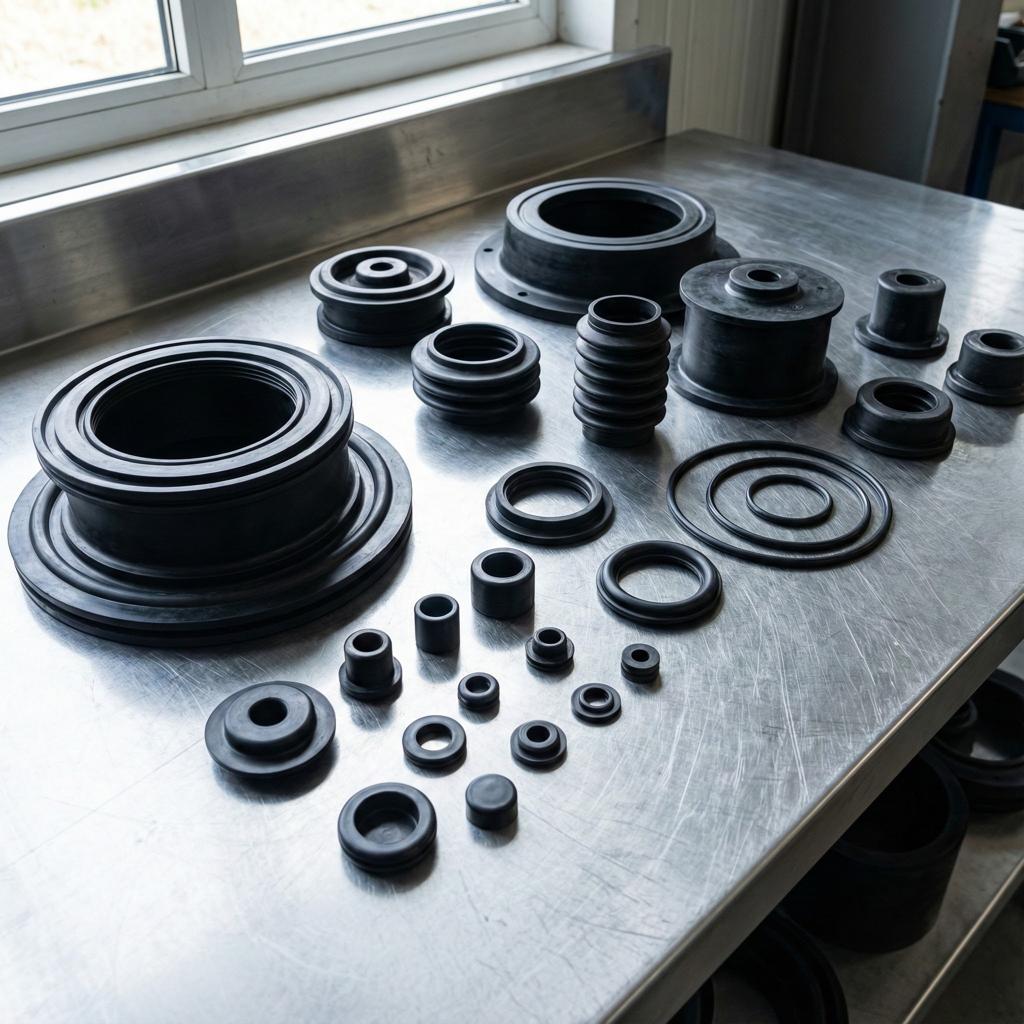
Rubber products are made from different materials and formulations. Even products that look similar may have different compound compositions, additives, fillers, or processing requirements.
These differences can influence how a product responds to heat. A heating cycle developed for one rubber compound should not automatically be used for another compound without technical confirmation.
When production results change after a material batch or supplier change, manufacturers should check whether the compound specification has also changed. It is useful to record material batch information together with the oven cycle and product inspection results.
If the process includes post-curing, confirm the recommended conditions with the material supplier. Not every rubber compound or molded component requires an additional post-curing stage. For more information, see our guide to when rubber parts may need post-curing after molding.
3. Product Thickness and Heating Time
Product dimensions have a direct influence on how quickly heat moves through a rubber component. Thin parts and thick parts may not reach the same internal temperature at the same time.
A thick or irregularly shaped component may have a slower temperature response at its center than at its surface. Therefore, the chamber may reach its target temperature while the product core is still heating up.
This is particularly important when a batch contains products with significantly different dimensions. Using one cycle for all products may be convenient, but it should only be done after confirming that the cycle meets the requirements of each product type.
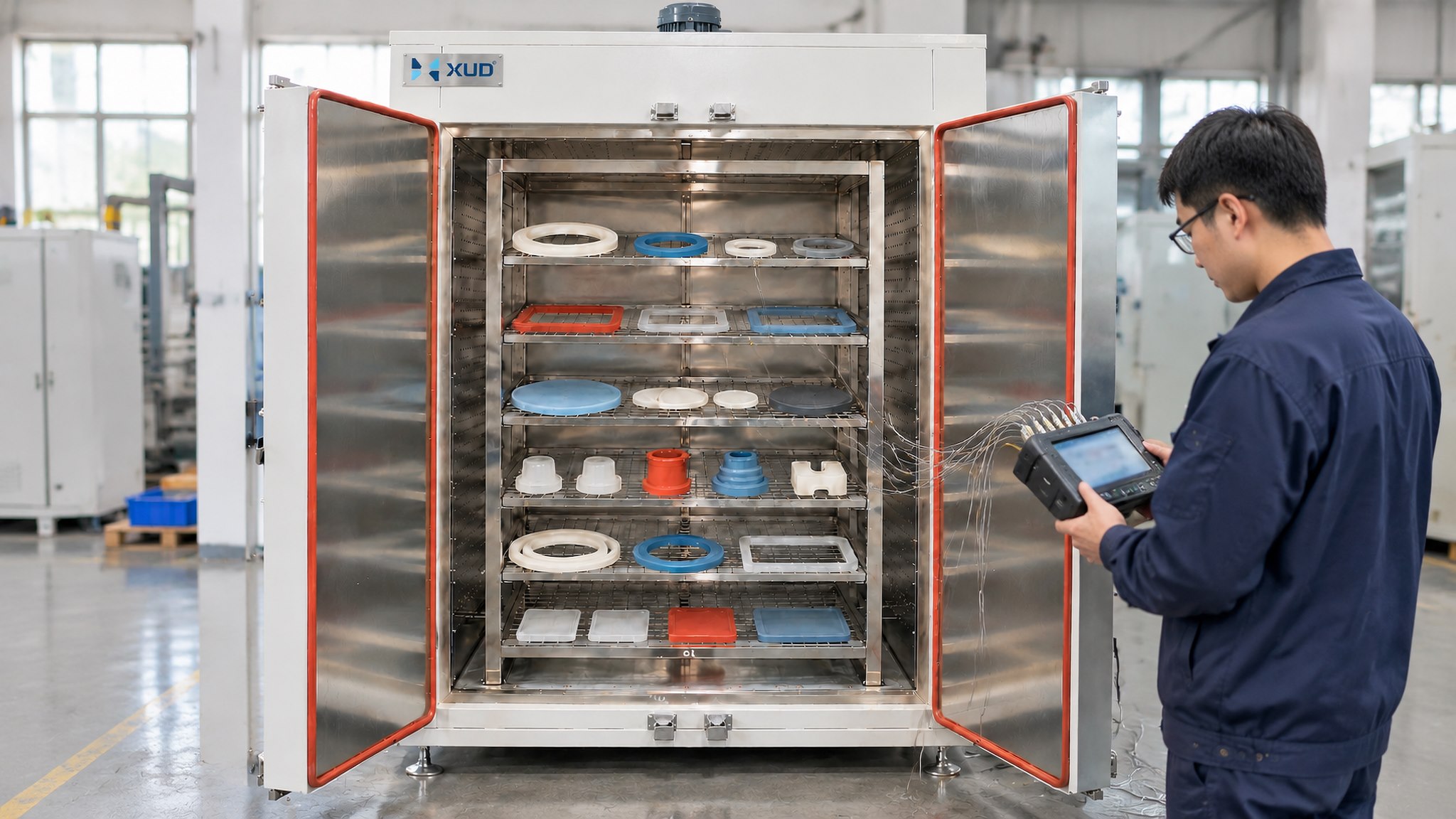
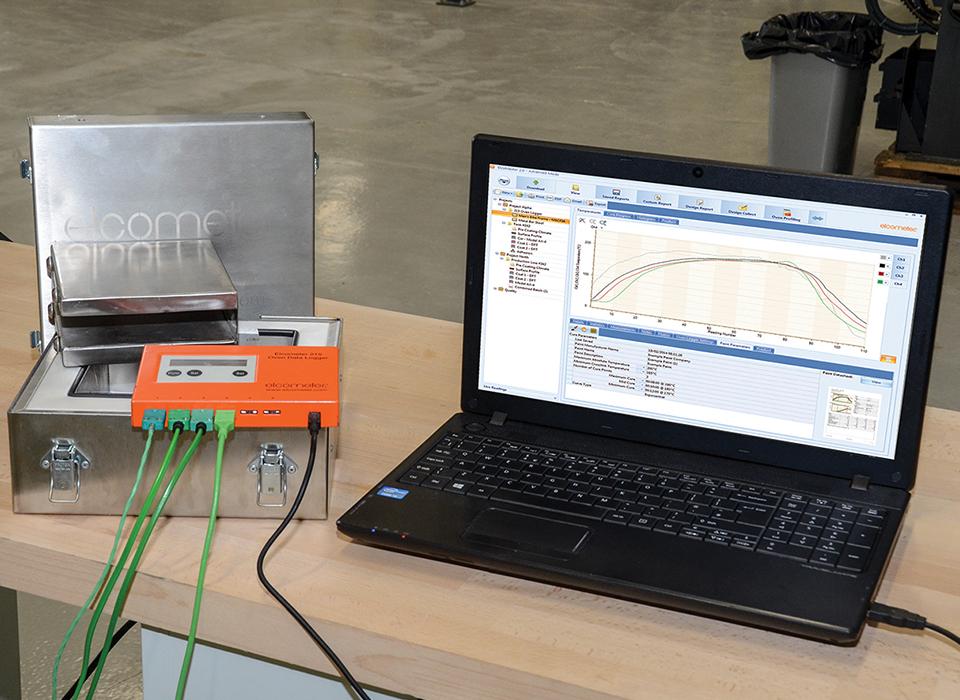
For process validation, manufacturers can select representative parts and use suitable temperature measurement methods to understand how the product heats under actual production conditions. The measurement approach should be appropriate for the material and application.
4. Loading Quantity and Product Arrangement
Changing the loading quantity can change the heating conditions inside an oven. A lightly loaded chamber and a fully loaded chamber do not necessarily behave in the same way.
When too many products are placed in a limited space, the gaps between parts may become too small. This can restrict hot-air circulation and create differences in heating conditions between different areas of the load.
Product arrangement also matters. Parts placed directly against each other, stacked too closely, or positioned in a way that blocks air passages may not receive the same heating conditions as parts with sufficient clearance around them.
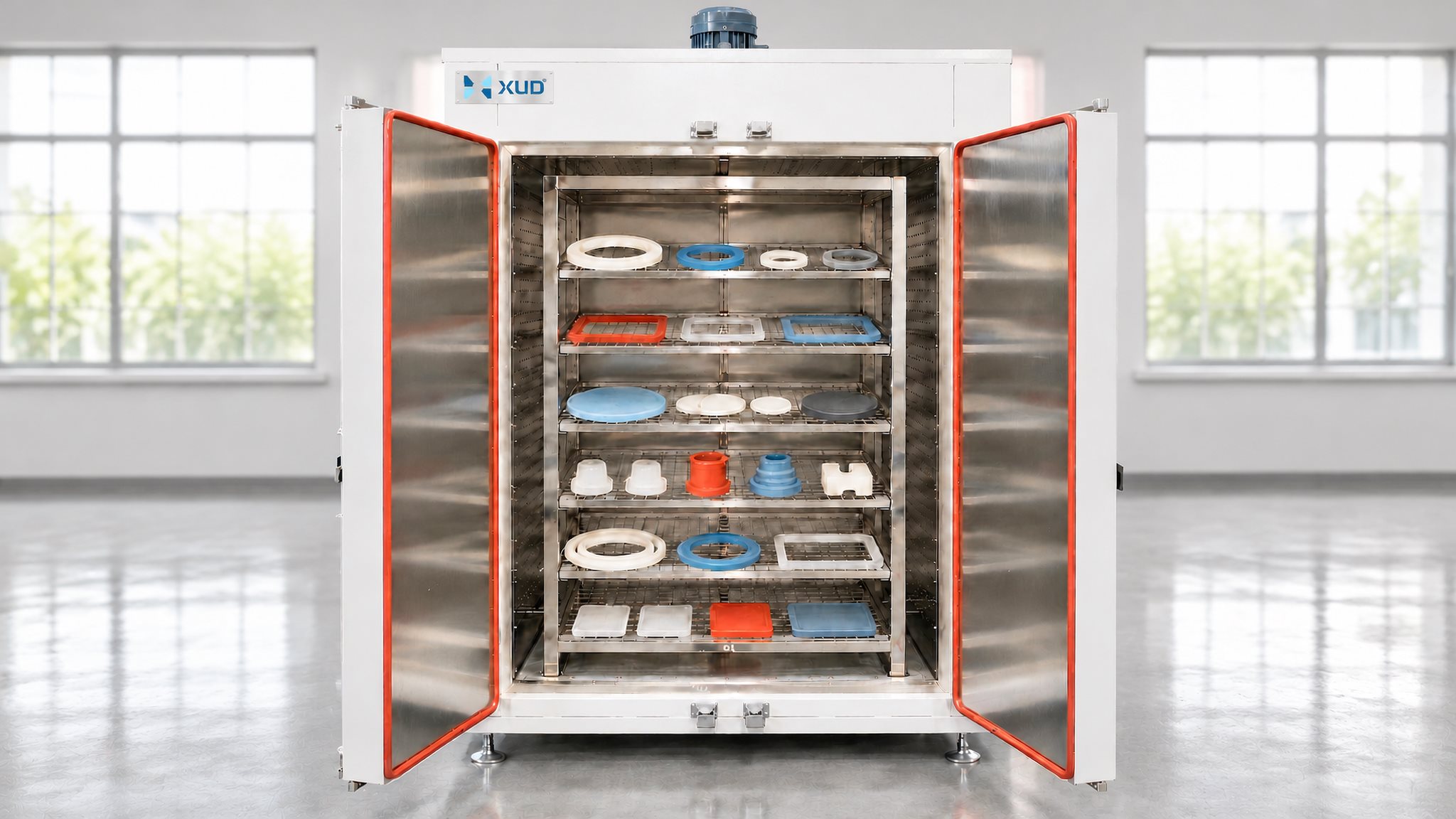
Manufacturers should define a repeatable loading method, including tray spacing, product orientation, maximum loading quantity, and the position of each tray or trolley. These details should be included in the production procedure.
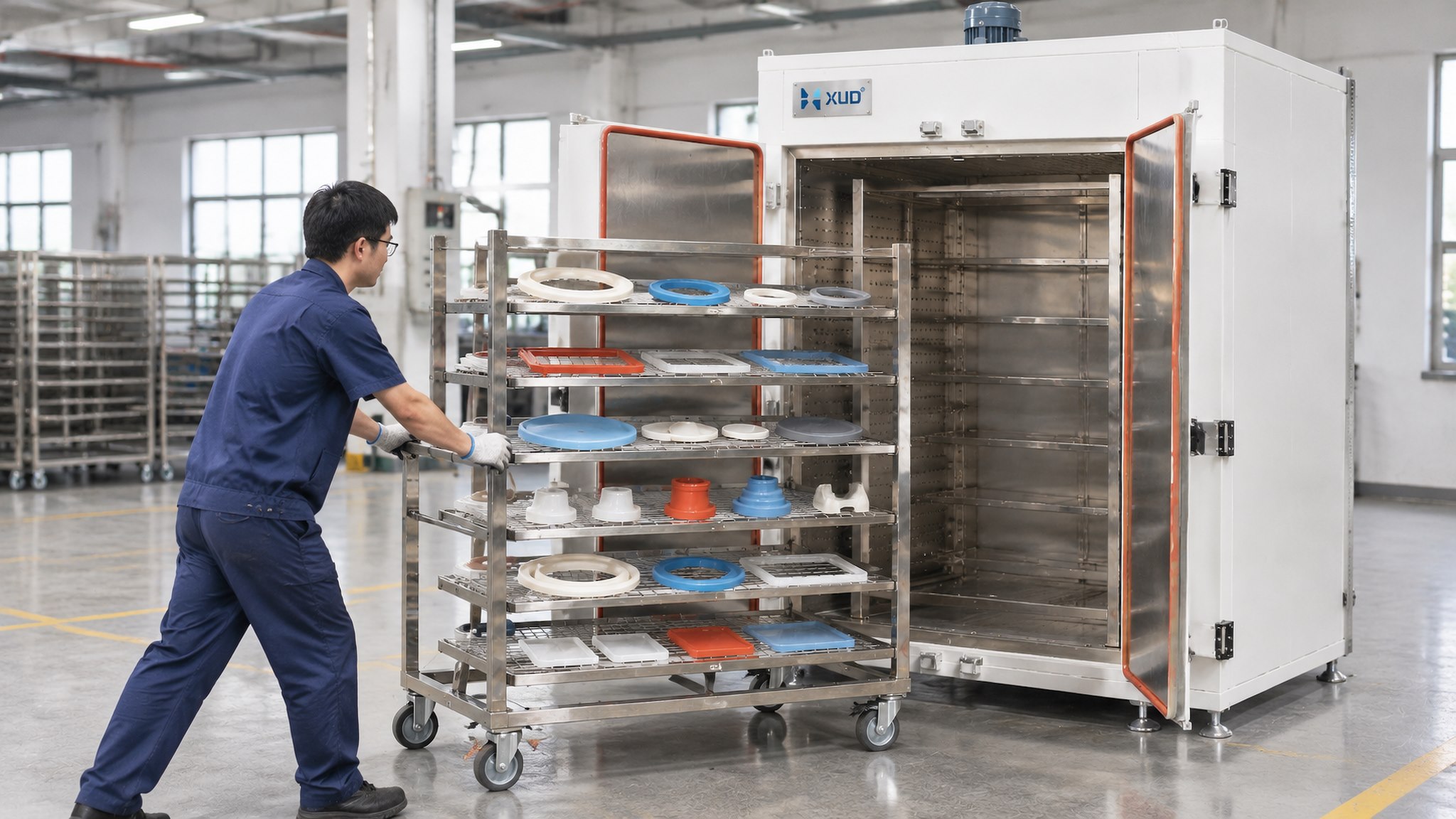
See our practical guide to loading rubber parts without blocking oven airflow for more information.
5. How to Investigate and Validate the Process
When rubber products show inconsistent results, changing several oven settings at once can make the cause difficult to identify. A more systematic investigation is usually more effective.
A practical troubleshooting sequence
- Check the material: Confirm the compound type, material batch, and supplier's processing recommendations.
- Check the product: Compare product dimensions, thickness, shape, and initial temperature.
- Check the load: Record the number of parts, tray arrangement, spacing, and loading position.
- Check the heating conditions: Review the oven temperature records and, where appropriate, measure temperatures at representative product locations.
- Compare inspection results: Relate the process records to the actual quality results of the products.
Once the likely cause is identified, make controlled adjustments and evaluate the results. Avoid increasing temperature or extending heating time without checking the material's permitted process range. Excessive or unsuitable heating may negatively affect some rubber compounds.
After a suitable process is confirmed, document the key parameters and loading method. This makes it easier to repeat the process when production volume, operators, or batches change.
6. How the Right Oven Configuration Helps
An appropriate oven configuration can make it easier to maintain repeatable loading and heating conditions. The correct design depends on product dimensions, batch quantity, process requirements, and factory layout.
Cabinet-type ovens
Single-door and double-door cabinet ovens can be considered for different loading and unloading arrangements. They are useful when production is organized into separate batches.
Trolley-type ovens
A trolley system can make it easier to move products into and out of the oven. It is worth considering for heavier products, larger batches, or production lines that use dedicated loading racks.
Multi-layer ovens
Multi-layer arrangements can increase usable loading space. However, tray spacing and airflow paths should be considered carefully so that a higher loading capacity does not compromise heating consistency.
Electric or gas heating
Both electric and gas heating options can be considered according to factory utilities, operating preferences, and project requirements. The suitable solution should be evaluated together with chamber size, heating capacity, temperature range, and control requirements.
Our industrial Rubber Curing Oven configurations can be customized for different rubber products and loading requirements, with a maximum working temperature of up to 300°C depending on the selected configuration.
7. Frequently Asked Questions
Why do rubber parts in the same batch sometimes have different results?
Possible reasons include differences in product dimensions, material characteristics, loading positions, air circulation, and actual product temperature during the heating cycle. Production records and product inspection can help identify the cause.
Does increasing the oven temperature solve inconsistent results?
Not necessarily. The cause may be related to loading, material variation, or product heating behavior. Increasing the temperature without checking the material's permitted process range may create additional quality problems.
Should different rubber products use separate oven cycles?
It depends on the materials, dimensions, and process requirements. Products may share a cycle only when the process has been verified to meet the specifications of all products involved.
How can an oven manufacturer help improve production consistency?
An oven manufacturer can evaluate chamber dimensions, heating capacity, airflow arrangement, loading systems, and control requirements based on the customer's product and process information. Final process consistency should still be verified using representative products and actual production conditions.
Need a Rubber Curing Oven for Your Production?
Dongguan Xinyuanda Machinery Equipment Co., LTD. designs and manufactures industrial ovens for rubber heating and curing-related applications. We can discuss cabinet-type, trolley-type, and multi-layer configurations with electric or gas heating options.
WhatsApp: +86 18998007076
Email: annalan@xudoven.com
Process note: Actual heating conditions must be determined according to the rubber compound, product specifications, and validated production requirements. This article provides general process and equipment-selection guidance, not a universal rubber curing recipe.
When Do Rubber Parts Need Post-Curing After Molding?
Related Article