Industrial Tunnel Ovens for Continuous Production: Design, Applications and Selection
If your batch ovens are starting to feel like a production bottleneck — with loading, heat-up and unloading eating up 30% or more of your daily operating hours — it is probably time to evaluate industrial tunnel ovens. For high-volume, repeatable thermal processes, continuous production is not just an efficiency upgrade; it directly boosts throughput, cuts per-unit energy cost, and stabilizes part-to-part quality. At Dongguan Xinyuanda Machinery Equipment Co., Ltd., we build tunnel ovens around your line, not the other way around.
What Are Industrial Tunnel Ovens?
Industrial tunnel ovens are continuous thermal processing systems built around a long, insulated chamber paired with a mechanical conveying system. Workpieces enter at one end, travel through controlled heating zones, and exit fully processed in a single uninterrupted pass.
The core difference from batch box ovens is workflow rhythm. Batch ovens process parts in discrete loads, with repeated stop-and-start cycles for loading, ramping, soaking and unloading. Tunnel ovens run non-stop. For lines producing 1,000+ parts per day, this typically translates to a 35–50% throughput gain compared with equivalent batch capacity, while also reducing labor per unit.

How Industrial Tunnel Ovens Work
Reliable performance depends on four coordinated systems:
- Conveying system: The belt or carrier moves parts at a steady, adjustable speed. Options include wire mesh belts, slat chains and overhead conveyors, selected based on part shape, weight and maximum temperature.
- Heating zones: The chamber is divided into independently controlled sections. Each zone can be set to a different temperature to create staged ramp-up, steady soaking and gradual cool-down profiles.
- Temperature control: Every zone uses a PID controller paired with 2–3 sensors to maintain setpoints within ±3–5°C. Advanced configurations log full temperature data for quality traceability.
- Residence time: Total process time = effective heated length ÷ conveyor speed. This is the most critical calculation for curing and drying — get it wrong, and parts come out under-processed or over-baked.
Common Applications of Industrial Tunnel Ovens
Tunnel ovens deliver the most value where consistent, high-volume thermal processing is required. Proven, process-validated applications include:
- Industrial parts drying: Post-washing removal of water or cutting fluids from metal stampings, castings and fasteners.
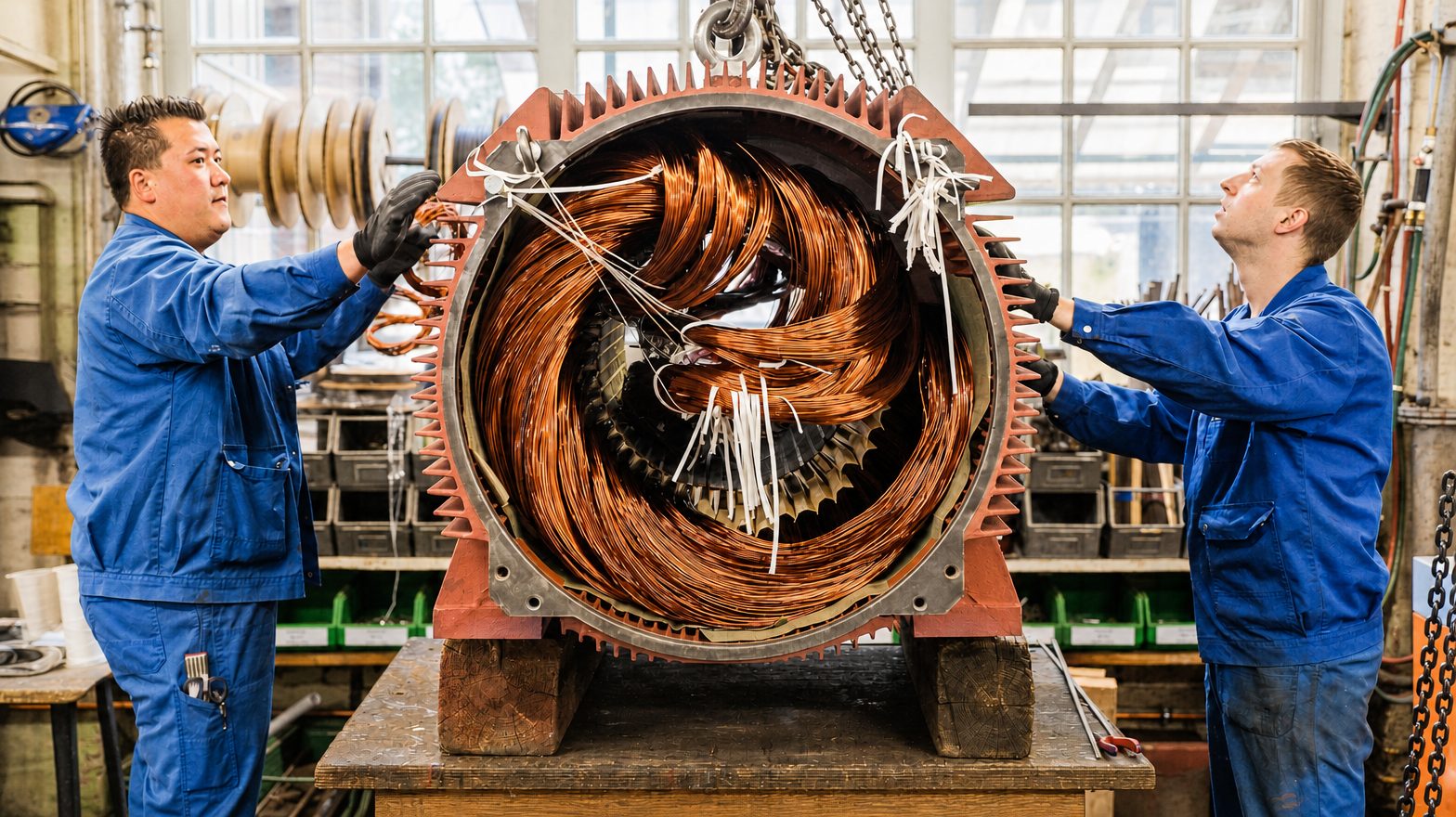
- Coating and material curing: Varnish curing for motor stators and windings, powder coating cure, electronic resin encapsulation and adhesive activation.
- Additional validated uses: Component preheating, low-temperature tempering, product aging tests and specialty drying processes. For motor winding varnish lines, for example, a continuous tunnel oven delivers roughly 40% higher output than a batch oven of similar footprint, with more uniform cure quality across every piece.

Types of Industrial Tunnel Ovens
Tunnel ovens are classified by heat source, zone layout and conveyor type — and these categories frequently overlap.
- Electric-heated tunnel ovens: Offer clean, precise temperature control and simple installation, ideal for electronics, medical and clean assembly environments.
- Multi-zone tunnel ovens: Equipped with 3–8 independent heating zones to support advanced thermal profiles that require gradual ramp-up, holding and controlled cooling.
- Wire mesh belt tunnel ovens: The most versatile configuration for small-to-medium parts. Heavy-duty slat conveyors and overhead conveyors are available for larger or heavier loads. It is very common to specify a hybrid configuration — for example, an electric, 5-zone wire mesh belt oven.
How to Select Industrial Tunnel Ovens for Your Production Line
Proper sizing depends on six core factors. Skip the “standard size” trap; a poorly matched oven wastes energy and floor space, or becomes a bottleneck within a year.
- Output volume: Hourly production rate dictates belt width and speed. Always build in a 15–20% capacity buffer for order spikes.
- Workpiece dimensions: Chamber width and height must clear your largest part plus 100–150 mm on all sides for unobstructed airflow.
- Target temperature: Most drying and curing runs 120–200°C; tempering and specialty processes can require 300–400°C.
- Conveyor speed: Must match your upstream and downstream line cadence. Standard adjustable range is 0.5–5 m/min.
- Oven length: Calculated backward from required process time. If your cure needs 20 minutes at 2 m/min, you need 10 meters of effective heated length.
- Factory layout: Inlet/outlet orientation, ceiling height, floor load capacity and utility access all shape the final design.
Custom Industrial Tunnel Oven Solutions
At Dongguan Xinyuanda Machinery, we do not sell off-the-shelf tunnel ovens — we engineer them around your process and facility. Available custom options include fully customized chamber dimensions, zone-by-zone temperature profiling, choice of conveyor style, integrated cooling sections, and PLC/HMI control with recipe storage and data logging. We can also integrate the oven directly into your existing production line, matching upstream dip coaters, washers or downstream unloading stations. We quote clear, measurable performance specifications — temperature uniformity, heat-up time, energy consumption — with no vague cure-quality promises.
Frequently Asked Questions
Q: How do you calculate tunnel oven production capacity?
A: Capacity = parts per meter of belt × belt speed × 60. We run this calculation for you based on your part size and loading pattern.
Q: How many heating zones do I need?
A: Simple drying works with 2–3 zones. For curing processes with specific ramp-up, soak and cool-down requirements, 4–8 zones are typical.
Q: What is the typical conveyor speed adjustment range?
A: Standard models offer 0.2–6 m/min variable frequency control. Wider or narrower ranges can be built to match your exact line cadence.
Q: What information do you need for a custom quote?
A: Part dimensions and weight, target hourly output, required temperature and process time, available floor space, and existing upstream/downstream equipment specs.
Ready to turn your batch bottleneck into a continuous, high-output line? Reach out for a straightforward, data-backed proposal.
what is hot air oven