Electric vs. Gas Industrial Oven: Operating Costs, Installation and Performance
When selecting industrial heating equipment for drying, curing or thermal processing, electric and gas-fired ovens are the two most widely adopted solutions. While energy unit price is often the first factor considered, choosing the right option requires evaluating operating costs, installation requirements, heating performance and safety compliance together. At Dongguan Xinyuanda Machinery Equipment Co., Ltd., we help clients make data-driven decisions based on real-site conditions instead of generic assumptions.
How Does an Electric Industrial Oven Work?
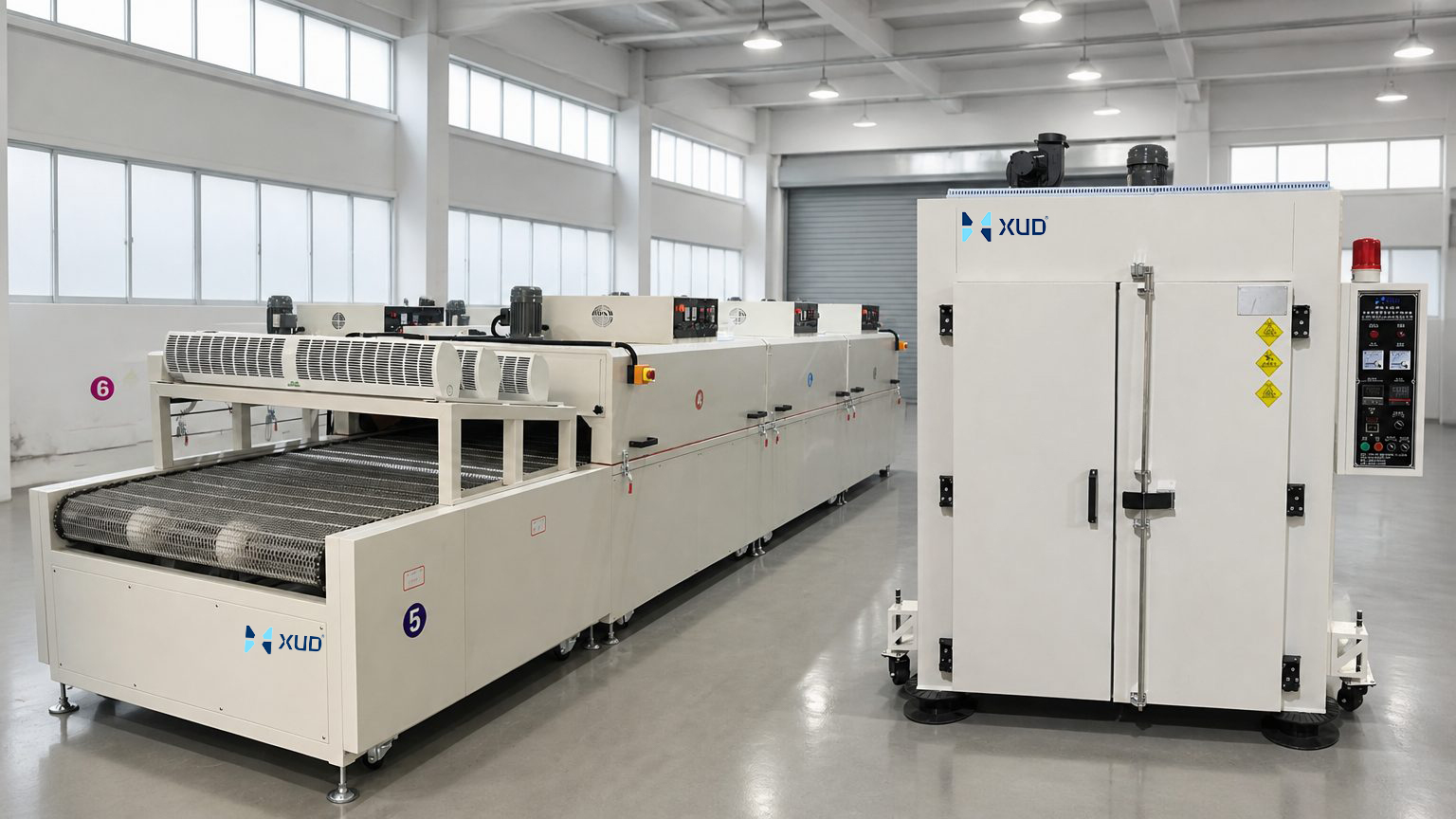
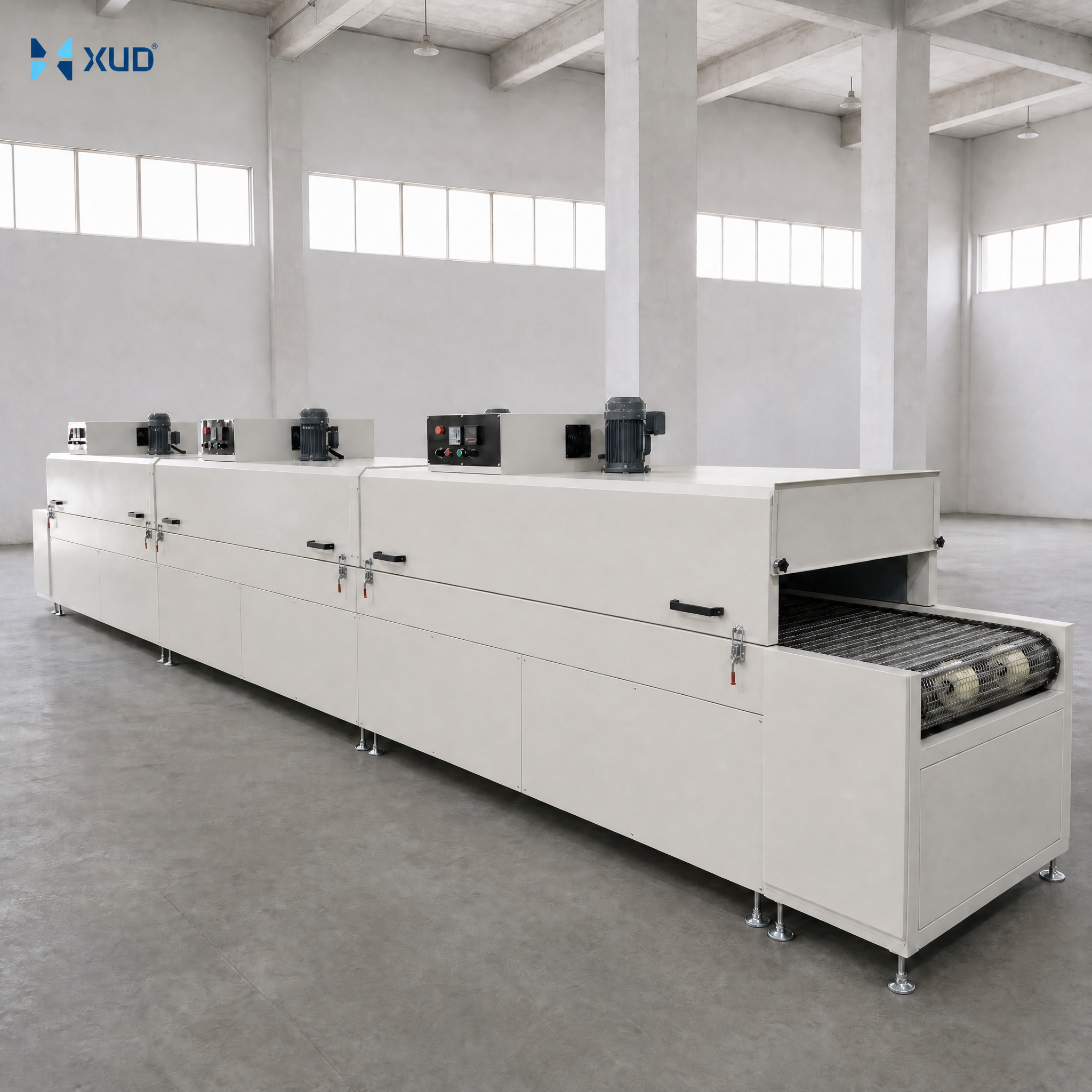
An electric industrial oven converts electricity into heat through resistive heating elements installed along chamber walls or air ducts. A forced hot air circulation system driven by centrifugal fans delivers uniform heat across workpieces, while a digital PID controller regulates power output to maintain temperature accuracy of ±1–3 °C. Key benefits include precise temperature tuning, clean heat output without combustion byproducts, and straightforward integration with existing electrical infrastructure. Installation primarily depends on available 3-phase power capacity, with total connected load ranging from 12 kW for small batch units to over 200 kW for continuous tunnel lines.
How Does a Gas Industrial Oven Work?
A gas industrial oven generates heat via controlled combustion of natural gas, LPG or propane through industrial burners paired with ignition and flame monitoring systems. Heat is delivered either directly (combustion gases mix with process air) or indirectly (a heat exchanger separates combustion gases from process air), each with specific application limits. Direct heating offers higher thermal efficiency but only suits processes unaffected by minor combustion residues. Indirect heating provides clean process air for sensitive products at slightly lower efficiency. All gas ovens require dedicated combustion air intake, exhaust flue systems and workshop ventilation, with safety features including gas pressure switches, flame detectors and emergency shut-off valves. Note that burner designs vary by project; no single configuration is standard for all gas-fired units.
Electric vs. Gas Industrial Oven: Key Differences
Core differences between the two heating methods:
- Energy source: Electric units run on industrial 3-phase power; gas units require on-site natural gas, LPG or propane supply.
- Temperature control: Electric ovens deliver high precision via power modulation; gas ovens regulate via burner firing rate with wider tolerance ranges.
- Installation: Electric setups require sufficient power distribution capacity; gas setups need pipeline connections, flue ducting and ventilation systems.
- Operating cost: Electric costs follow electricity tariffs and load factor; gas costs depend on local gas prices and burner efficiency.
- Maintenance: Electric systems focus on heating elements and electrical components; gas systems require regular burner, valve and exhaust servicing.
There is no universal “better” option—the optimal choice always depends on your specific project conditions.
Which Industrial Oven Has Lower Operating Costs?
Operating cost is the most frequently asked question, but there is no blanket answer. The core calculation formula is:
Energy Cost = Energy Consumption × Unit Energy Price
To estimate accurately, you first need local industrial electricity and gas prices per unit of energy. Then calculate effective heat load per hour or per batch, accounting for heat-up phase, holding phase, standby mode, exhaust heat loss and chamber insulation performance. Also factor in upfront installation cost, annual maintenance expense and expected service life. For example, electric ovens often have lower installation costs where spare power capacity is available, while gas ovens may deliver lower per-hour energy costs in regions with cheap gas and high electricity prices. Never calculate cost solely based on nameplate power rating—actual load varies significantly with workload and operating cycle.
Installation and Safety Considerations
For electric ovens, confirm incoming voltage, frequency (50Hz/60Hz), phase configuration and total available power. Main distribution panels, circuit breakers and wiring must be sized for the full connected load to avoid voltage drop or overheating hazards. For gas ovens, verify gas type, supply pressure, pipeline diameter and local gas safety codes. Proper flue sizing, exhaust fan capacity and fresh air intake are mandatory to prevent carbon monoxide buildup and ensure stable combustion. Both types require over-temperature protection devices, standard operating procedures and compliance with local occupational safety regulations. For export projects, we always validate electrical standards (IEC, UL, CE) and gas safety norms according to the client’s country.
How to Choose the Right Heating Method
- Choose electric heating if your facility has stable 3-phase power but no dedicated gas supply, or if your process requires tight temperature uniformity and clean heated air.
- Choose gas heating if you have reliable, low-cost gas supply and require high heat output for large-volume or high-temperature production.
For processes with strict ramp-up rates, 24/7 continuous operation or special atmosphere requirements, a custom engineering evaluation is recommended.
Instead of giving one-size-fits-all advice, we invite you to share your local energy prices, target temperature, workpiece specifications, daily operating hours and site conditions. Our team will calculate and compare both solutions for your exact case.
Frequently Asked Questions
Is an electric industrial oven more expensive to operate?
Not always. Higher per-unit electricity prices are often offset by better partial-load efficiency and lower standby heat losses. The actual result depends on local tariff structures and your usage pattern.
Is a gas industrial oven suitable for continuous production?
Yes. Properly sized gas industrial ovens are widely used in 24/7 conveyorized production lines, delivering stable high heat output with optional redundant burners for enhanced reliability.
What power supply is required for an electric industrial oven?
Most require 3-phase AC power. Common voltages include 380V 50Hz, 480V 60Hz and 415V 50Hz. Total power ranges from 10 kW for small batch ovens to over 200 kW for large tunnel lines.
What information is needed to specify a gas-fired industrial oven?
We need gas type, available supply pressure, target temperature, chamber size, production throughput and site ventilation conditions.
Get Your Custom Heating Solution Comparison
At Dongguan Xinyuanda Machinery Equipment Co., Ltd., we design and manufacture both electric and gas industrial ovens tailored to your drying, curing and thermal processing needs. Our engineering team delivers cost-effective, safety-compliant solutions matched to your production scale and process requirements.
Contact us today for a free side-by-side evaluation:
WhatsApp: +86 18998007076
Email: annalan@xudoven.com
We will respond with a professional proposal within 1 working day.
Batch Oven vs. Conveyor Oven: Which Is Better for Your Production Line?
Related Article